When Festive Smoke Clouds Our Cities
Published on November 12, 2026
When Festive Smoke Clouds Our Cities
A Festival, A
Nationwide Air Quality Concern
The celebrations of
Deepavali 2026 were followed by a significant deterioration in air quality
across several Indian cities. On November 9, thick smog enveloped parts of the
country, drawing attention to the environmental consequences of firecracker
emissions and the wider challenges of urban air pollution.
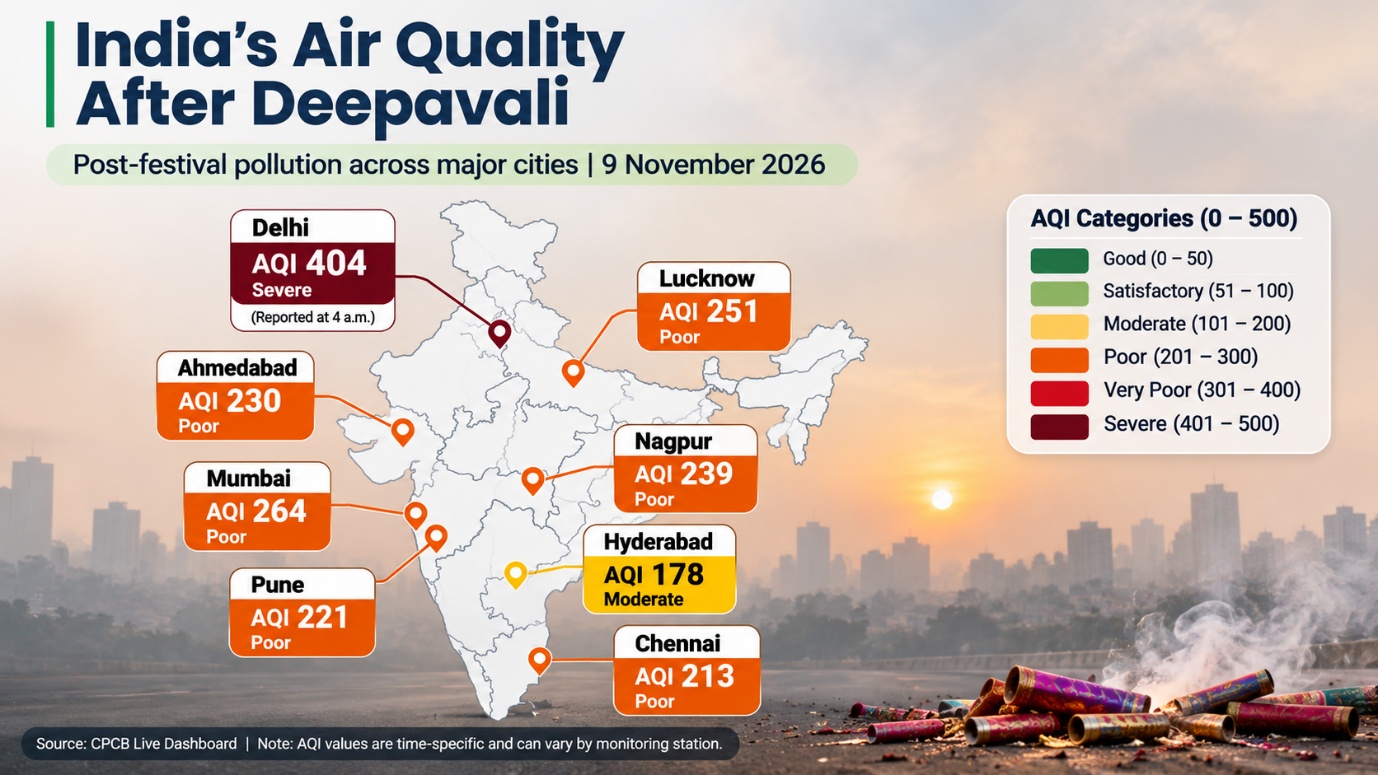
According to the Central Pollution Control Board (CPCB), Delhi's Air Quality Index (AQI) reached 404 at 4 a.m. on November 9, entering the 'Severe' category. Among individual monitoring stations, Burari Crossing recorded an AQI of 441, while Vivek Vihar registered 437.
The impact was not limited to the national capital. Mumbai's citywide AQI stood at 171, in the 'Moderate' category, while its Kherwadi (Bandra East) monitoring station recorded a significantly higher AQI of 264 at 7 a.m. Chennai's citywide AQI reached 213, placing it in the 'Poor' category. Several other cities, including Lucknow (251), Nagpur (239), Ahmedabad (230) and Pune (221), also recorded AQI levels in the 'Poor' category.
In Chennai, CPCB monitoring data recorded an AQI of 296 at Manali Village and 265 at Arumbakkam at around 9 a.m. on November 9. Separately, the Tamil Nadu Pollution Control Board's (TNPCB) Deepavali monitoring survey, covering the 24 hours up to 6 a.m. on November 9, identified Valasaravakkam as the city's most affected monitoring location, with an AQI of 343, followed by Nungambakkam (332), Sowcarpet (311) and T. Nagar (306).
These developments
highlight how festive emissions can add to the existing pollution burden in
densely populated urban environments.
Government Measures and Timing Restrictions
To address the environmental and public health impacts of firecrackers, the government continued its regulatory measures during Deepavali 2026. In Tamil Nadu, the State Government permitted firecracker use only between 6:00 a.m. and 7:00 a.m., and 7:00 p.m. and 8:00 p.m., limiting celebrations to two hours.
The advisory also
encouraged the use of certified green crackers with reduced emissions and lower
noise levels. Residents were advised to avoid loud and series crackers, refrain
from bursting fireworks near hospitals, places of worship and other silence
zones, and stay away from fire-prone areas. Community celebrations in
designated open spaces, with prior permission from local authorities, were also
encouraged. The TNPCB conducted awareness initiatives through educational
institutions, Eco Clubs and local administrations to promote responsible
celebrations.
A note on the national policy context: The Supreme Court also issued directions on October 29, 2026, regulating the use and sale of green crackers in the Delhi-NCR region. It permitted bursting only from 6:00 a.m. to 7:00 a.m. and 8:00 p.m. to 10:00 p.m. on November 7 and 8, with restrictions near hospitals, educational institutions and other designated silence zones. These directions were specific to Delhi-NCR.
What Makes Post-Festival Air Pollution a Concern?
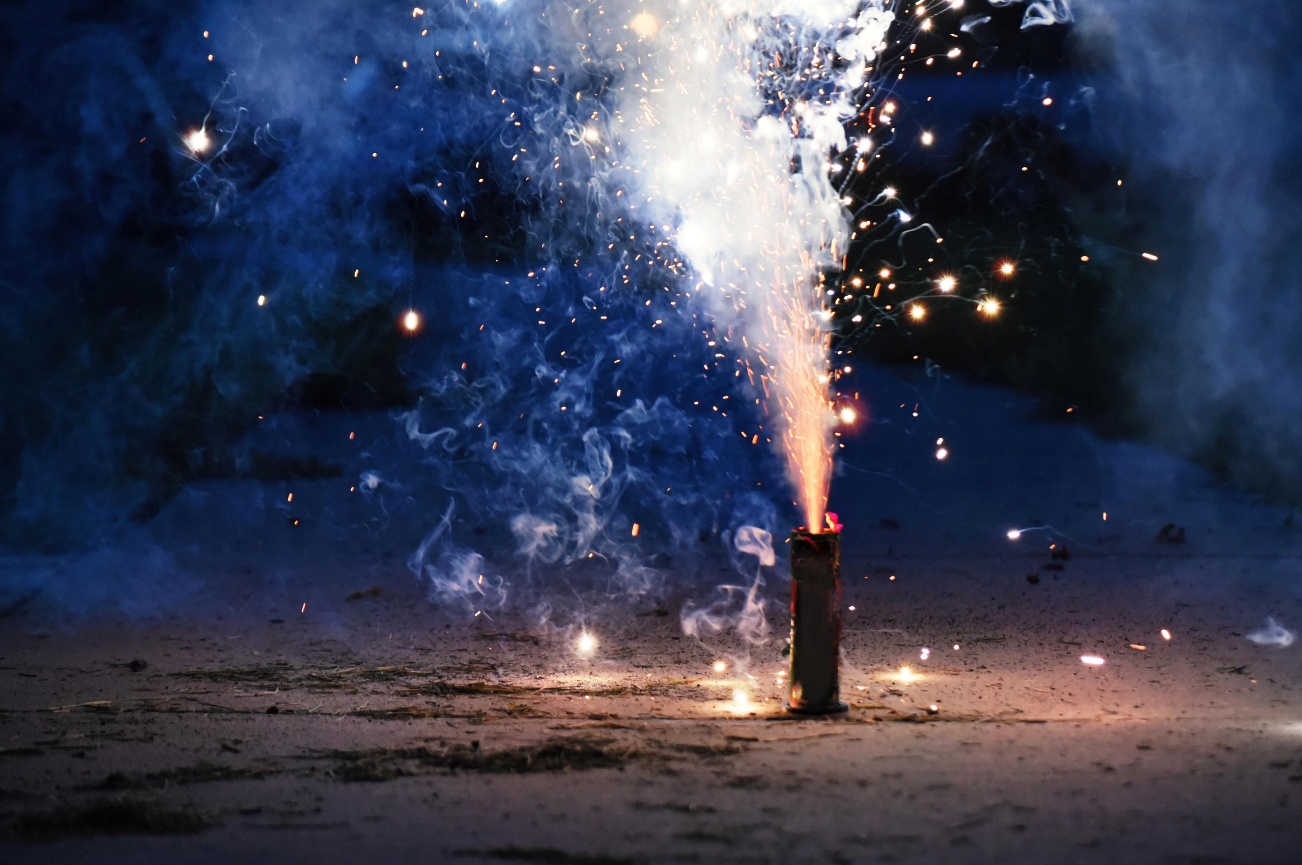
Firecrackers release
particulate matter and various gaseous pollutants into the atmosphere. Fine
particulate matter, particularly PM2.5, is a major concern because its small
size allows it to penetrate deep into the respiratory system.
DID YOU KNOW?
PM2.5: The Invisible
Air Pollutant
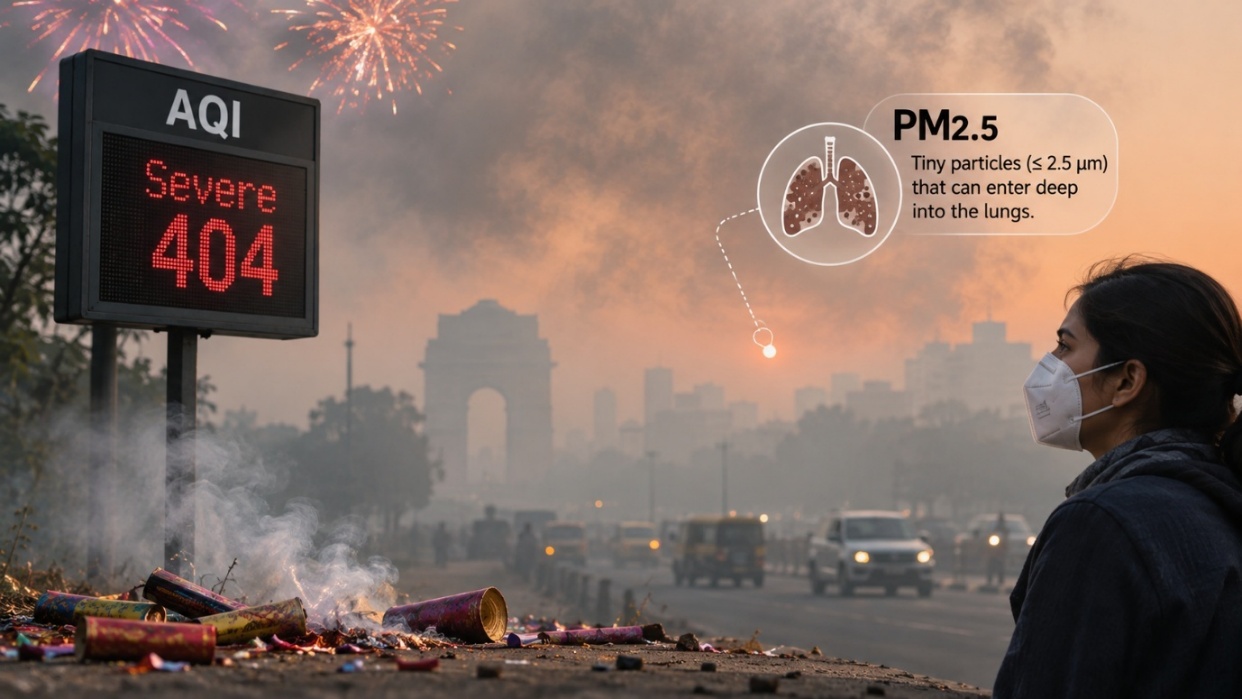
PM2.5 refers to tiny
airborne particles measuring 2.5 micrometres or less in diameter. These
particles are approximately 30 times smaller than the average width of a human
hair.
- They can travel deep into the lungs and enter
the bloodstream.
- Firecracker emissions, vehicle exhaust and
industrial activities are among their sources.
- Exposure can increase the risk of respiratory
and cardiovascular diseases.
The World Health
Organization identifies air pollution as a major environmental risk to
human health. Exposure to elevated particulate matter concentrations is
associated with respiratory and cardiovascular diseases.
The impact can be
particularly concerning for children, older adults and individuals with
pre-existing health conditions.
However, firecracker
emissions are only one part of the wider pollution challenge. Vehicular
emissions, industrial activities, construction dust, waste burning and seasonal
agricultural fires also contribute to the air pollution burden in many Indian
cities.
Weather conditions such
as low wind speeds and atmospheric temperature inversions can further restrict
the dispersion of pollutants, allowing them to accumulate near the ground.
The Environmental Impact Beyond the Atmosphere
Air pollution is not the
only environmental concern associated with large-scale firecracker use.
Increased noise levels
can disturb communities and affect animals, while the accumulation of
firecracker packaging and residues adds to the urban solid waste burden.
Reports from Chennai
following Deepavali also highlighted challenges in the separate collection of
firecracker waste, with poor public participation contributing to waste
accumulation on streets.
These concerns
demonstrate the interconnected nature of environmental challenges. Air quality
management, responsible waste disposal, noise control and public health
protection must be addressed together.
Aizawl:
An Example of Quieter Celebrations
Aizawl, the capital of
Mizoram, offered an alternative approach to Deepavali celebrations in 2026. The
district administration-imposed restrictions on the sale, storage,
transportation and use of firecrackers, citing concerns over air pollution,
noise pollution and public health.
The city's reported AQI
was 56 following the celebrations, highlighting the possibility of maintaining
a relatively cleaner and quieter festive environment through community
participation and responsible practices.
Aizawl's approach
reminds us that celebrations and environmental responsibility can go hand in
hand.
Moving Towards Responsible Celebrations
Reducing the
environmental impact of celebrations requires collective participation.
Responsible consumption, improved waste segregation, stronger pollution
monitoring and sustained public awareness can contribute to healthier urban
environments.
Government authorities,
educational institutions, industries and environmental organisations all have a
role in encouraging sustainable practices.
Reliable air quality
monitoring and transparent reporting are equally important to understand
pollution patterns and support timely interventions.
Cleaner Air Is a Shared Responsibility
The post-Deepavali
pollution episode of 2026 serves as a reminder that environmental
responsibility extends beyond individual actions and seasonal campaigns.
Protecting air quality
requires consistent efforts throughout the year, supported by informed
communities, effective environmental governance and sustainable choices.
At IDREA, we believe
promoting environmental awareness and encouraging responsible practices remain
important steps towards building healthier communities and a sustainable
future.
The celebrations may
last for a few hours, but the responsibility of protecting our environment
continues every day.
Data Sources: CPCB Air Quality Monitoring Data
and TNPCB Deepavali Air Quality Monitoring Survey (November 9, 2026).