Transparent Solar Panels: The Future of Sustainable Buildings
Published on July 24, 2026
Transparent Solar Panels: The Future of Sustainable
Buildings
This is the idea behind transparent
solar panels, an emerging renewable energy technology that has the
potential to transform ordinary glass into an energy-generating surface. While
traditional solar panels have become a familiar sight on rooftops, transparent
solar panels open up new possibilities by integrating renewable energy into the
buildings we use every day.
Although the technology is still
developing, it represents an exciting step towards creating smarter, greener,
and more energy-efficient cities.
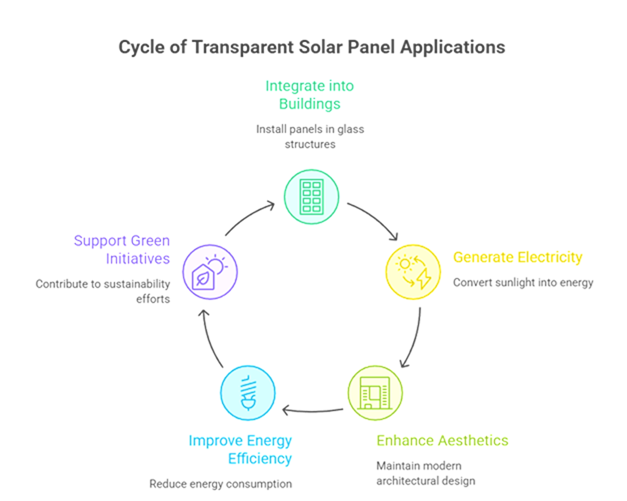
What Are Transparent Solar Panels?
Transparent solar panels
are a type of photovoltaic (PV) technology designed to generate electricity
while allowing visible light to pass through. Unlike conventional solar panels,
which are opaque and mounted on rooftops, transparent solar panels can be
incorporated into windows, glass façades, skylights, and other transparent
surfaces.
These panels absorb parts
of sunlight that are invisible to the human eye, such as ultraviolet (UV)
and infrared (IR) light, while letting most visible light pass through.
This enables the glass to remain transparent while producing renewable
electricity.
Transparent solar panels
are part of an innovative approach known as Building-Integrated
Photovoltaics (BIPV), where solar energy systems are built directly into
construction materials rather than being installed separately.
How Do Transparent Solar Panels Work?
Sunlight is made up of
different types of light:
·
Visible
light
·
Ultraviolet
(UV) light
·
Infrared
(IR) light
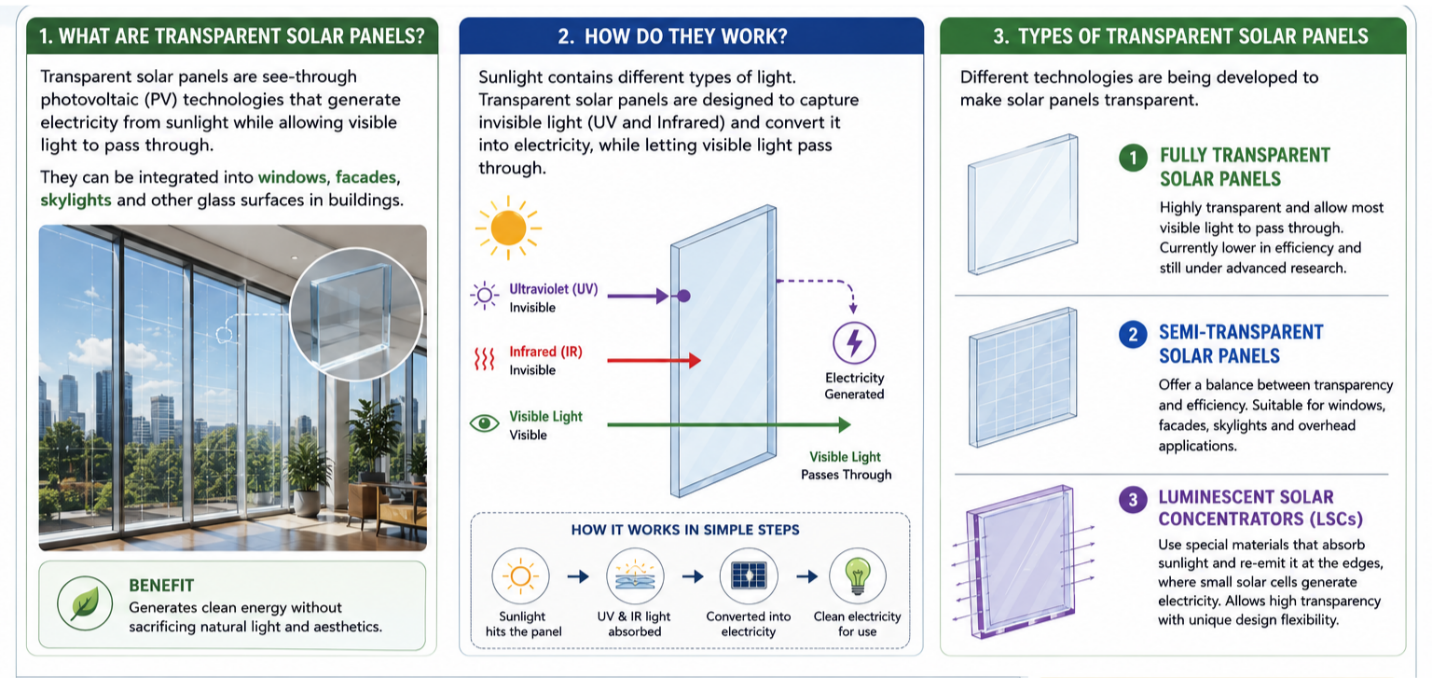
Traditional solar panels
absorb much of this sunlight to generate electricity. Transparent solar panels
work differently.
They are designed to
capture UV and IR light while allowing most visible light to pass through. The
captured energy is then converted into electricity using photovoltaic materials
embedded within the glass.
As a result, the panels
continue to function like ordinary windows while quietly producing clean
energy.
Why Is This Technology
Important?
Modern cities are becoming
increasingly dependent on glass architecture. High-rise buildings, shopping
malls, airports, hospitals, and office complexes often have large glass façades
that receive sunlight throughout the day.
Instead of allowing this
sunlight to go unused, transparent solar panels offer an opportunity to
transform these surfaces into electricity-generating assets.
The technology supports
several important sustainability goals:
·
Reduces
dependence on fossil-fuel-based electricity
·
Promotes
renewable energy generation
·
Makes
better use of existing building surfaces
·
Supports
green and energy-efficient buildings
·
Contributes
to carbon emission reduction
·
Helps
advance Net Zero ambitions
As urban populations
continue to grow, innovations like transparent solar panels could play an
important role in making cities more sustainable.
Where
Can Transparent Solar Panels Be Used?
Transparent solar panels have a wide range of potential applications,
particularly in places where glass is already part of the building design.
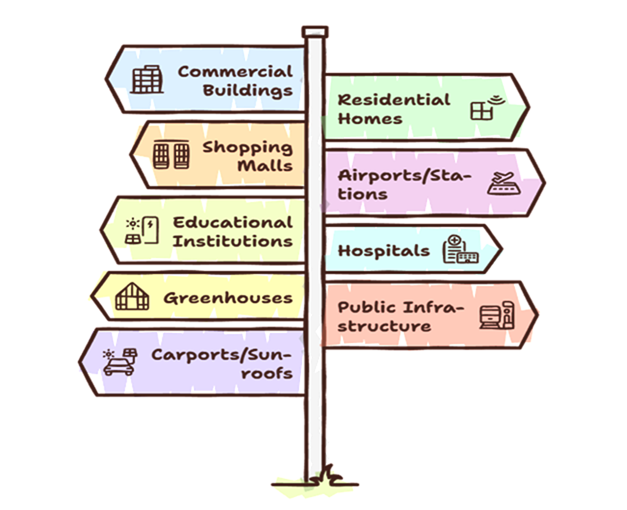
Some possible applications include
· Commercial Buildings: Office towers and corporate headquarters with glass façades can
generate electricity while maintaining modern architectural aesthetics.
· Residential Homes: Transparent solar panels can be integrated into windows, skylights, and
sunrooms during new construction or major renovations.
· Shopping Malls: Large glass entrances and skylights can
contribute to renewable energy generation while enhancing natural lighting.
· Airports and Railway Stations: These
facilities often have extensive glass structures, making them suitable
candidates for building-integrated solar technology.
· Educational Institutions: Schools,
colleges, and universities can use transparent solar panels as both an energy
solution and an educational demonstration of clean technology.
· Hospitals: Healthcare facilities can improve energy
efficiency while maintaining bright indoor environments.
· Greenhouses: Unlike conventional solar panels that block
sunlight, transparent panels allow sufficient visible light to reach plants
while generating electricity from other parts of the solar spectrum.
· Bus Shelters and Public Infrastructure: Bus
stops, pedestrian walkways, and public shelters can incorporate transparent
solar panels to power lighting, information displays, or charging stations.
· Carports and Sunroofs: Transparent solar technology may also be used in vehicle sunroofs and
parking structures to produce renewable electricity.
Benefits of Transparent Solar Panels
1.
Better Use
of Existing Space: Rather than requiring additional land or rooftop space,
transparent solar panels make productive use of surfaces that already exist.
2. Supports Sustainable Architecture: The
technology integrates renewable energy into building design without
significantly changing the appearance of the structure.
3.
Generates
Clean Energy: Every unit of
electricity produced through solar power helps reduce dependence on
conventional energy sources and lowers greenhouse gas emissions.
4. Improves Energy Efficiency: Buildings equipped with transparent solar panels may
reduce part of their electricity demand by generating power on-site.
5.
Encourages
Innovation: Transparent
solar technology represents the next generation of renewable energy solutions
that combine engineering, architecture, and sustainability.
Current Challenges
Like many emerging technologies, transparent solar panels still face
certain limitations.
Lower Efficiency: Conventional silicon solar panels currently
produce significantly more electricity than transparent solar panels.
Higher Cost: Manufacturing advanced transparent
photovoltaic materials is still relatively expensive.
Limited
Commercial Adoption: Although research is progressing rapidly, large-scale
deployment remains limited compared to conventional solar systems.
Ongoing Research: Scientists continue to improve transparency,
durability, and energy conversion efficiency to make the technology more
practical and affordable.
These challenges are common for new
technologies and are expected to improve as research advances and production
scales up.
Transparent
Solar Panels vs. Conventional Solar Panels
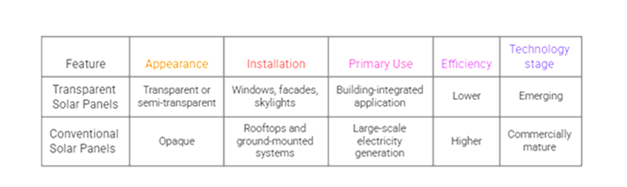
Rather than replacing
conventional solar panels, transparent solar panels are expected to complement
them by making additional building surfaces productive.
Why Does This Matter
for India?
India is rapidly expanding
its renewable energy capacity while also investing in smart cities, sustainable
infrastructure, and green buildings.
Modern commercial
buildings in cities such as Chennai, Bengaluru, Hyderabad, Mumbai, and Delhi
often feature large glass façades. Integrating transparent solar panels into
these structures could help generate renewable electricity without requiring
additional land.
As India moves towards its
Net Zero emissions target by 2070, innovative technologies like
transparent solar panels could support cleaner urban development alongside
conventional rooftop solar, wind energy, battery storage, and other renewable
energy solutions.
Although widespread
adoption may still take time, the technology offers an exciting glimpse into
the future of sustainable construction.
Looking Ahead
Transparent solar panels
demonstrate how innovation can change the way we think about renewable energy.
As researchers continue to improve
efficiency, reduce manufacturing costs, and develop new photovoltaic materials,
transparent solar technology is expected to become increasingly practical for
commercial and residential applications.
One day, buildings may no longer be
passive consumers of electricity. Instead, their windows, skylights, and glass
façades could become active contributors to clean energy generation.
Conclusion
The transition to a sustainable
future will require more than traditional solutions. It will also depend on
innovative technologies that make better use of the resources around us.
Transparent solar panels may still be
an emerging technology, but they represent an important step towards
integrating renewable energy into everyday life. While they are unlikely to
replace conventional solar panels in the near future, they have the potential
to complement existing renewable energy systems and redefine how buildings
generate electricity.
As the world continues its journey
towards cleaner energy and lower carbon emissions, transparent solar panels
remind us that sometimes, the future is right in front of us - through the very
windows we look out of.