Turning Plastic Pollution into Profit: A New Business Model
Published on July 27, 2025
Turning Plastic Pollution
into Profit: A New Business Model
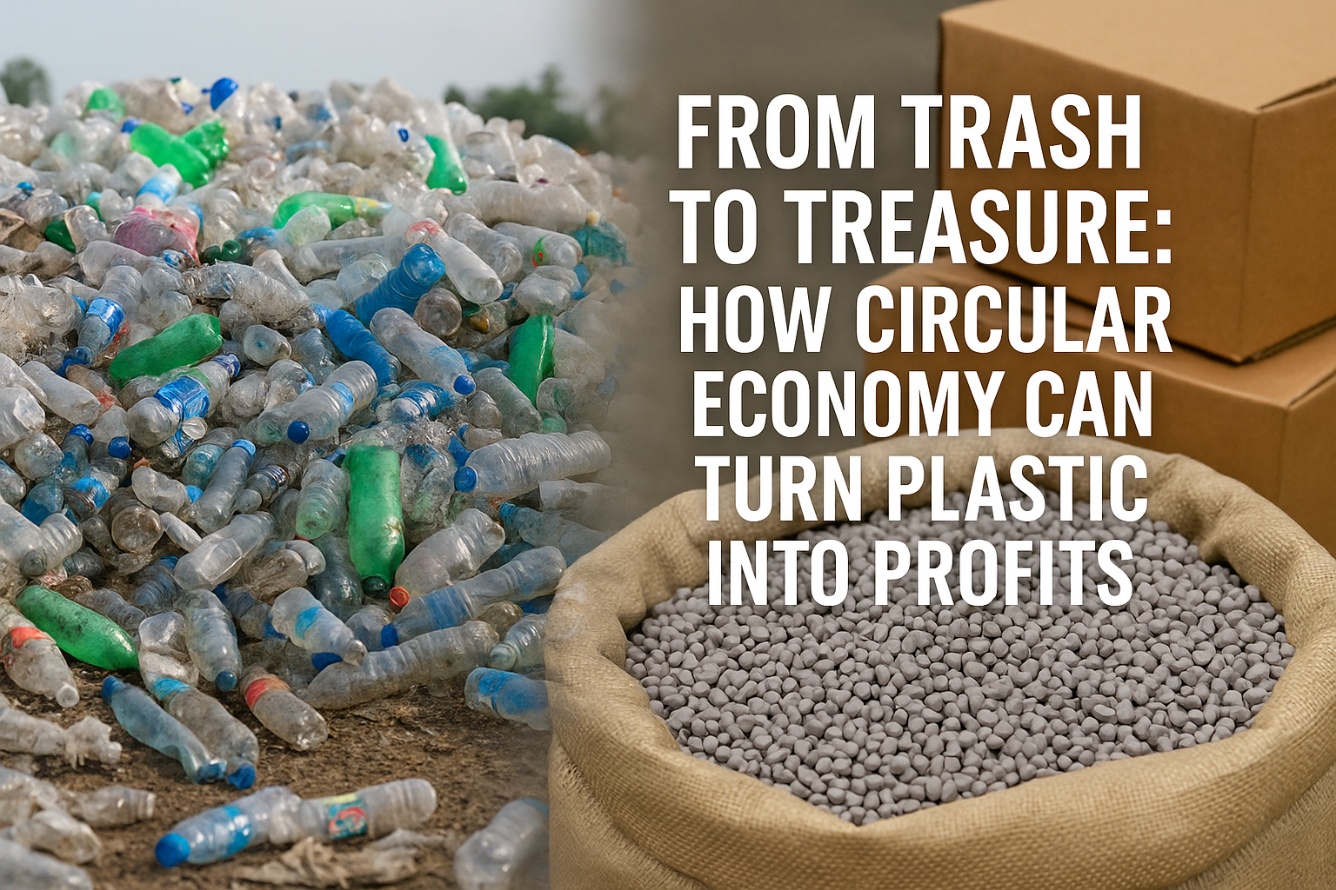
Over 300 million tonnes of plastic waste are created annually worldwide,
most of which ends up in landfills and the environment. One of the largest environmental problems
facing the globe today is plastic pollution.
However, what if this issue could be turned into a chance to earn money?
Come in the circular economy—a compelling approach that cuts down plastic
pollution and opens up new paths for business expansion and innovation.
The linear economy, based on a 'take, make, dispose' mindset, has served
as the world model of production and consumption for decades. This system drove
rapid industrial growth, but also created an unsustainable system that depletes
natural resources and burdens our planet with waste. The circular economy, in
contrast, is constructed around a regenerative system, in which products and
materials are reused, remanufactured, and recycled in efforts to minimise waste
and keep resources in action as long as possible.
This change is no longer hypothetical. Globally, firms are proving that
profitability and sustainability are possible. Let's observe how firms are
turning plastic waste from a costly problem to a profitable resource.
Comprehending the Circular Economy Model
In plastics, the circular economy means making the products easier to
recycle, creating closed-loop systems for plastic materials, and creating new
materials that are biodegradable or easier to process. It centres on four
principles:
- Reducing avoidable plastic waste at the source.
- Recycling and reusing plastic materials to
keep them in use.
- Developing new materials and new business
models.
- Restoring plastic pollution-impacted
ecosystems.
This model becomes more and more appealing to companies not just for the
environmental advantages but also due to the huge cost reduction and added
revenue it generates.
Case Study 1: Unilever’s Loop Partnership
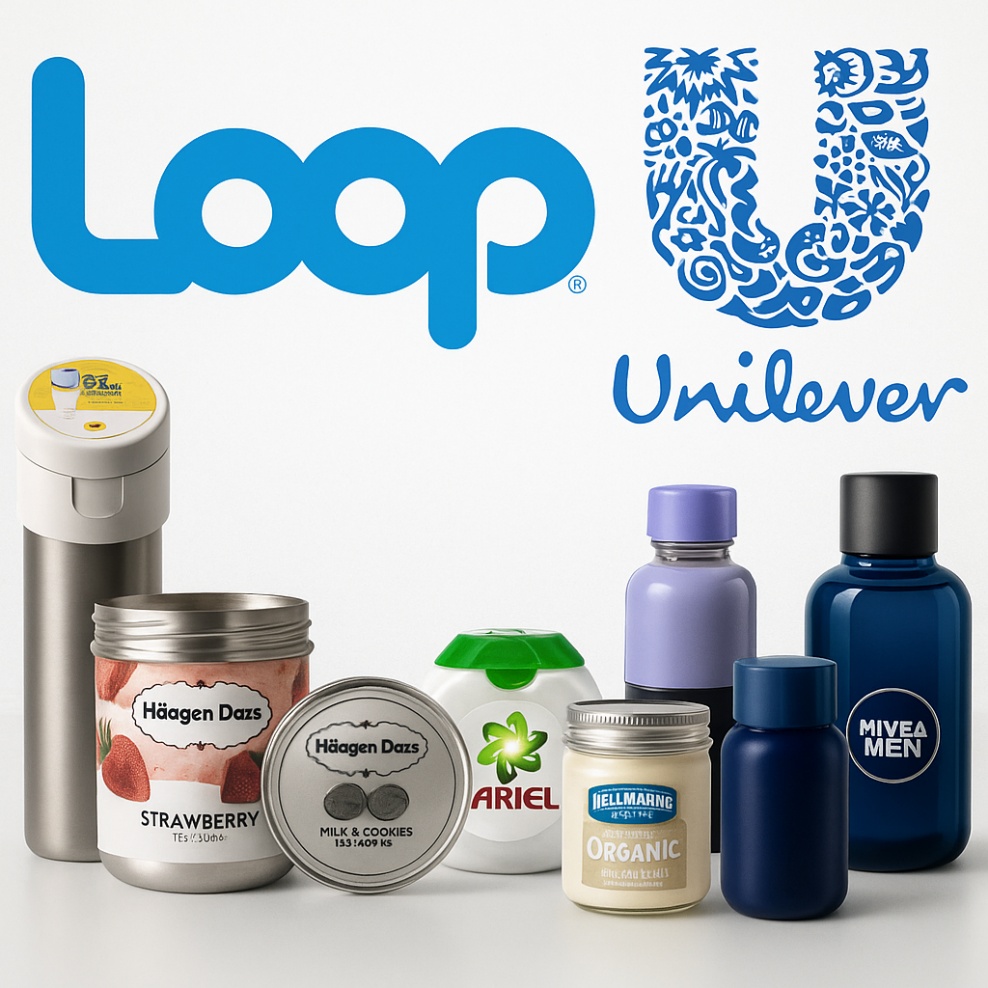
Perhaps one of the most widely debated examples of the circular economy
in action is the partnership between Unilever and Loop, a global reuse
platform. Unilever, a consumer goods giant, has been
criticized for decades about how much plastic packaging it produces. As a
result, the business collaborated with Loop to test a reusable packaging
system.
Under this system, shampoo and detergent, among other products, are sold
in permanent, refillable packaging. The containers are collected by customers
when they are empty, professionally cleaned, and refilled. This ends the usage
of single-use plastics while bringing in a new service model that consumers are
willing to pay more for.
Not only did it help Unilever reduce its footprint on the environment,
but it also provided the company with valuable customer data and brand
allegiance. Perhaps most importantly, it demonstrated that green practices
could be customer-oriented and profitable.
Case Study 2: Plastic Bank's Development
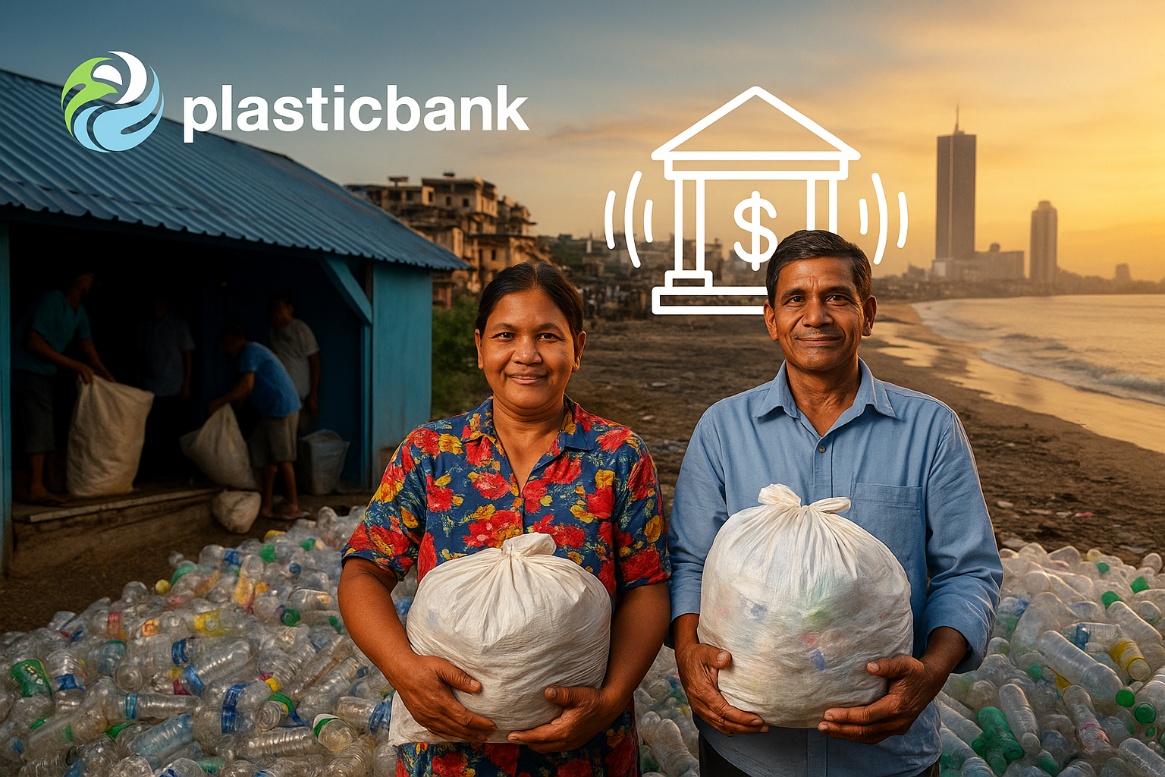
Plastic Bank, a Canadian social business, has created a pioneering
business model that is directly linking plastic waste collection with economic
empowerment. Operating in countries like Haiti, Indonesia, and the Philippines,
Plastic Bank sets up collection points where people in the local communities
can exchange plastic waste gathered for digital tokens. After that, these
tokens are used to pay for necessities like food, medicine, and education.
The gathered plastic is sold to companies like Henkel and SC Johnson
under the Social Plastic® brand, and they utilise it to package their goods.
This creates a cycle whereby plastic litter is made a valuable commodity that
benefits communities and businesses.
Through the "model", Plastic Bank has empowered thousands of
families while assisting companies meet their sustainability targets. It is a
critical example of how profitability and social impact can go hand-in-hand
under the circular economy paradigm.
Case Study 3: Adidas and the Futurecraft Loop
Footwear is another sector that suffers from plastic waste. Classic
sneakers tend to wind up in a landfill since they consist of an intricate
combination of materials that can't be easily recycled. With this in mind,
Adidas introduced the Futurecraft Loop, an entirely
recyclable running shoe constructed from a single kind of plastic.
When the shoes come to the end of their life, they can be sent back to
Adidas, where they are milled and recycled into brand new shoes—no material
loss. Such a revolutionary idea is rebranding product life cycles and cutting
the fashion world's enormous plastic legacy.
Even if it is just in its infancy, this innovation makes Adidas an
innovative brand, unleashing new business opportunities founded on models of
sustainable production.
How Businesses Can Seize the Opportunity
Shifting to a circular economy framework is not easy. It necessitates
the redesign of products, the reimagining of supply chains, and significant
initial investments in many cases. The payoff in the long run is however
irrefutable. The following are some operational steps that businesses can take
to initiate their process:
- Evaluate and
Redesign Product Life Cycles:
Take a close look at the materials and production processes your products incorporate. Can they be designed for simpler recycling or extended life cycles? - Invest in
Recycling Infrastructure:
Develop effective collection and recycling systems through partnerships, or invest in recycling capacities internally. - Adopt New
Business Models:
Approach the shift to service-based models where products are rented and reused by returning them, as with Unilever's Loop program. - Take up Extended
Producer Responsibility (EPR):
Accept responsibility for the full lifecycle of your products through take-back programs and customer recycling. - Partner for
Greater Impact:
No single company can drive systemic change. Partner with industry colleagues, governments, and NGOs to co-create collective solutions for plastic waste management.
Conclusion: Turning Waste into Wealth
The shift from a linear to a circular economy is no longer merely an
environmental necessity—it is a strong business opportunity. Businesses
adopting this model are not only contributing to ending the global plastic
crisis but also opening up new sources of revenue, decreasing operating
expenses, and forging more sustainable relationships with increasingly
sustainability-minded consumers.
From Manila streets to Germany's innovation centres, companies are
proving that plastic trash doesn't need to be a waste. It can be an asset—one
that powers innovation, drives profits, and builds a sustainable future for
everyone.
The circular economy is not a fad. It is the roadmap to a strong,
lucrative, and sustainable future. The only question now is: Will your company
be at the forefront of change or will it get left behind?