Mercury Pollution: The Invisible Threat to Human Health and Ecosystems
Published on July 6, 2026
Mercury
Pollution: The Invisible Threat to Human Health and Ecosystems
Mercury is a naturally occurring metal found in the Earth's crust, but human activities have significantly increased its presence in the environment. Due to its toxic nature and ability to travel long distances through air and water, mercury has become a global environmental and public health concern. Despite being largely invisible, mercury pollution poses serious risks to ecosystems, wildlife, and millions of people worldwide.
Understanding Mercury Pollution
Mercury enters the environment through both natural and human-made sources. While volcanic eruptions and weathering of rocks release small amounts of mercury naturally, human activities such as coal combustion, industrial processes, mining, waste incineration, and improper disposal of mercury-containing products are responsible for much of today's pollution.
Once released into the atmosphere, mercury can travel across countries and continents before settling into water bodies and soil. In aquatic environments, certain microorganisms convert mercury into methylmercury, a highly toxic form that accumulates in fish and shellfish.
Environmental Challenges and Emerging Concerns
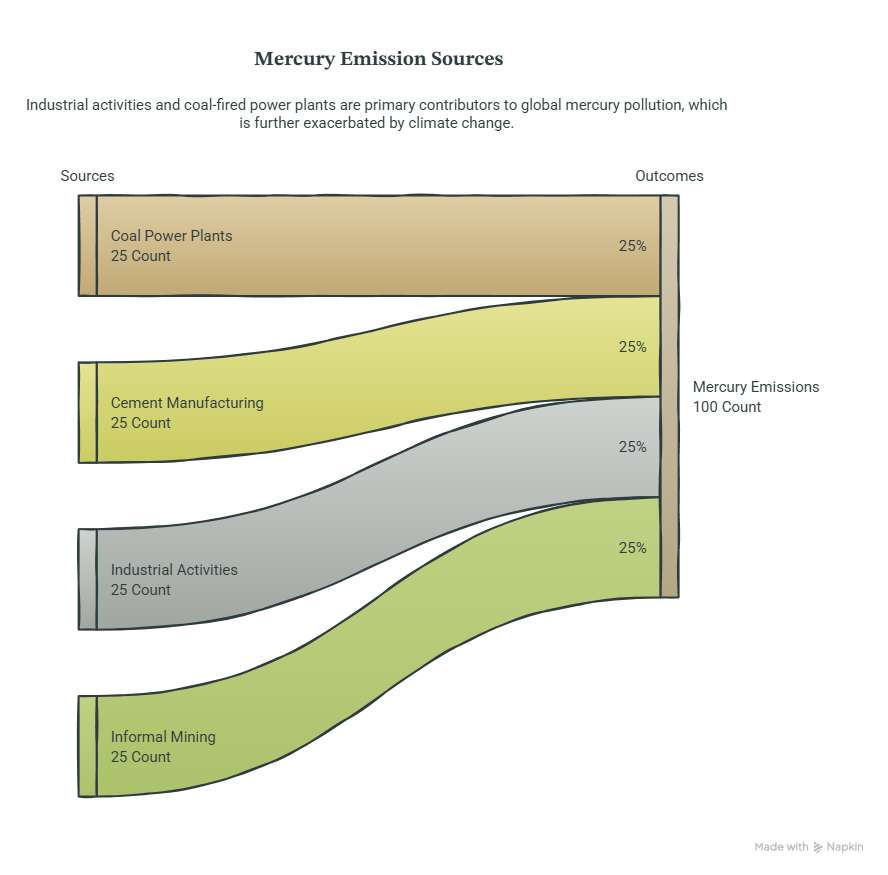
In many developing countries, coal-fired power plants, cement manufacturing,
industrial activities, and informal mining operations remain significant
sources of mercury emissions. Once released into the atmosphere, mercury can
travel long distances and contaminate even remote ecosystems such as forests,
wetlands, and polar regions. Scientists are also increasingly concerned that
climate change may influence mercury cycling by altering rainfall patterns,
increasing wildfires, and releasing previously stored mercury from soils and
sediments. These interconnected environmental challenges highlight the need for
integrated pollution control and climate action strategies.
Why Mercury is Dangerous
Mercury is a potent neurotoxin that can affect the brain, nervous system, kidneys, lungs, and immune system. Exposure to mercury can occur through inhalation, skin contact, or consumption of contaminated fish and seafood.
Children and unborn babies are particularly vulnerable because mercury can interfere with brain development, learning abilities, memory, and motor skills. Long-term exposure may also contribute to cardiovascular and neurological disorders in adults.
Impact on Ecosystems
Mercury pollution does not only affect humans. It disrupts entire ecosystems by accumulating in food chains. Small aquatic organisms absorb mercury, which is then passed on to larger fish, birds, and mammals through a process known as bioaccumulation.
As mercury concentrations increase at each level of the food chain, top predators often carry the highest levels of contamination. This can impair reproduction, growth, and survival rates in wildlife populations, threatening biodiversity and ecosystem balance.
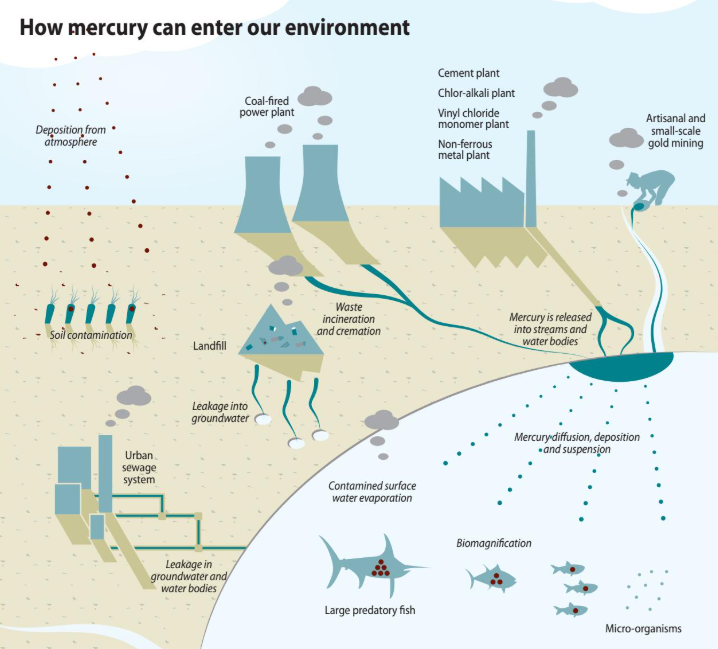
Source: GRID-Arendal / Zoï
Environment Network, December 2012. Adapted from UNEP, Mercury Awareness
Raising Package
Global Response: The Minamata Convention
Recognizing the dangers of mercury pollution, countries around the world adopted the Minamata Convention on Mercury, a global treaty aimed at protecting human health and the environment. The convention seeks to reduce mercury emissions, regulate mercury-containing products, and promote safer industrial practices.
Named after Minamata, Japan, where severe mercury poisoning affected thousands of people in the mid-20th century, the agreement serves as a reminder of the devastating consequences of uncontrolled pollution.
Mercury pollution in India
- Industrial emissions baseline (2000–2004): India's coal production ranks third globally, with cement and brick production in second place, yet emission inventories of mercury from industrial sources had been largely neglected despite rapid industrial growth. Springer
- Effluent contamination: Studies compiled by the Centre for Science and Environment found mercury discharge in industrial effluents ranging from 0.058–0.268 mg/l — many times above India's and WHO's prescribed standard of 0.01 mg/l for industrial effluent and 0.001 mg/l for drinking water. Centre for Science and Environment
- Urban air quality (2025): A study monitoring Delhi, Ahmedabad, and Pune found Delhi recorded the highest mercury concentrations, with both Ahmedabad and Pune also showing significant levels, indicating mercury pollution is widespread across Indian cities, correlated with coal- and industry-driven combustion emissions. AQI
- Legacy contamination site: The Kodaikanal thermometer factory case remains India's textbook example - operating from 1983–2001, improper mercury waste disposal caused severe soil, water, and air contamination, leading to neurological and developmental health effects in workers and residents.
What Can We Do?
Reducing mercury pollution requires collective action from governments, industries, and individuals.
Key measures include:
• Transitioning to cleaner energy sources and reducing coal
dependence.
• Promoting responsible waste management and recycling.
• Limiting the use of mercury-containing products.
• Strengthening environmental regulations and monitoring systems.
• Raising public awareness about safe fish consumption and pollution
prevention.
• Supporting environmental monitoring, contaminated site cleanup, and ecosystem restoration efforts.
Conclusion
Mercury pollution is a global challenge that transcends borders and generations. While significant progress has been made through international cooperation and environmental regulations, continued efforts are essential to safeguard human health and protect ecosystems. By embracing cleaner technologies, responsible consumption, and sustainable practices, society can reduce mercury pollution and create a healthier future for both people and the planet.