From Paris to Tahiti: Sustainability analysis of Olympics 2024
Published on August 19, 2024
From Paris to Tahiti: Sustainability analysis of Olympics 2024
What thoughts do the Olympics evoke in
us?
Athletic feats,
Diverse cultures,
Sports,
Sportsmanship,
Stories about the spirit of competition
and camaraderie?
While we celebrate sharing humanity’s
passion for excellence over winning, this Paris Olympics 2024 is also
about sustainability. The event highlights eco-friendly practices, aiming for a
smaller carbon footprint. It's a groundbreaking step, blending athletic
excellence with environmental responsibility, showing that we can care for our
planet while enjoying world-class sports.
Paris 2024: Setting a New Benchmark for Olympic
Sustainability
The Paris 2024 Olympics promise to set a new benchmark in
sustainability, extending its green ethos from the bustling streets of Paris to
the serene shores of Tahiti. The Paris 2024 Olympics are poised to be the
greenest in history, aligning fully with the International Olympic
Committee’s (IOC) strategic roadmap, Olympic Agenda 2020 and
compatible with the Paris climate agreement. This vision aims to shape
the future of the Olympic Movement by making the Games more sustainable,
cost-effective, and aligned with the needs of host cities and communities. From
Paris to Tahiti, the Paris 2024 Olympics are pioneering a comprehensive
sustainability agenda that could serve as a model for future international
events. Starting with the new motto, 'Faster, Higher, Stronger - Together',
the key sustainability initiatives include:
1)
Carbon neutral goals:
The Paris 2024 Olympics aim for a maximum carbon budget
of 1.58 Mt CO2 eq, a challenging target compared to Tokyo
2020. Hosting cities can leverage mega-events to promote urban regeneration and
energy transitions, aligning with Paris climate goals. The expected carbon
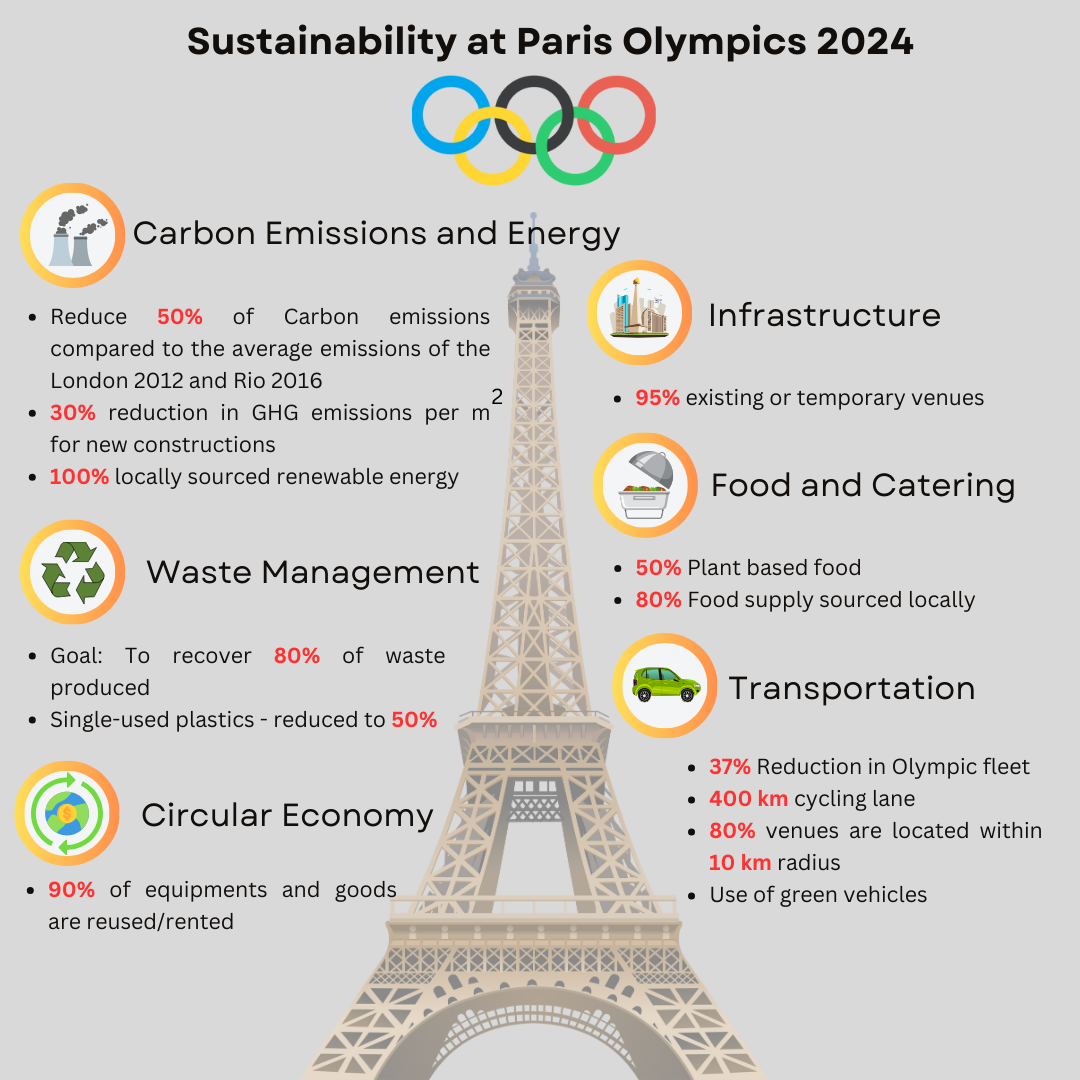
footprint is 1.6 Mt CO2 eq for 13-16 million visitors,
equating to 100-125 kg CO2 eq per person (83 bottles of wine). The Paris 2024 Olympics aims to reduce carbon emissions by 50%
compared to the average emissions of the London 2012 and Rio 2016 Games,
aligning with the Paris Agreement on Climate Change (olympics.com). This ambitious goal considers all carbon emissions, including direct,
indirect, and spectator travel emissions. Despite these efforts, an estimated 2
million tonnes of carbon dioxide emissions remain
a concern, emphasizing the need for effective carbon offsetting and further
sustainable practices.
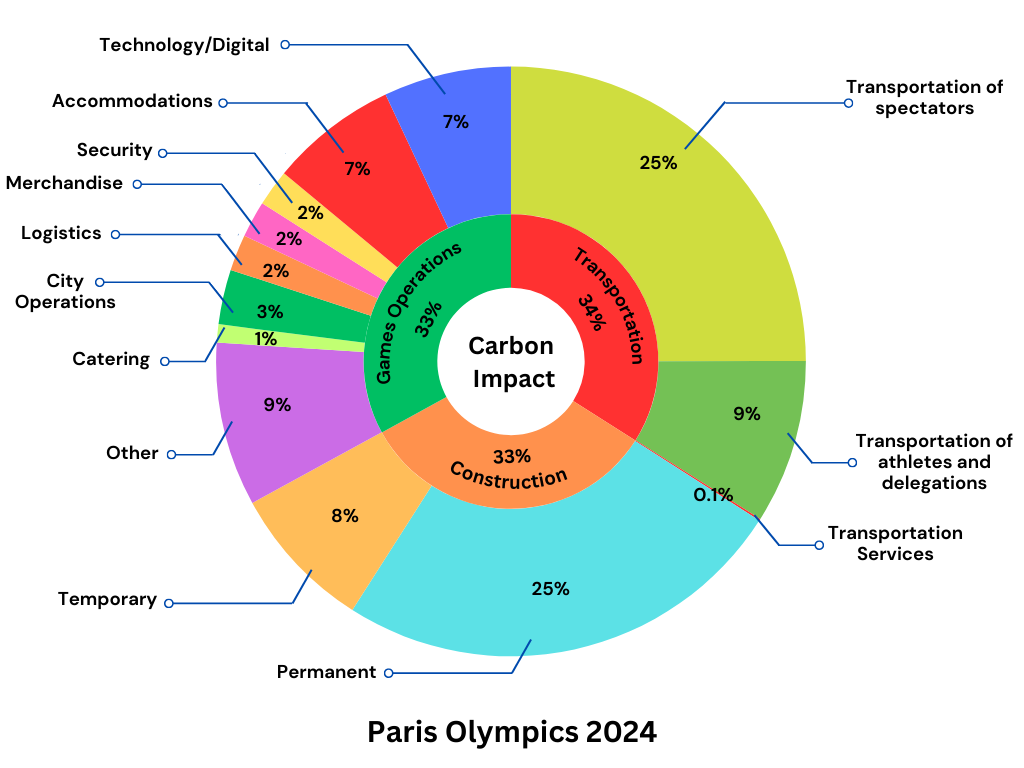 (Data Source:prnewswire.com)
2)
Sustainable transportation:
Paris has developed an extensive plan
to promote sustainable transportation. The city’s well-established public
transport network has been enhanced, and athletes and spectators were
encouraged to use bicycles and electric vehicles. The Olympic Village is
designed to be car-free, further reducing emissions. Additionally, the Olympic
fleet has been reduced by 37% compared to the previous games (How the 2024 Paris Olympics fast-tracked
decarbonization). Transport to the Games focuses on
accessibility and sustainability:
Public Transport: Enhancing
the city’s public transport network, with 80% of the venues located
within a 10 km radius of the Olympic Village (Will the Paris 2024 Olympics be the Greenest
Ever?).
Green Vehicles: Using
electric, hybrid, and hydrogen-powered vehicles to reduce emissions is
encouraged.
Extensive Cycling Infrastructure: Paris has expanded over 400 km of cycling lanes linking all
competition venues, promoting cycling as a sustainable mode of transportation.
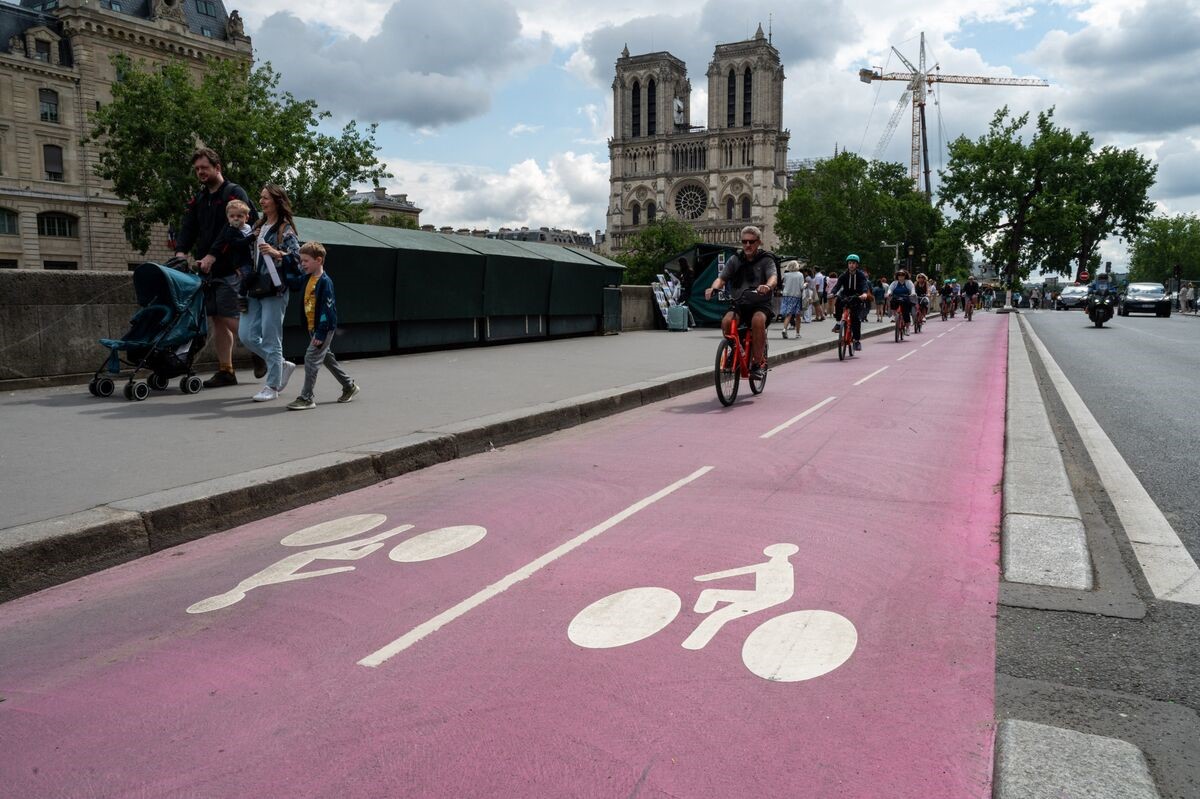
(Cyclists Are Taking Over Paris for the
Olympic Games)
3)
Waste Management:
An ambitious waste management program aims to achieve a 70%
recycling rate during the games (IOC). Single-use plastics are banned, and
extensive recycling and composting facilities were set up across the venues.
Nearly 11,000 seats are made from recycled plastic bottles and caps (Paris Olympics to give waste a second life)
4)
Eco-friendly infrastructure:
A cornerstone of the Paris 2024 sustainability strategy
is the extensive use of existing and temporary venues, minimizing new
construction. Approximately 95% of the venues are considered to be
pre-existing or temporary, aligning with the IOC's sustainability
recommendations (IOC). Key sustainable features include the Aquatics Centre and
the Paris 2024 Olympic Village. Both venues are located in the northeastern
suburban areas of Paris which are investment lacking locations in the city.
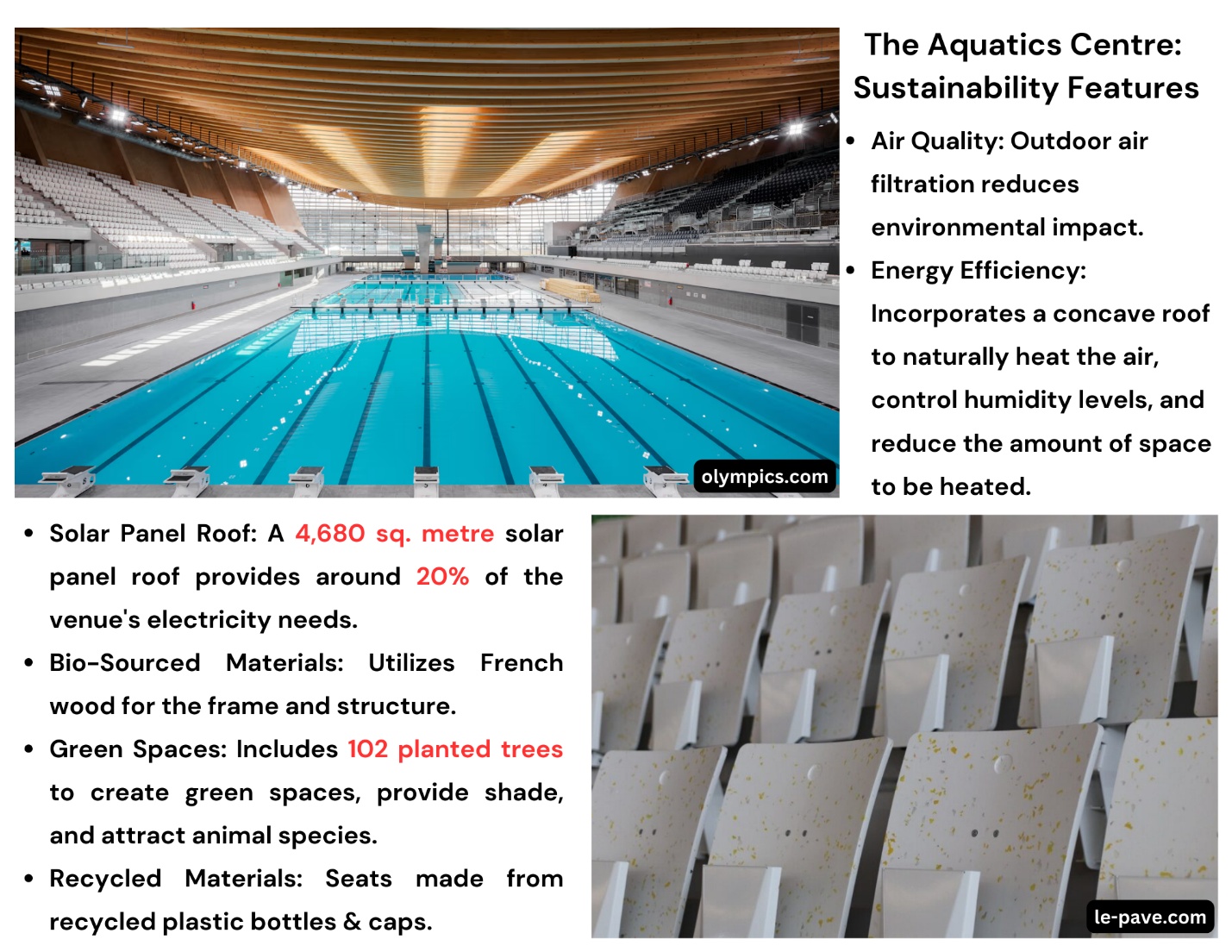
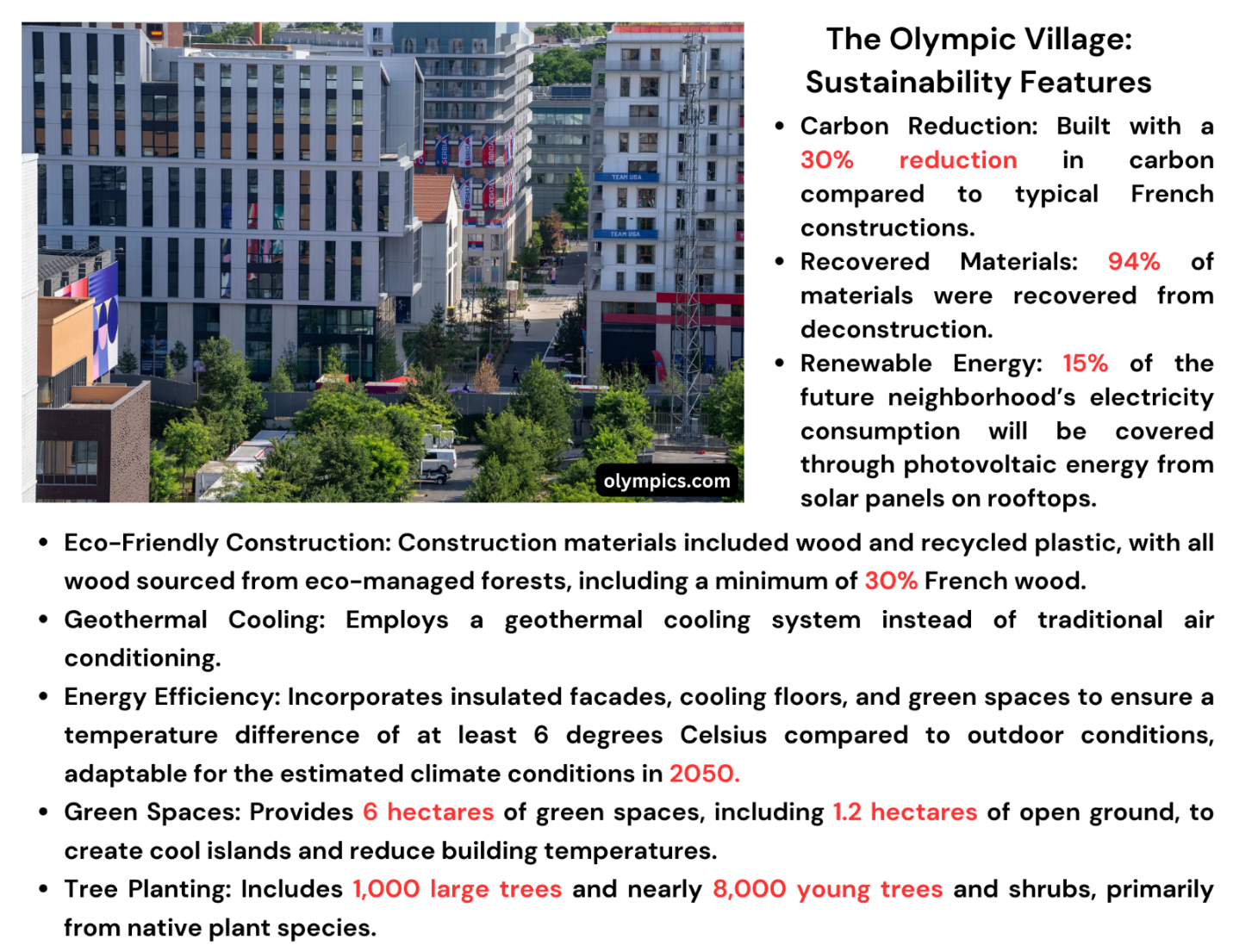 (Data Source: Olympics.com)
5)
River Seine Cleanup and Environmental
Impact:
Environmental Cleanup: Paris
undertook a major effort to clean the River Seine to ensure it met safety
standards for the 2024 Olympics, investing €1.4 billion in projects like
the construction of an underground rainwater storage tank and upgrades to water
treatment facilities (apnews.com). This cleanup aimed to address pollution caused by overflow from the
city's aging sewage system during heavy rains. The Seine was chosen to host
various Olympic events, including the triathlon and marathon swimming,
with the goal of showcasing environmental commitment and leveraging the Games
to promote urban regeneration and sustainability.
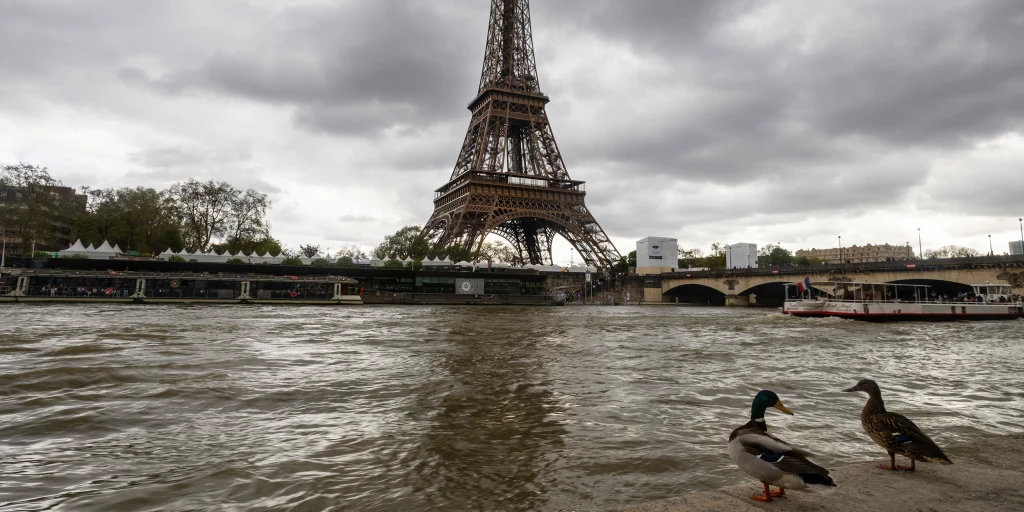 A glimpse of river Seine (Getty Images: Tim Clayton / Corbis)
During the Olympics, the men's triathlon swimming leg was
delayed due to elevated E. coli levels in the River Seine, caused by heavy
rains leading to sewage overflow. Despite significant investments to improve
water quality, water quality issues persisted. Although the triathlon event was
postponed, contingency plans, such as alternative venues and reserve days, were
implemented. Ultimately, the water quality met safety standards, allowing the
triathlon events to proceed.
6)
Renewable Energy and Energy Efficiency:
The Games operate entirely on 100% locally sourced
renewable energy from France (Wind & Solar), transitioning seamlessly away
from temporary diesel generators (Choosing renewable energy). Major venues like the Aquatics Centre and the Olympic Village are
outfitted with solar panels, while geothermal cooling systems enhance their
energy efficiency. The Athletes' village, set to become social housing
post-Olympics, incorporates sustainable features such as natural cooling
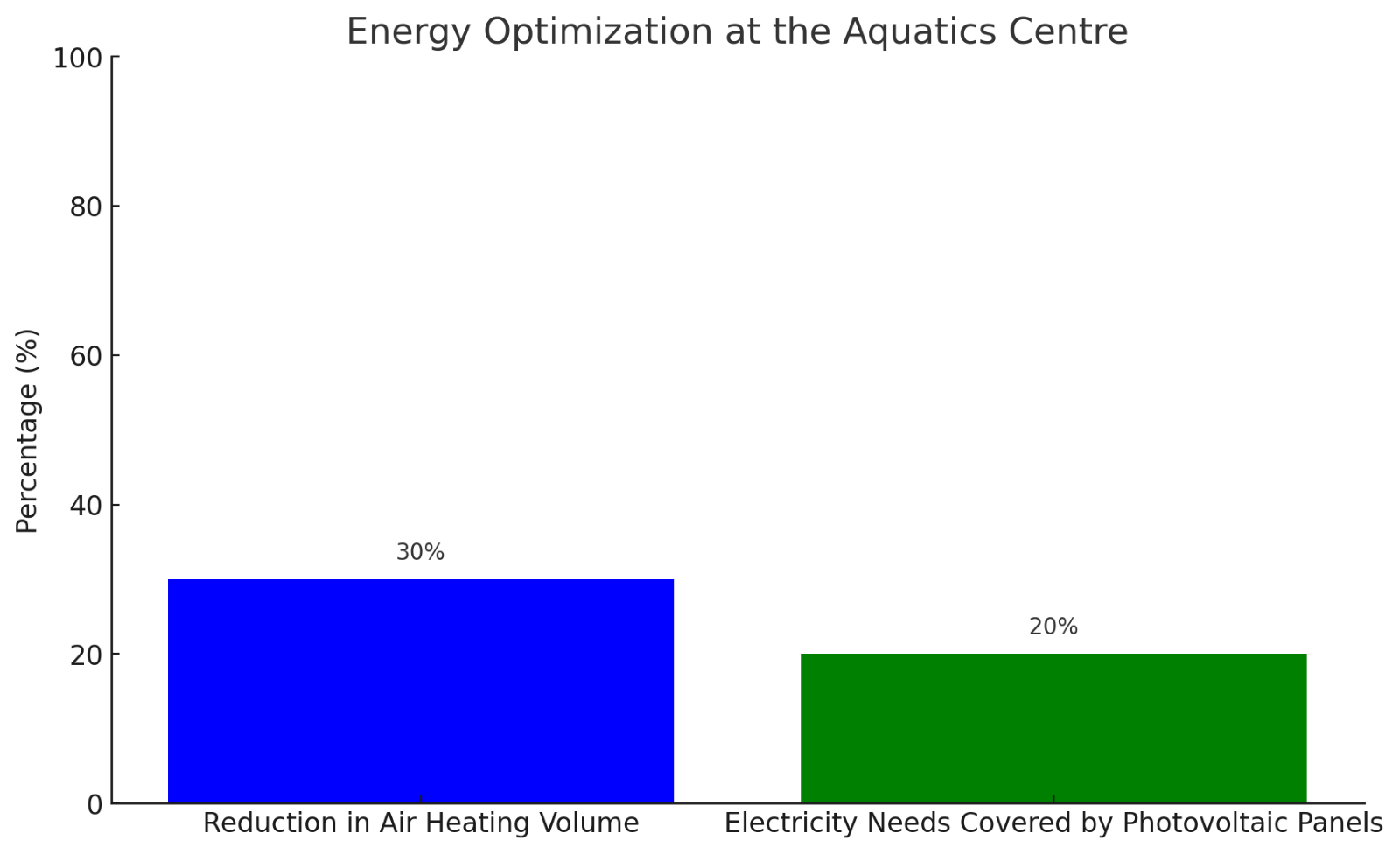
systems, despite the initial lack of built-in air conditioning. At the Aquatics
Centre, the building is designed to optimize energy consumption for both the
Games and future use. The concave roof shape reduces the volume of air needing
heating by 30%, while pool water is maintained at 28°C using heat
recovered from a neighboring data center. Additionally, photovoltaic panels on
the roof will supply approximately 20% of the building’s electricity
needs.
The geothermal cooling system has fallen short of
expectations, struggling to maintain optimal temperatures amidst the summer
heat. As a result, many participating countries have resorted to bringing
their own air conditioning units or renting them locally to ensure the
comfort of their athletes and staff. The situation highlights the challenges of
relying solely on sustainable solutions in large-scale events, underscoring the
need for backup systems to address unforeseen climate conditions.
7)
Sustainable Food:
France is renowned for its rich, meat-centric cuisine,
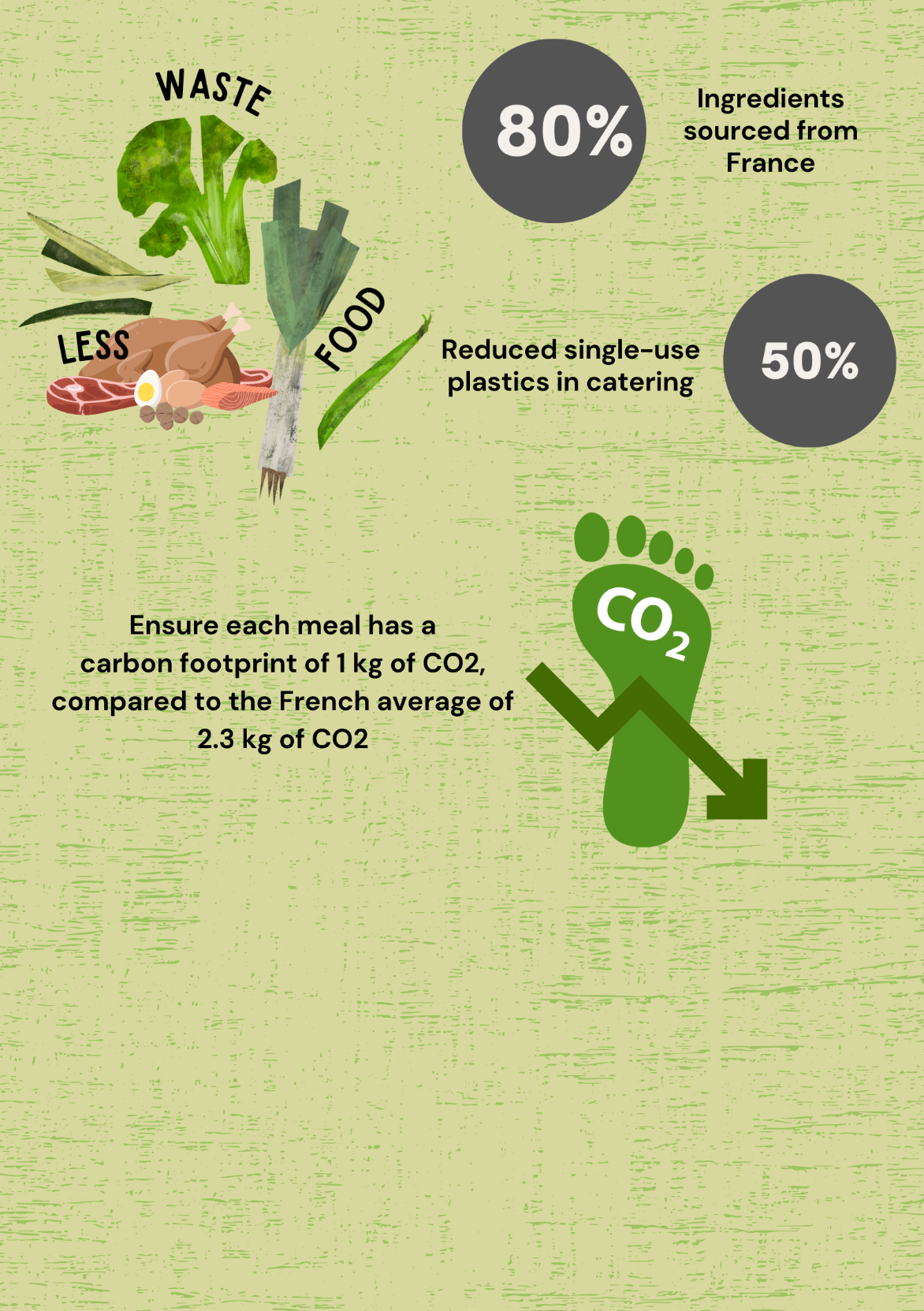
but Paris 2024 aims to reduce the carbon footprint of the 13 million meals
expected to be served during the Olympic and Paralympic Games. The Food Vision
initiative will double the amount of plant-based food compared to London 2012
and Rio 2016, with 80% of ingredients sourced from France, including all
meat and dairy products. Efforts to limit food waste and reduce single-use
plastics in catering by 50% aim to ensure each meal has a carbon
footprint of 1 kg of CO2, compared to the French average of
2.3 kg (IOC). Despite these efforts, catering is anticipated to
account for only 1% of the Games' overall carbon footprint, and concerns
remain about food waste and Coca-Cola's use of single-use plastic bottles,
raising accusations of greenwashing.

Single use plastics banned for Olympics and
Paralympics
8)
Circular Economy Approach:
Reduction, renting, and reusing are key elements of the
Paris 2024 sustainability strategy. A circular economy approach is being
implemented like fully recycled metal medals and re-using mattresses from the
athletes' village. This helps to reduce new resource use and ensure the reuse
of equipment and goods, with second lives secured for 90% of equipment
and goods and prioritizing the renting of equipment from sports federations.
The Aquatics Centre, predominantly constructed from carbon-storing timber, will
be repurposed into a community venue after the games, contributing to a lasting
legacy.
9)
Athlete Advocacy:
Numerous athletes competing in the Paris 2024 Olympics
are also sustainability advocates. They utilize their platforms to raise
awareness about environmental issues and encourage eco-friendly lifestyles.
Their dedication extends beyond competition, embodying a comprehensive approach
to health and wellness.
10)
The Intersection of Sports and
Sustainability:
The Paris 2024 Olympics underscore the unique potential
of the Games to drive environmental awareness and sustainability practices
worldwide. Despite existing challenges and criticisms, cities hosting the
Olympics can leverage the event to spark significant environmental improvements
and serve as role models for global sustainability efforts.
Reasons for choosing Tahiti: 9,765 miles from Paris.
Tahiti was chosen for the 2024 Olympic surfing events due
to its excellent surf conditions, particularly from July to August, which offer
consistent, high-quality waves. This choice supports sustainable tourism and
aims to reduce environmental impact by using existing infrastructure. Moreover,
hosting the event in Tahiti pays homage to the rich Polynesian surfing
heritage, providing a culturally significant and historically respected venue
for the sport. These factors ensure top-tier competition while promoting
sustainability and cultural recognition.
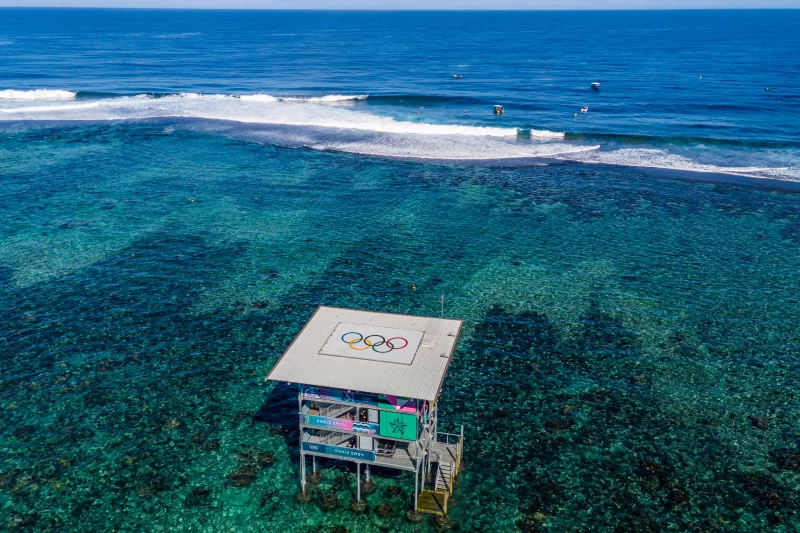 The tower for judges and the field of play Teahupo'o,
Tahiti (Getty
images)
The tower for judges and the field of play Teahupo'o,
Tahiti (Getty
images)
Challenges and Criticisms:
Despite the ambitious sustainability initiatives, the
Paris 2024 Olympics face significant challenges:
Travel and Accommodation Emissions: Approximately 50% of the Games emissions are from travel and
accommodation, posing a major hurdle in reducing the overall carbon footprint.
Greenwashing Concerns: Critics
have raised concerns about the effectiveness of carbon offsetting measures and
the potential for greenwashing. These issues call for more genuine and robust
sustainability efforts.
Future Considerations for the Olympics:
Ongoing debates question the compatibility of the
Olympics with a sustainable future. Some suggest a decentralized hosting model
or rotating games in a limited number of cities to reduce environmental
impacts. Paris's infrastructure investments serve as an example for cleaner
cities, while the sustainability efforts of Olympic organizers set a precedent
for future Games.
Novel Carbon Accounting: Methods
like Scope 4 emissions could measure the future emissions avoided due to
Olympic initiatives, highlighting long-term benefits.
Sustainable Legacies: Efforts such
as creating cycleways connecting venues enhance the positive impact of hosting
the Olympics and encourage global sustainability.
Paris, where the landmark Paris Agreement for net-zero
emissions was adopted, is now setting a strong precedent for sustainability in
the Olympics, marking a significant step forward in eco-friendly event
management. The Paris 2024 Olympics symbolizes a transformative leap by
integrating innovative infrastructure, strict environmental standards, and
respect for local communities. Despite challenges, the commitment to minimizing
the carbon footprint through various initiatives demonstrates a strong dedication
to sustainability. Though not emissions-free, Paris 2024 sets a new standard,
aligning with the Paris Agreement's goals and providing a blueprint for
eco-friendly mega-events, guiding us toward a greener future.