AI in Renewable Energy: Transforming the Future of Sustainable Energy
Published on December 12, 2024
AI in Renewable
Energy: Transforming the Future of Sustainable Energy
Artificial Intelligence (AI) is transforming industries worldwide, leaving its undeniable imprint on the renewable energy sector. As the world intensifies its focus on sustainability and clean energy, AI emerges as a vital enabler, driving efficiency, innovation, and scalability. From optimizing energy grids to predicting maintenance needs, AI is reshaping how we harness and utilize renewable energy resources. The following insights are based on a report published by Market.us, highlighting the remarkable growth and potential of AI in the renewable energy sector.
Global Market
Growth: A Rising Powerhouse
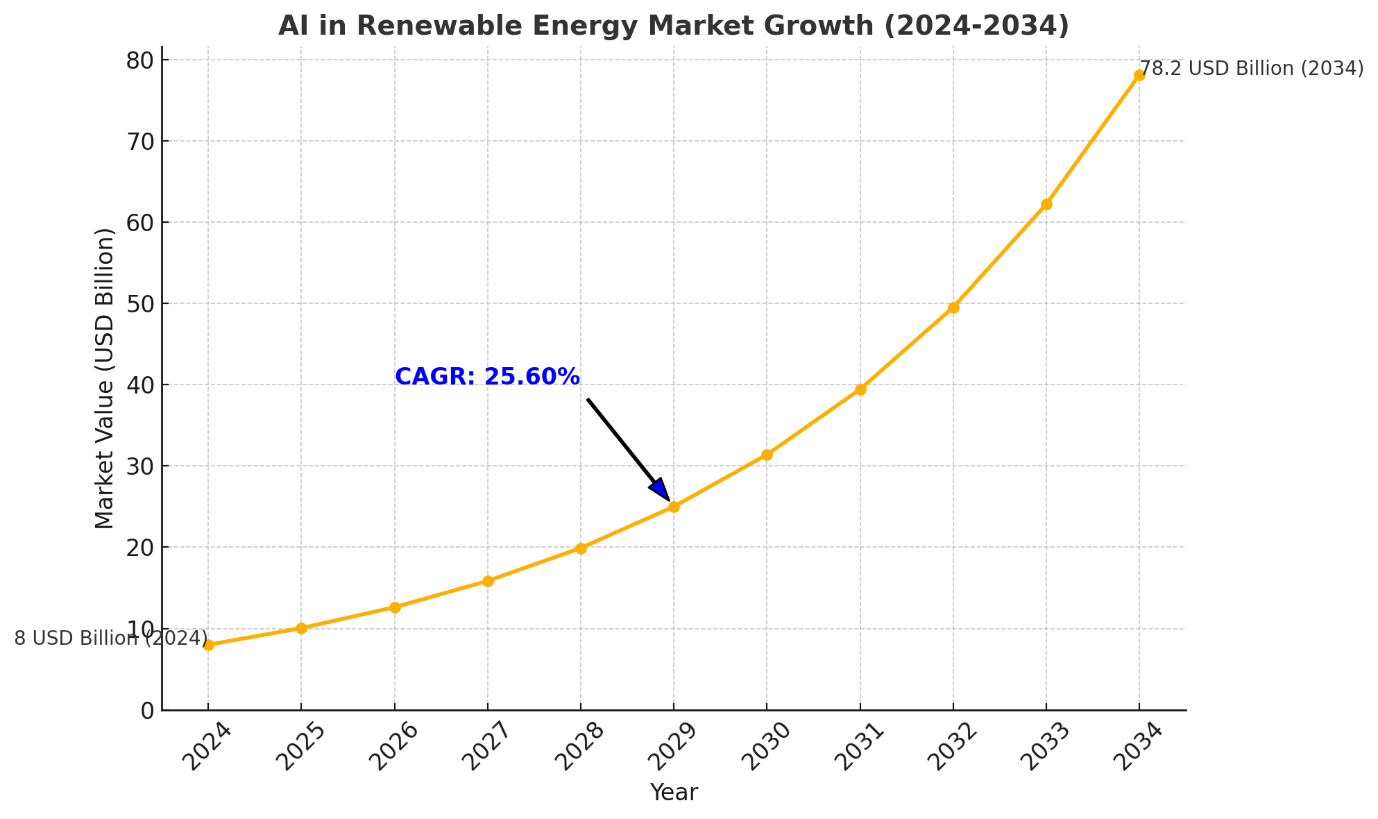
The global market for AI in Renewable Energy is set to witness unprecedented growth, projected to expand from 8 billion USD in 2024 to 78.2 billion USD by 2034, reflecting a staggering compound annual growth rate (CAGR) of 25.60%. This exponential rise underscores AI's increasing adoption as a critical tool in achieving energy efficiency, sustainability, and cost optimization.
Regional Insights:
Asia-Pacific Leading the Charge
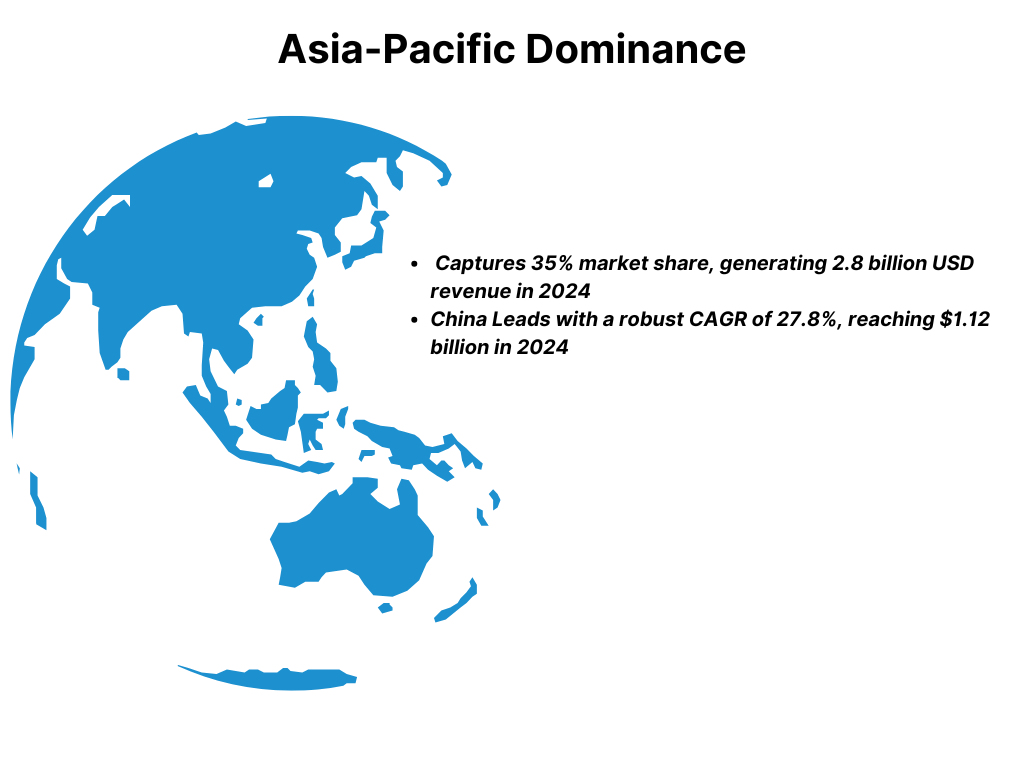
The Asia-Pacific region is expected to dominate the AI in Renewable Energy market, capturing over 35% of the market share and generating approximately 2.8 billion USD in revenue by 2024. Among the regional leaders, China stands out with a robust CAGR of 27.8%, expected to reach 1.12 billion USD in the same year. These projections reflect the region's commitment to technological innovation and renewable energy adoption.
Technology and
Innovation Driving Change
AI's role in renewable energy is characterized by groundbreaking technological advancements. Key trends and innovations include:
- Smart Grids and Energy Management Systems: AI-powered grids optimize energy distribution, minimize waste, and enhance system reliability.
- Decentralization of Energy Resources: AI facilitates the effective management of distributed energy systems, empowering communities with localized energy solutions.
- Predictive Maintenance: Leveraging AI for predictive analytics helps monitor renewable energy assets, reduce downtime, and enhance operational efficiency.
Key Market
Segments: AI's Multifaceted Applications
AI applications in renewable energy span multiple critical segments, each driving unique value:
- Cloud-Based Solutions: With over 56% market share, cloud-based AI solutions lead the market due to their scalability, operational flexibility, and real-time analytics capabilities.
- Demand Forecasting: Capturing more than 30% of the market, AI enhances energy distribution efficiency by predicting consumption patterns accurately.
- Energy Generation: AI dominates this segment with over 35% market share, improving the reliability and efficiency of energy output from renewable sources.
Benefits of AI
Integration in Renewable Energy
AI integration has transformed renewable energy operations by offering the following benefits:
- Enhanced Efficiency: AI optimizes energy distribution, reducing wastage and ensuring reliable energy delivery.
- Cost Savings: Advanced analytics lower maintenance and operational costs, promoting profitability.
- Sustainability and Compliance: AI supports regulatory compliance and advances green energy initiatives, contributing to environmental sustainability.
- Improved Decision-Making: Businesses leverage AI for data-driven strategies, boosting agility and operational excellence.
Challenges:
Barriers to Adoption
Despite its transformative potential, AI adoption in renewable energy faces notable challenges:
- High Energy Consumption: Training AI models consumes significant energy, raising concerns about sustainability.
- Cybersecurity Risks: The digital transformation of energy systems introduces vulnerabilities that require robust security measures.
Business
Implications and Opportunities
AI’s integration into renewable energy systems presents vast opportunities:
- Cost Optimization: Businesses benefit from reduced operational costs and streamlined processes.
- Competitive Edge: Key players like Google DeepMind, IBM, Siemens, and Microsoft are revolutionizing the sector with advanced solutions for grid management and energy optimization.
- Collaborative Efforts: Partnerships, such as IBM's collaboration with Sustainable Energy for All, focus on enhancing urban energy infrastructure.
The AI in Renewable Energy market stands at the threshold of transformative growth, driven by technological advancements, regulatory support, and the global push toward sustainability. As the market grows from 8 billion USD in 2024 to 78.2 billion USD by 2034, the integration of AI will redefine the renewable energy landscape, offering unprecedented efficiency, resilience, and environmental benefits.
While artificial intelligence offers significant advantages for the renewable energy sector, its integration is not without challenges. On the positive side, AI improves operational efficiency, enables better forecasting, reduces costs, and supports the large-scale adoption of clean energy systems. At the same time, concerns such as high energy consumption during model training, cybersecurity risks, and unequal access to advanced technologies cannot be ignored. The way forward lies in leveraging AI where it delivers clear value, while investing in energy-efficient algorithms, strong digital security, and responsible governance frameworks. When applied thoughtfully and transparently, AI can support renewable energy growth without undermining sustainability goals, helping the sector move steadily toward a more resilient and low-carbon energy future.