Efficiency of Solar Panels
Published on June 21, 2025
Efficiency of Solar Panels
Solar power is a rapidly expanding industry with immense
potential for sustainable energy solution. Solar panel efficiency is crucial
for capturing the sun's abundant and renewable energy supply. Understanding the
complexities of solar panel efficiency is critical for increasing power output
and contributing to a more sustainable future.
Traditional
Solar Panels
Solar panels were a key participant inside the renewable
power area for decades. Traditional solar panels, also referred to as photovoltaic
(PV) panels, make use of the photovoltaic effect to convert sunlight
into electricity. These panels are predominantly fabricated from silicon
crystals and are enormously green in changing sun energy into usable
electric strength. The performance of conventional sun panels normally ranges
from 15% to 22%, depending on different factors like weather conditions
and panel orientation.
There are two primary types of traditional solar panels: monocrystalline and
polycrystalline. Monocrystalline panels are known for their higher
performance quotes due to their uniform structure.
Also, polycrystalline panels offer a more value-powerful solution without
compromising significantly on performance.
Factors that effect the performance of solar panels
encompass daylight intensity, temperature, shading, panel orientation, and
maintenance.
How Solar Panels Work
Solar panels work by the interaction of
sunlight and solar cells known as Photovoltaic effect. These photovoltaic cells
are typically made of silicon converting sunlight into electricity through the
photovoltaic effect. When sunlight hits a solar panel, photons are absorbed
by the cells, and jump into an excited state. A stream of excited electrons is
formed that flows through the upper region of the cell forming an electric
current.
This direct current (DC) produced by the solar
panels is then converted into alternating current (AC) using an inverter,
making it compatible with household appliances and the electrical grid.
Types of Solar Panels and Their Respective Efficiency
There are three main types of solar panels
commonly used: monocrystalline, polycrystalline, and thin-film.
|
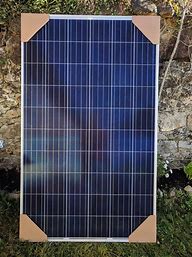
1. Monocrystalline panels are known for their high
efficiency levels due to the presence of highly pure silicon and their
uniform structure. Monocrystalline solar panels typically have an
efficiency rate of 15% to 20%, making them one of the most efficient
options available in the market |
|
|
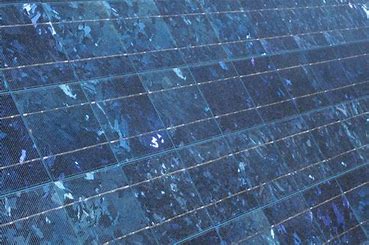
2. Polycrystalline
panels
offer a more cost-effective option with slightly lower efficiency.
Polycrystalline panels are made from raw silicon and have an
efficiency rate around 15%, balancing cost and performance. |
|
|
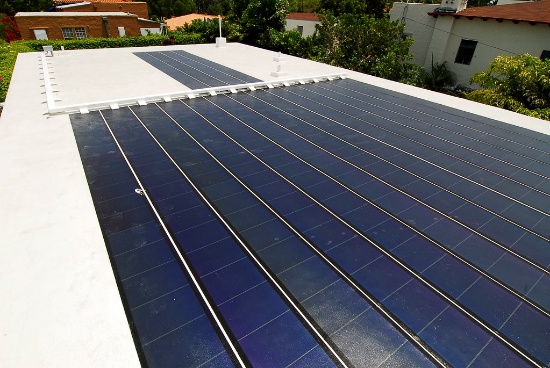
3. Thin-film panels are flexible
and lightweight, due to the presence of amorphous silicon, cadmium
telluride or gallium. Thin-film solar panels generally have lower
efficiencies ranging from 7% to 10%. |
|
Factors Affecting Solar Panel Efficiency
Solar panel efficiency can be influenced by
various factors, both internal and external.
·
One important factor is the angle
at which the panels are installed relative to the sun. Panels that are not
positioned optimally may receive less sunlight, leading to reduced efficiency.
·
Additionally, the cleanliness
of solar panels plays a significant role in their performance. Presence of
dust, dirt, or debris on the panels can block sunlight and affect energy
production.
·
Another crucial factor that
influences solar panel efficiency is temperature. High temperatures
generally reduce the efficiency of solar panels as they work more effectively
in cooler conditions.
·
Furthermore, solar panels are sensitive
to solar shadings. Shading caused by nearby buildings, trees, or
other obstructions casting shadow to a single cell can cause virtual shading
to the whole series resulting in low energy output.
By addressing these factors through proper
installation, maintenance, and monitoring, the overall efficiency of solar
panels can be enhanced for maximum energy generation.
Methods to Enhance the Efficiency of Solar Panels
·
One of the key enhancing strategy is Solar tracking systems which optimizes
solar panel angles for maximum irradiation.
They are classified into two types: single-axis and dual-axis trackers, with
dual-axis providing higher efficiency. Studies shows that single axis
tracker increases efficiency by 32.17% whereas double axis
tracker increases efficiency by 81.68%. The average daily
intensity per unit area increases by 13.8% (single-axis) and 22.5% (dual-axis)
when sun tracking system is used.
When Fuzzy-based and hybrid tracking systems are integrated the
efficiency increases even more. They achieve 78% of nominal output
power. Various strategies are combined in solar tracking to maximize solar
energy use.
·
Another crucial strategy to
enhance solar panel efficiency is by integrating sun-tracking technology with Concentrating
mirrors. Factors like temperature, tilt angle, dust, and shadowing
impact the efficiency of solar panels.
Accumulation of dust decreases with increased tilt, and at a 20°
tilt, maximum energy is produced. Concentrated photovoltaics offers a cost-effective
solution to increase power by directing sunlight using lenses or mirrors.
Using coolants and mirrors results in a 52% boost in
output. Quantum dot concentrators are more cost-effective and
offer superior heat management.
·
Cleaning and maintaining
solar panels on a regular basis is
another efficient way to increase their efficiency. The amount of sunlight
the solar panels absorb significantly decreases by the collection of dust,
dirt, and debris. By keeping the solar panels free from any obstacles to absorb
more sunlight we can ensure optimal performance of the solar panels.
Recent Researches to Increase the Efficiency of Solar Panels
MIT researchers have enhanced perovskite
solar cell efficiency to 25.2% by integrating a specially treated tin
dioxide conductive layer and modifying the perovskite composition.
Perovskite is a calcium titanium oxide mineral composed of calcium titanate.
Perovskites are a broad class of materials defined by the fact that they have a
particular kind of molecular arrangement, or lattice, that resembles
that of the naturally occurring mineral perovskite. This advancement surpasses
typical silicon-based solar cells, increasing the efficiency from 20% to 25%.
Perovskites are promising due to their potential for low-cost, low-temperature
manufacturing of ultrathin, lightweight, flexible cells.
Scopes & Future Prospects
Advancement in technology and progression in
research is continuously expanding for solar energy. Innovative materials and
designs are being explored to create affordable and sustainable solar panels
with increased efficiency.
With ongoing advancements in nanotechnology, physical & life science, and
artificial intelligence it creates a bigger promise for the enhancement of
solar panels for a sustainable, cleaner & greener energy source.