Khavda Renewable Energy Park: A New Era in Green Power
Published on November 18, 2025
Khavda Renewable Energy Park: A
New Era in Green Power
Adani Green Energy
Limited (AGEL) is leading the way
with the development of the Khavda Renewable Energy
Park in Kutch district, Gujarat. The huge project will be the world's largest
hybrid wind and solar energy project, a first for India's transition to clean
energy. In addition to being merely a power project, it represents India's
commitment to spearheading the world struggle against climate change and
creating a sustainable future.
Project Overview
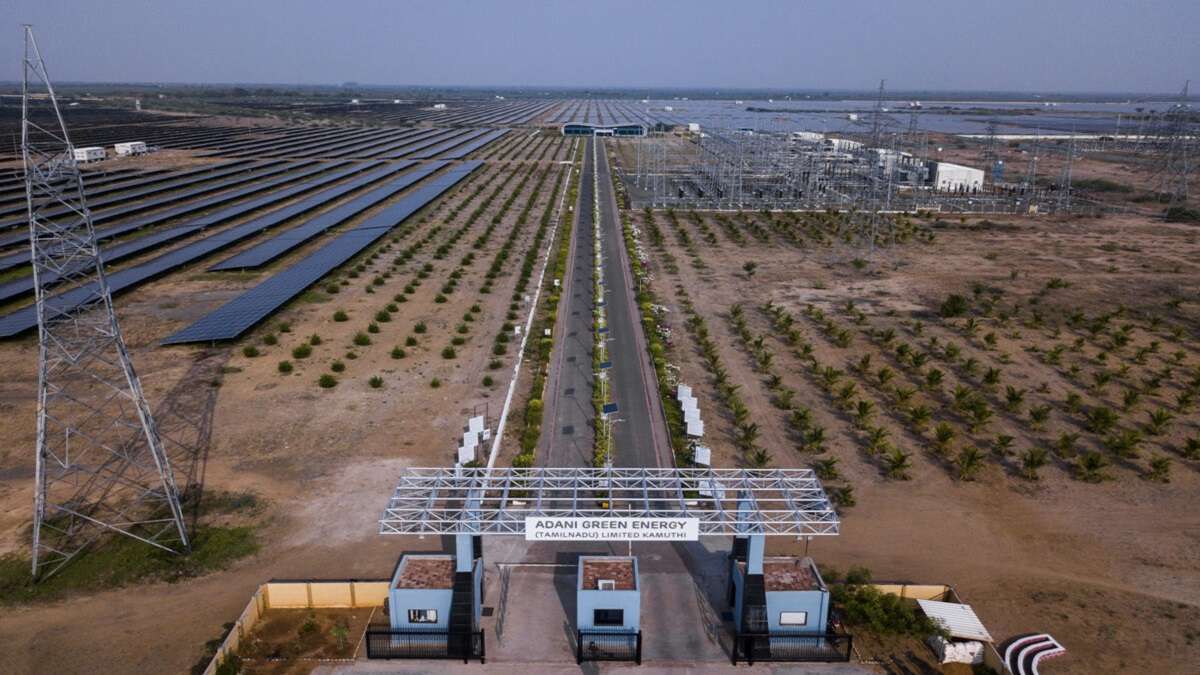
The Khavda Renewable Energy Park is a mega and
record-scale project, planned to reach an overall generation capacity of 30 gigawatts (GW) by
leveraging both solar and wind power technologies. What is even more
impressive is the extent of the location—its expanse will be around 538 square kilometers, nearly five-and-a-half times larger than Paris. Based in one of
India's sunniest and driest regions, the park fully capitalizes on the area's
high solar irradiance and wind energy potential.
India has ambitious plans to reach 500 GW of non-fossil fuel capacity by
the year 2030, and the Khavda project is the epitome
of that dream. It not only adds to the installed renewable capacity of the
country but also establishes a new international benchmark of scale,
integration, and technological advancement in green energy infrastructure.
Development Milestones
The mega project journey began officially in December 2022, when the
development was initiated in the first phase. In less than a year, AGEL marked
a major milestone by initiating power generation on December 31, 2023—a
reflection of the company's quick execution skills. By March 2024, the project
had already operationalized 1,000 megawatts (MW) of solar power, which is a
major feat within such a short period.
In the future, AGEL will introduce another 4 GW of capacity in the
current financial year. It aims to reach 6 GW by March 2025, and then continue
to add at least 5 GW every year. This staged process ensures scalability
without compromising operational excellence. If this pace continues, the whole
30 GW capacity will be fully developed and operational within the next five
years.
Source: Adani Green Energy
Press Release, AGEL ESG Report 22-23
Environmental and
Economic Impact
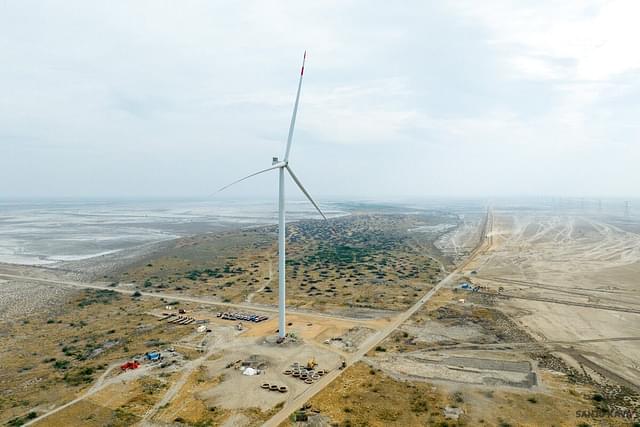
The environmental benefits of the Khavda
Renewable Energy Park are tremendous. On completion, the project is estimated
to produce about 81 billion kilowatt-hours (kWh) of renewable energy each year.
That is sufficient electricity to power more than 16 million homes and cut down
fossil fuel dependence enormously, as well as lead to better air quality and
public health results.
Based on carbon savings, the project would be cancelling nearly 58
million metric tons of CO₂ every year—that's
taking over 12 million cars off the roads every year. That scale of reduction
has an immediate implication that is highly affirmative towards supporting
India's Nationally Determined Contributions (NDCs) as part of the Paris
Agreement, and the mitigation goals at large globally.
From an economic perspective, the project is also a significant
employment and regional development driver. It is projected to generate more
than 15,200 green jobs, providing opportunities in construction, operations,
maintenance, and support services. For a comparatively underdeveloped region
such as Kutch, this job influx can assist in stimulating the local economy,
developing capacity, and promoting sustainable livelihoods for communities.
Source: Adani Green Energy –
Project Details
Technological
Innovations
Innovation is the core of the Khavda project.
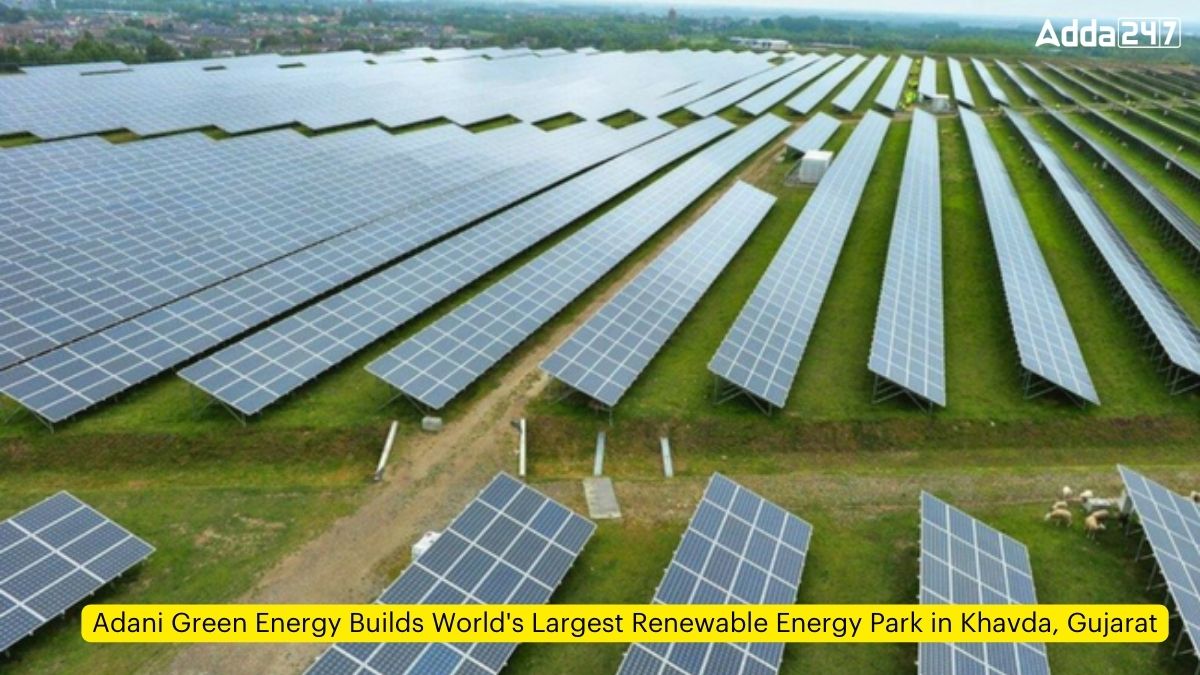
AGEL is harnessing advanced technologies to ensure a high energy return and
operating efficiency. A remarkable aspect is that bifacial solar modules are
used, which will be able to capture the sunlight from both the sides of the
panel—thereby generating a 10–15% boost in energy generation compared to the
traditional panels.
Another innovation that is very important is the use of robotic
waterless solar cleaning systems. In the dusty and dry climate of Kutch, dust
buildup on solar panels can significantly lower efficiency. These cleaners are
robotic and ensure maximum performance without the use of water, thereby
conserving a limited natural resource and maintaining sustainable performance
in a desert environment.
Advanced digital monitoring equipment, AI-driven performance
optimization analytics, and predictive maintenance programs are also being
incorporated into the project, which makes it a smart and future-proof
renewable energy facility.
Source: Khavda Renewable Energy Park – Wikipedia
Strategic
Collaborations and Global Confidence
AGEL's capacity to implement such a large project has drawn large-scale
international cooperation and investment. Perhaps the most prominent
partnership is with TotalEnergies, a world leader in energy, which has joined
forces with AGEL in a joint venture. Together, their efforts add to a solar
portfolio of over 1 GW, not only injecting capital but also technical know-how
and global best practices.
Such strategic partnerships highlight international faith in India's
renewable energy sector and AGEL's potential as a sound and innovative ally.
They also highlight a larger pattern of cross-border cooperation towards the
global clean energy transition—a pattern that is likely to gain momentum as
nations cooperate to achieve net-zero ambitions.
Source: Adani Green and TotalEnergies JV – Adani Website
Looking Ahead: A
Blueprint for the Future
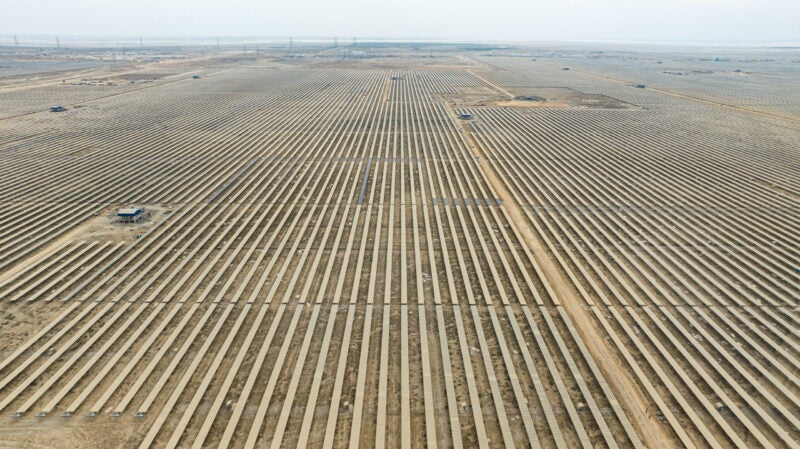
The Khavda Renewable Energy Park is not merely
an enormous infrastructure development project—it is a visionary master plan
for the future of energy. It's a prime example of how nations like India can
utilize their natural resources, engineering capabilities, and policy help to
develop world-class renewable energy hubs. AGEL's initiative in this regard
adds strength to India's international leadership in the renewable energy space
and is an inspiration for others to emulate.
While the world struggles with the dual imperatives of energy security
and climate change, initiatives such as Khavda show
that it is possible to scale up clean energy fast, cheaply, and in a
sustainable manner. The success of this park could well lay the foundation for
the next wave of renewable energy development—not just in India but worldwide.
Conclusion
The Khavda Renewable Energy Park is a landmark
project that embodies the ambition, innovation, and dedication needed to shift
to a sustainable energy future. With its record-breaking size, state-of-the-art
technology, and strong implementation plan, the project places Adani Green
Energy Limited on the world's energy transition map as a pioneer.
By combining solar and wind energy in a synergistic and scalable way,
the park does not just bring India within reach of its renewable energy goals
but sets an entirely new global standard for the development of green
infrastructure. The tale of Khavda is only just
unfolding, but its legacy will be felt for decades to come—as a shining example
of progress, of sustainability, of hope.