How Much CO₂ is in Your Morning Coffee? The Hidden Emissions of Milk
Published on April 15, 2025
How
Much CO₂
is in Your Morning Coffee? The Hidden Emissions of Milk
A Greener Glass: How to Make More Sustainable Milk
Choices
Whether we start our day with a refreshing glass of
milk, pour it into our morning tea or coffee, or add it to our cereal bowl,
milk has become an essential part of our daily lives. However, while we often
think about the nutritional benefits of milk, we may overlook its environmental
impact.
The dairy industry is a major contributor to
greenhouse gas (GHG) emissions, while plant-based alternatives vary in their
environmental impact based on factors like water usage, land requirements, and
production emissions. Making informed choices about the milk we consume can
play a small yet significant role in building a more sustainable future. Let us
take a closer look at how different types of milk contribute to our carbon
footprint.
The Carbon Footprint
of Dairy Milk
Milk production has a significant environmental impact and requires
substantial resources. Its carbon footprint is influenced by several key
factors:
- GHG
Emissions: Producing one litre of dairy milk generates
approximately 3.2 kg of CO₂-equivalent
emissions considerably higher than most plant-based alternatives. These
emissions arise from multiple sources:
- Methane Production:
Cows release methane during digestion, a greenhouse gas with a much
higher global warming potential than CO₂.
- Manure Management:
The handling and storage of manure contribute to methane and nitrous
oxide emissions.
- Feed Production:
Growing feed crops involves fertilizers, irrigation, and machinery, all
of which add to CO₂
emissions.
- Land
and Water Usage: Producing one litre of dairy milk requires
approximately 8.9 m² of land and 628 litres of water. The
land used for dairy farming could otherwise support carbon-sequestering
vegetation, while the high water consumption
contributes to resource depletion.
The Dairy Industry's Contribution to Global GHG Emissions
The
dairy sector is a significant contributor to greenhouse gas (GHG) emissions
worldwide. Key statistics highlight its impact:
·
Global
Emissions: The
dairy industry is responsible for approximately 4.0% of total human-induced GHG emissions. These emissions arise not only from
milk production but also from processing, transportation, and supply chain
operations.
·
Regional
Differences:
Emission levels vary across regions due to differences in herd management,
farming techniques, and production efficiency. Developed countries, which
commonly adopt advanced technologies and sustainable practices, tend to have
lower emissions per litre of milk compared to many developing regions, where
traditional methods are more prevalent.

Figure: Breakdown of greenhouse gas emissions for
dairy production across different regions and years, highlighting the impact of
factors like enteric fermentation, manure management, feed, and fertilizer.
(Source: Mapping the carbon footprint of milk production from cattle: A
systematic review Mazzeto et al.)
Comparing Plant-Based
Milk Alternatives
Plant-based milk has emerged as a more environmentally friendly
alternative to dairy milk. Below is a comparison of some of the most common
options based on their environmental impact and nutritional profile.
Almond Milk
- GHG
Emissions: Produces approximately 0.7 kg of CO₂-equivalent emissions per litre.
- Water
Usage: Almond farming requires significant water
resources, consuming about 371 litres of water per litre of almond milk.
- Nutritional
Profile: Lower in calories and protein compared to
dairy milk.
Soy Milk
- GHG
Emissions: Generates around 0.98 kg of CO₂-equivalent emissions per litre.
- Water
Usage: Requires approximately 0.66 m² of land and
28 litres of water per litre.
- Nutritional
Profile: A strong alternative with protein content
comparable to dairy milk.
Oat Milk
- GHG
Emissions: Produces around 0.9 kg of CO₂-equivalent emissions per litre.
- Water
Usage: Requires about 0.76 m² of land and 48
litres of water per litre.
- Nutritional
Profile: Rich in vitamins and minerals with a moderate
protein content.
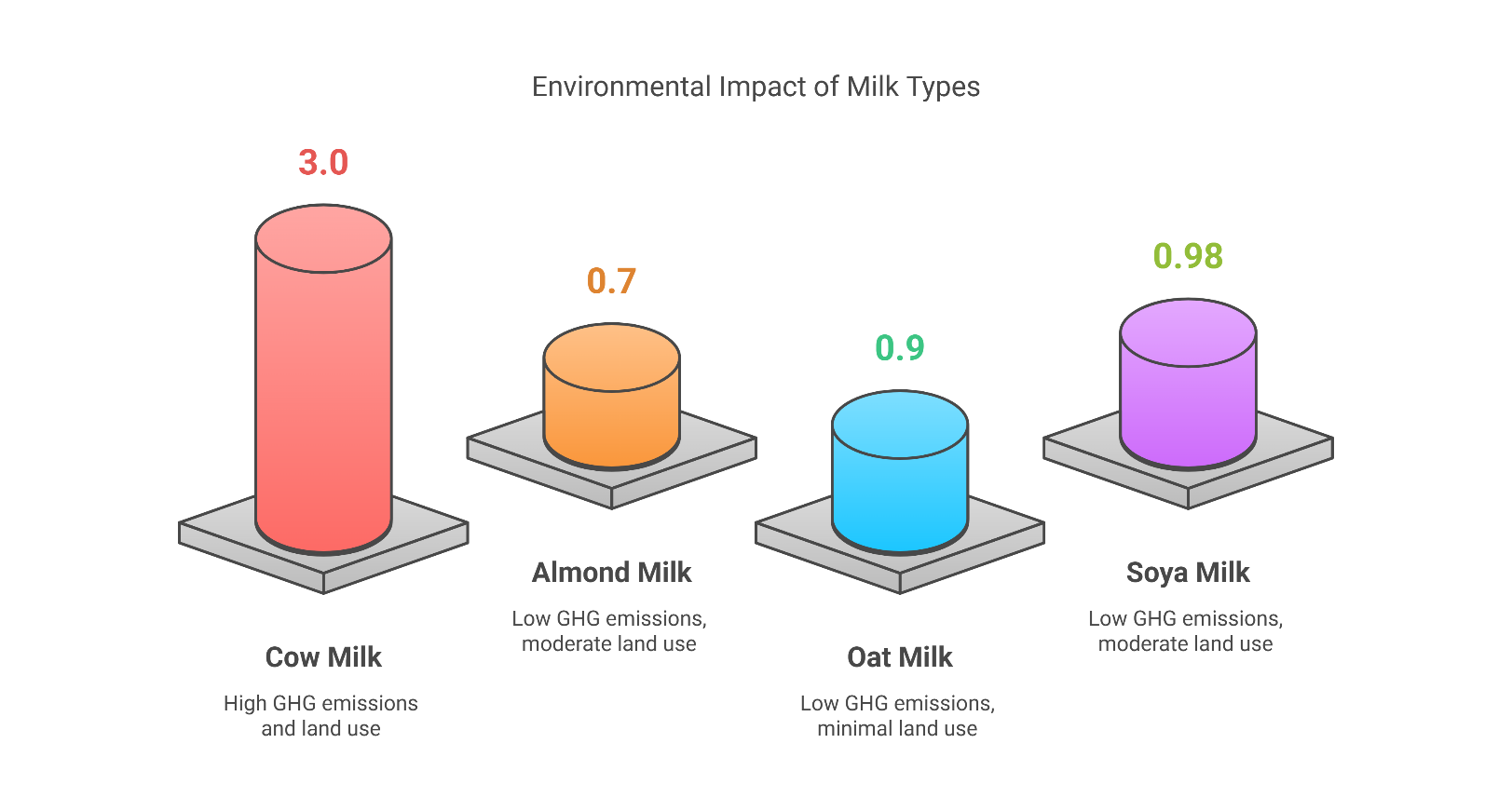
Figure: Comparative
environmental impact of different milk types, showcasing their greenhouse gas
emissions and land use.
Making Sustainable
Choices
Reducing the environmental impact of milk consumption can be as simple
as making mindful choices. Here are some ways to make a more sustainable
impact:
- Opt for Plant-Based
Alternatives: Choosing plant-based milks like oat or soy
can significantly reduce your carbon footprint. These alternatives
generally require fewer resources, such as land and water, and generate
lower greenhouse gas emissions compared to dairy milk.
- Support
Sustainable Dairy Practices: If you prefer dairy, look for producers
committed to sustainable farming. Methods such as regenerative
agriculture, improved manure management, and feed optimization can
help mitigate environmental harm and lower emissions.
- Check
Labels for Added Sugars and Additives: Some plant-based milks contain added
sugars, stabilizers, or preservatives. Reading labels carefully ensures
that your choice aligns with both health and sustainability goals.
Additional Ways to
Make a Difference:
- Choose
Organic or Locally Sourced Milk: Organic dairy farming often follows
better animal welfare and environmental practices. Locally produced
milk (whether dairy or plant-based) helps reduce emissions from
transportation.
- Consider
Packaging Impact: Opt for brands that
use eco-friendly packaging or offer refillable or recyclable
options to further minimize waste.
- Reduce
Milk Waste: Only buy and consume what you need. Proper
storage can prevent spoilage, and using milk alternatives in multiple
ways (smoothies, baking, cooking) can help minimize waste.
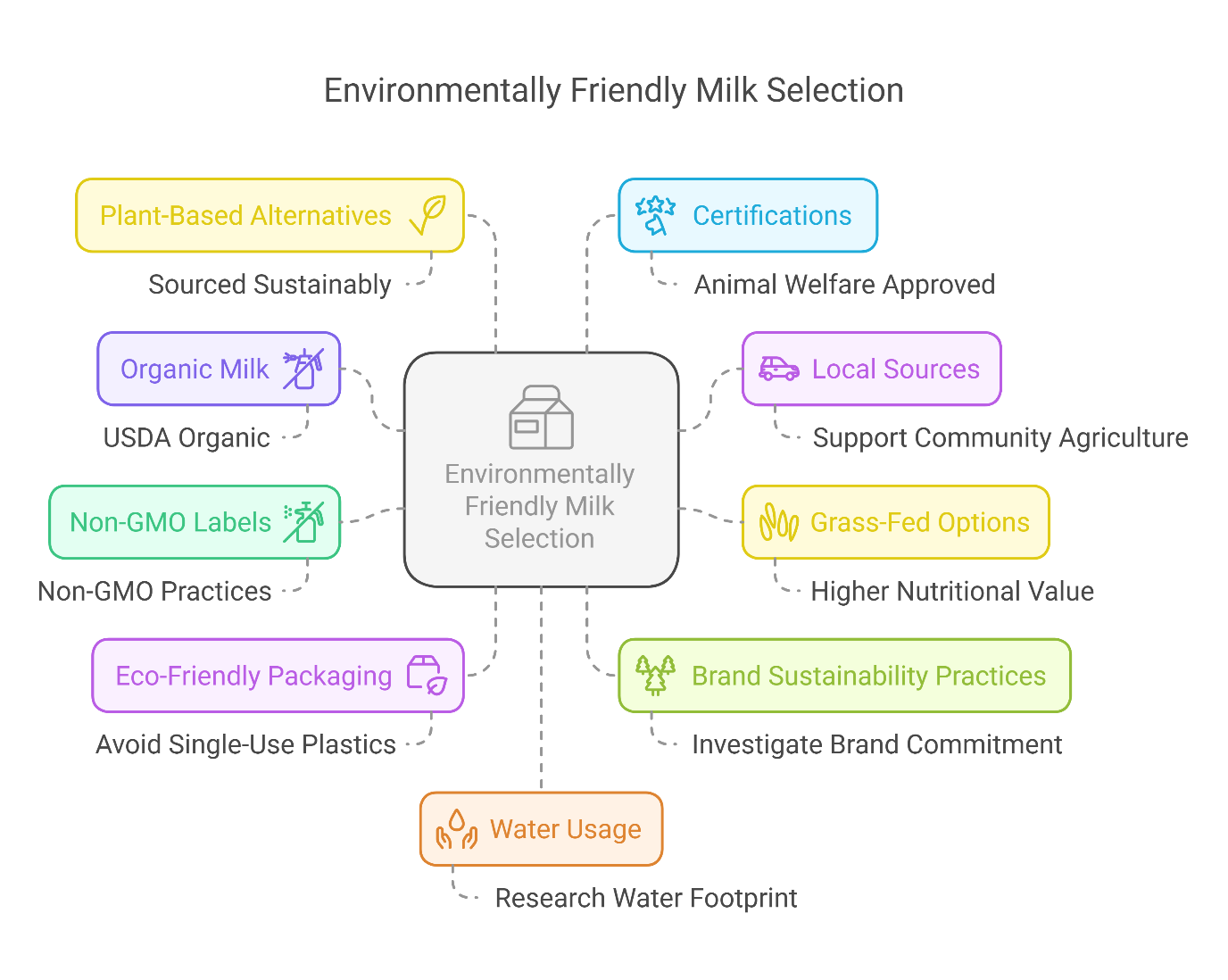
A guide to selecting
environmentally friendly milk options, including factors such as plant-based
alternatives, local sources, eco-friendly packaging, and certifications.
Being
aware of the environmental impact of both dairy and plant-based milk allows us
to make informed choices that support sustainability. Small, conscious
decisions such as opting for a milk alternative with a lower carbon footprint
or supporting sustainable dairy farming can collectively make a significant
difference. By choosing responsibly, we can reduce greenhouse gas emissions,
conserve natural resources, and contribute to a healthier planet for future
generations. Every step toward sustainability, no matter how small, helps
create a more environmentally responsible way of living.