European Union’s CBAM: A New Carbon Cost on India’s Exports
Published on February 10, 2026
European Union’s CBAM: A New Carbon Cost on India’s
Exports
The European Union’s Carbon Border Adjustment Mechanism (CBAM) marks a significant shift in how international trade and climate policy intersect. Launched as a part of the EU’s broader climate strategy to achieve net-zero emissions by 2050, CBAM is designed to ensure that imported goods face a carbon cost equivalent to that paid by EU producers under the existing Emissions Trading System (ETS). This policy, which entered its definitive implementation phase on January 1, 2026, places a price on the greenhouse gas emissions embedded in selected carbon-intensive products entering the EU market, fundamentally altering traditional trade flows and competitive dynamics.
What Is CBAM and Why Was It Introduced?
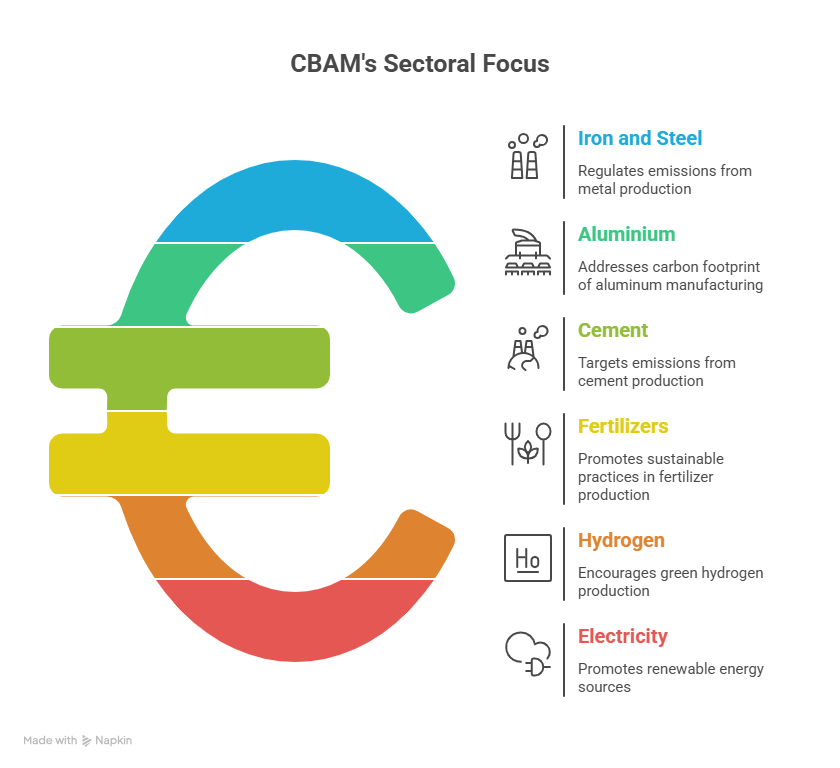
At its core, CBAM is a carbon tariff on imports. It applies to goods from sectors that are both emissions-intensive and trade-exposed such as iron and steel, aluminium, cement, fertilizers, hydrogen, and electricity. By requiring importers to either purchase carbon certificates or report the actual embedded emissions of these products, the EU ensures that foreign producers shoulder a similar carbon cost as their European counterparts. This approach seeks to prevent carbon leakage, a phenomenon where production shifts to countries with weaker climate policies, thereby undermining the EU’s own emissions reduction efforts.
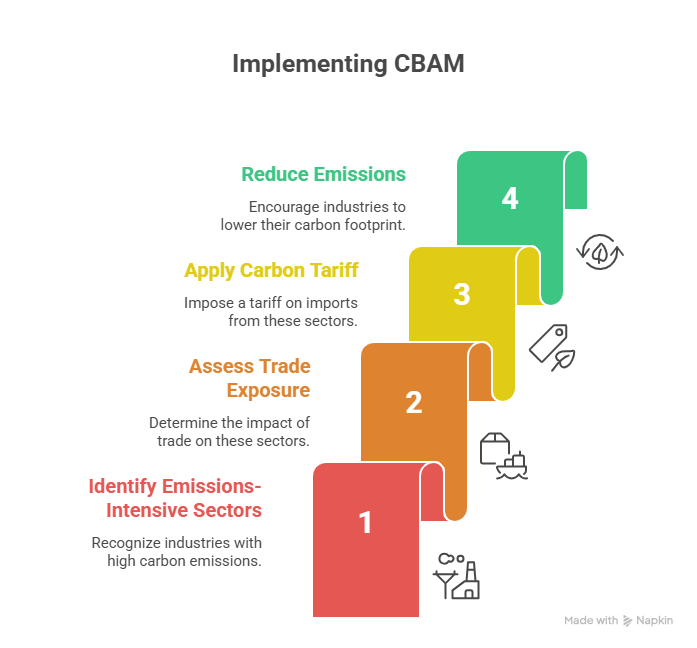
CBAM complements the EU’s existing ETS, a cap-and-trade program that has been in place since 2005 and imposes costs on carbon emissions from within the EU. By extending carbon pricing to imports, the EU aims to create a level playing field for domestic and foreign producers and reinforce its climate leadership.
Implications for India’s Export Sector
India is a major trading partner of the European Union, with a considerable share of its exports heading to Europe. Many of these products, especially steel, aluminium and other heavy industrial goods, fall squarely within CBAM’s scope. Estimates suggest that around USD 8 billion worth of Indian exports potentially fall under regulations similar to CBAM, with significant portions of Indian steel and aluminium, destined for the EU market.
For Indian exporters, CBAM introduces a dual challenge:
- Reporting
and Compliance Burden
Exporters will need to measure and verify the embedded carbon emissions of their products. This requires robust carbon accounting frameworks and verified data. Those unable to supply credible information may be subject to default values set by the EU, which often reflect higher emissions assumptions, effectively increasing the carbon cost of exports. - Competitive
Disadvantage
India’s electricity grid still relies heavily on fossil fuels, especially coal. The average grid emission factor remains comparatively high, meaning Indian products are inherently more carbon-intensive unless cleaner energy sources are demonstrably used in production. This can raise the effective cost of exports, making them less competitive in the EU market.
Experts suggest that products with lower emissions especially when backed by renewable power or verified green energy usage, stand to retain a competitive edge. In this context, renewable energy adoption and energy efficiency become not just environmental goals, but commercial imperatives.
Economic and Policy Considerations
While CBAM is poised to impact sectors like steel and aluminium significantly, the broader macroeconomic effects on India may be moderate. Some economic studies indicate that CBAM-covered exports account for a relatively small share of India’s GDP, though targeted sectors could experience measurable declines without mitigation measures.
India has expressed concerns about CBAM’s fairness, arguing that it disproportionately shifts the costs of decarbonisation onto developing countries that were granted greater flexibility under global agreements like the Paris Accord. Indian officials have characterized parts of CBAM as a non-tariff trade barrier, potentially complicating negotiations on trade agreements such as a future EU-India free trade pact.
Opportunities Amid Challenges
Despite these hurdles, CBAM also presents a strategic opportunity. As global markets increasingly emphasize low carbon footprints, Indian industries that pivot toward cleaner production methods through renewable energy adoption, energy efficiency, and transparent emissions reporting can enhance their export competitiveness.
For instance:
- Sourcing electricity from renewable energy can lower the carbon intensity of products, especially in energy-intensive manufacturing.
- Implementing robust carbon accounting and verification systems can reduce reliance on punitive default emission values.
- Accelerator programmes and policy support for decarbonization can help Indian exporters adapt faster.
Thus, while CBAM introduces new costs and compliance requirements, it also acts as a catalyst for broader climate action and alignment with international sustainability standards.
The European Union’s Carbon Border Adjustment Mechanism represents a transformative nexus between climate policy and international trade. For Indian exporters, especially those in carbon-intensive industries, CBAM means adapting not only to changing market rules but also to evolving expectations around environmental responsibility and carbon transparency.
In an era where climate credentials increasingly shape trade flows, proactive decarbonisation and strategic engagement with global carbon pricing norms will be key to maintaining India’s export competitiveness and supporting its long-term sustainable development goals.