Great Indian Bustard, Renewable Energy & Corporate Responsibility: Balancing Biodiversity with Clean Energy Expansion in India
Published on February 2, 2025
Great Indian Bustard, Renewable Energy & Corporate
Responsibility: Balancing Biodiversity with Clean Energy Expansion in India
Introduction
The critically endangered Great Indian Bustard (Ardeotis nigriceps) - locally known as Godawan has become a central symbol in India’s emerging environmental jurisprudence, where biodiversity protection intersects with renewable energy infrastructure development, corporate accountability under ESG (Environmental, Social & Governance) frameworks, and Corporate Social Responsibility (CSR) norms.
Once widespread across the Indo-Gangetic plains and arid regions, the Great Indian Bustard’s numbers have dwindled drastically from hundreds in the early 2000s to fewer than 200 individuals confined largely to parts of Rajasthan and Gujarat today. The bird’s status on the IUCN Red List as Critically Endangered reflects the severity of threats it faces from habitat loss, agriculture expansion, collision with overhead power transmission lines, and infrastructure sprawl, including renewable energy developments, which ironically seek ecological benefits through reduced carbon emissions.
Why the Case Matters
At the heart of the matter is a legal and ethical question: How can India meet its ambitious climate goals and energy needs through renewable infrastructure without sacrificing the last viable populations of an iconic species and the fragile ecosystems it inhabits?
This dilemma has anchored one of the most important environmental and energy policy cases in recent Indian judicial history with profound implications for policymakers, energy corporations, civil society, and environmental governance.
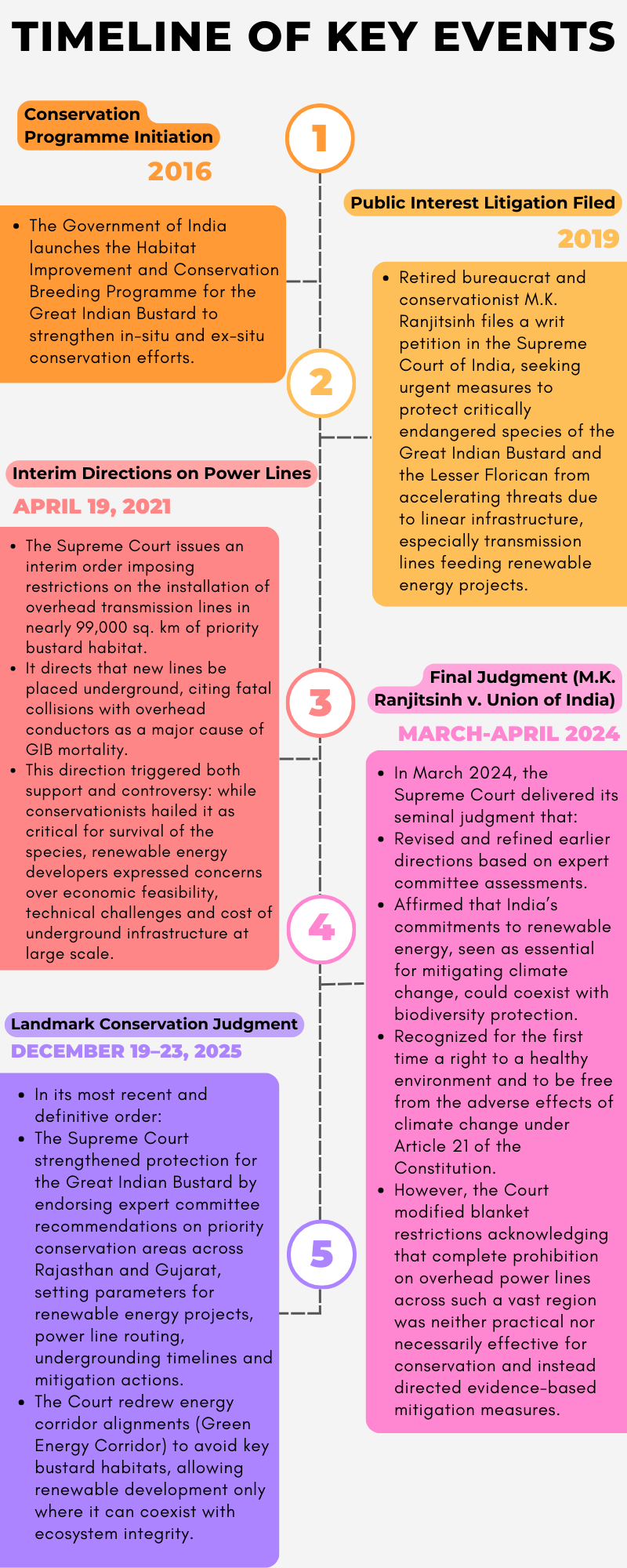
Most importantly, the Bench underscored that Corporate Social Responsibility (CSR) must inherently include environmental and ecological protection - not as charity but as a constitutional obligation under Article 51A(g) - and therefore corporate action frameworks like ESG reporting and CSR spending should prioritize biodiversity outcomes and ecological safeguards.
Judgment Reasoning: Constitutional & Environmental Mandates
The Supreme Court’s multi-year adjudication rests on several pillars:
1. Constitutional Duty of Environmental Protection
- Article 21 of the Constitution (Right to Life) intrinsically includes a right to a healthy environment, free from ecosystem degradation.
- Article 51A(g) imposes a fundamental duty on all citizens and, by logical extension, corporate actors to protect and improve the natural environment.
The Court explicitly held that CSR funds are a “tangible expression” of this duty, rejecting the narrow view of CSR as voluntary philanthropy. Corporate expenditures on biodiversity protection, mitigation measures for transmission lines, and habitat restoration are within the legal ambit of environmental responsibility.
2. Balanced Approach to Development and Conservation
Rather than an absolutist ban on renewable energy infrastructure, the Court adopted an ecocentric developmental balance:
- Renewable energy expansion is vital for climate goals and energy access.
- Excessive ecological damage especially to a species on the brink of extinction is unacceptable.
By routing power lines away from priority habitats and mandating undergrounding and mitigation timelines, the judgment seeks to operationalize sustainable development rather than pit climate action against biodiversity conservation.
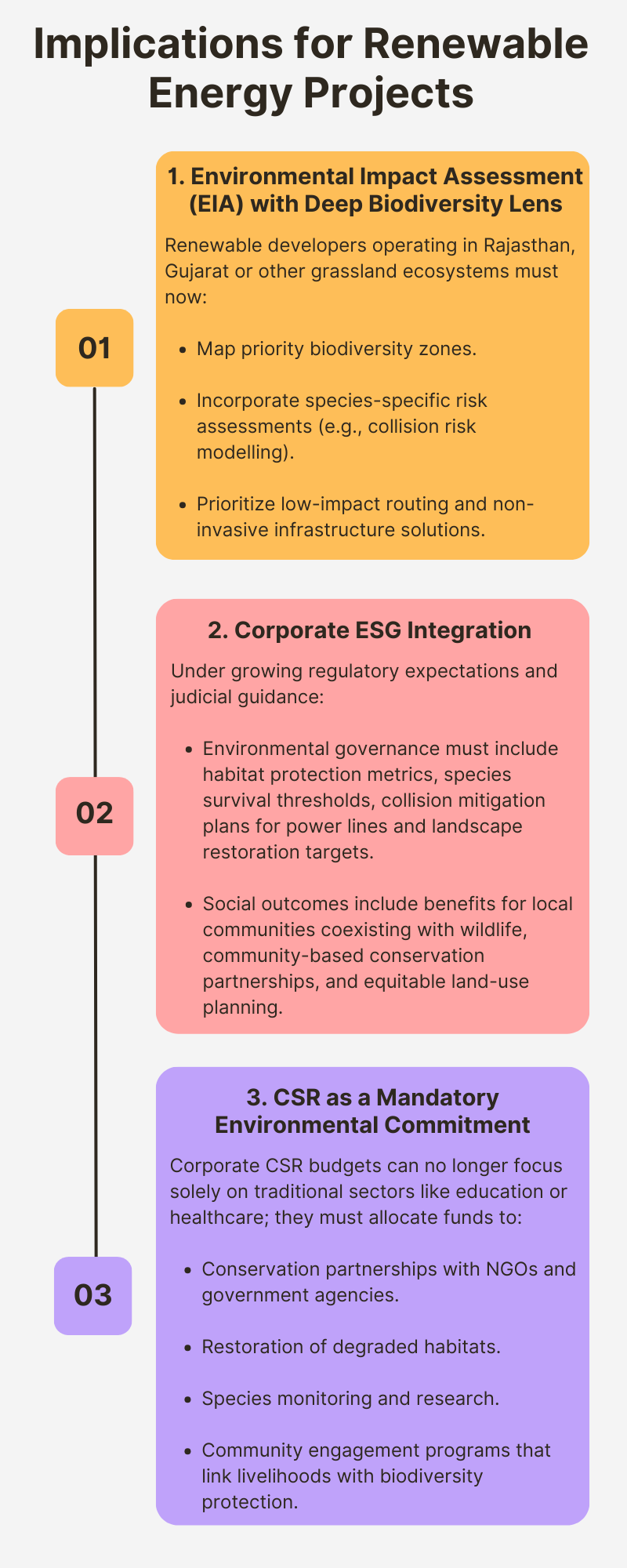
ESG & CSR: From Compliance to Competitive Advantage
For energy companies and investors alike:
- Integrating biodiversity outcomes into ESG reporting not only manages regulatory risk but unlocks value through stakeholder trust.
- CSR initiatives focused on ecological restoration and species protection can strengthen corporate legitimacy with civil society and investors.
- Transparent disclosure of environmental performance including adherence to judicial directives enhances credibility under frameworks like SEBI’s BRSR (Business Responsibility and Sustainability Reporting).
The Great Indian Bustard case is more than a wildlife conservation dispute; it represents a paradigm shift in how India views the relationship between green development and environmental justice. The Supreme Court’s nuanced, legally grounded judgment mandates that corporations and renewable energy projects do not merely minimize harm but proactively contribute to ecosystem regeneration and biodiversity safeguarding.
In an era of climate urgency, this case stands as a beacon for integrated, responsible development where economic progress and environmental stewardship are not at odds, but reinforce one another for current and future generations.