Greenwashing vs. Genuine Action: How to Spot the Difference
Published on April 2, 2025
Greenwashing vs. Genuine Action: How to Spot the
Difference
In the era of climate urgency, corporations increasingly publicize their sustainability credentials. While some actions represent real progress, others constitute “greenwashing” - the practice of exaggerating or fabricating environmental responsibility.
Let us make a technical breakdown of greenwashing strategies, contrast them with genuine climate action, and present a framework to evaluate corporate claims.
Understanding the Terms
Greenwashing
Definition: A deceptive practice where companies mislead stakeholders into believing their products, operations, or policies are environmentally responsible.
Objective: Improve public image, avoid regulatory scrutiny, or capture “green market” segments without substantive changes.
Genuine Action
Definition: Documented, measurable, and verifiable steps taken to reduce environmental impact, aligned with science-based targets and regulatory standards.
Objective: Achieve actual sustainability outcomes - lower emissions, conserve resources, protect ecosystems, and support communities.
Common Greenwashing Tactics
· Vague Terminology
· Selective Disclosure
· False Certification or Imagery
· Carbon Offset Over-reliance
· Short-Term Campaigns
Characteristics of Genuine Action
· Science-Based Targets (SBTs)
· Lifecycle Assessment (LCA)
· Third-Party Verification
· Transparent Reporting
· Stakeholder Engagement
Technical Red Flags vs. Positive Indicators
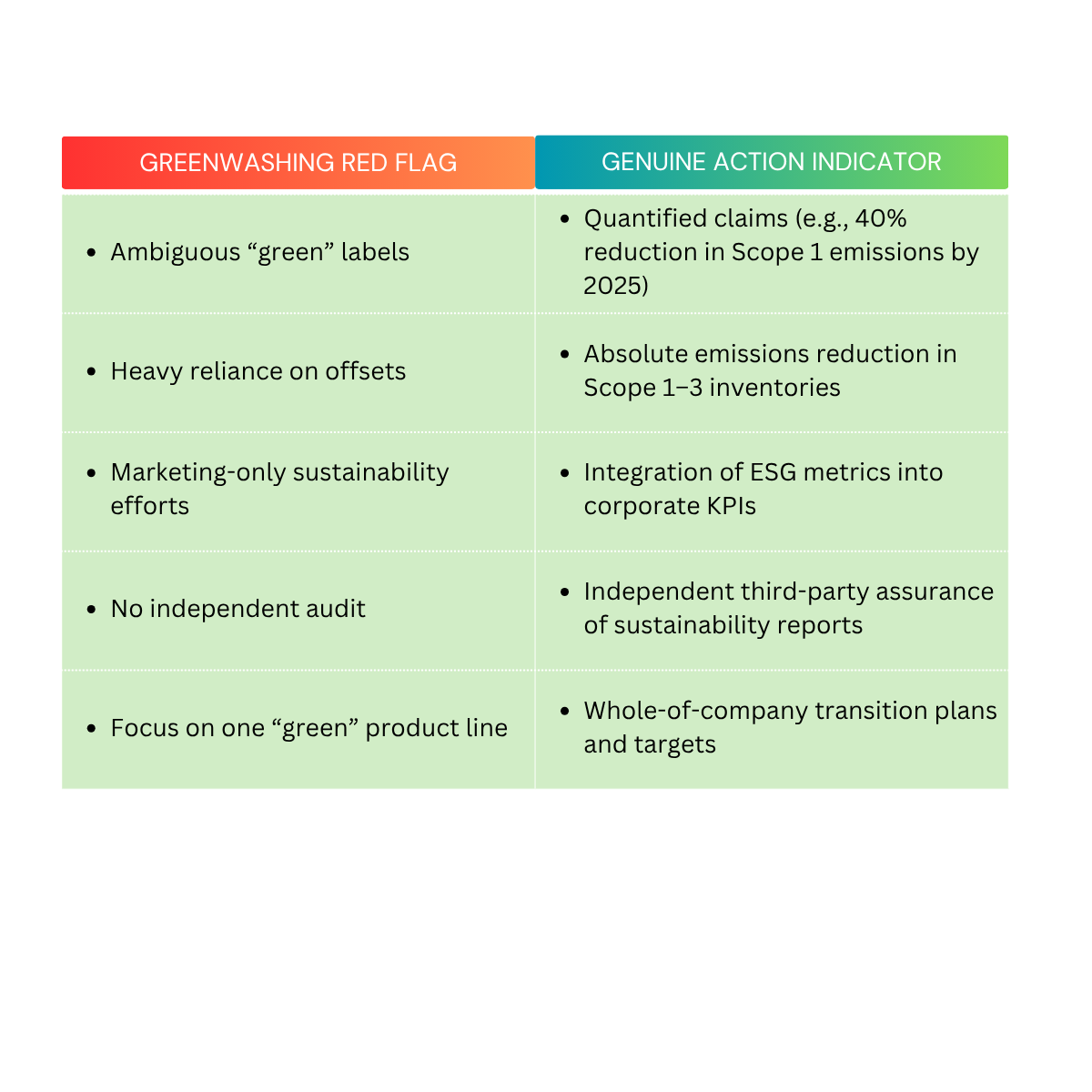
Evaluation Framework for Stakeholders
- Step 1: Traceability - Are raw materials traceable to certified, responsible sources?
- Step 2: Measurability - Are environmental metrics quantifiable and benchmarked?
- Step 3: Verifiability - Are claims verified by recognized external agencies?
- Step 4: Materiality - Do sustainability claims address the company’s largest environmental impacts?
- Step 5: Accountability - Is executive compensation linked to sustainability outcomes?
Case Examples
- Greenwashing Case: A beverage company promoting “100% recyclable bottles” while maintaining high levels of plastic production, with no circular economy strategy.
- Genuine Action Case: A manufacturing firm disclosing a full carbon inventory, committing to 100% renewable energy by 2030, verified annually under Science Based Targets initiative (SBTi).
The difference between greenwashing and genuine action lies in measurability, transparency, and accountability. While greenwashing erodes trust and delays climate action, genuine commitments drive systemic transformation and resilience. Stakeholders from consumers to investors must critically evaluate sustainability claims using technical frameworks and insist on independent verification.