Sustainable Fashion Beyond Just Buying Less
Published on April 4, 2026
Sustainable Fashion Beyond Just Buying
Less
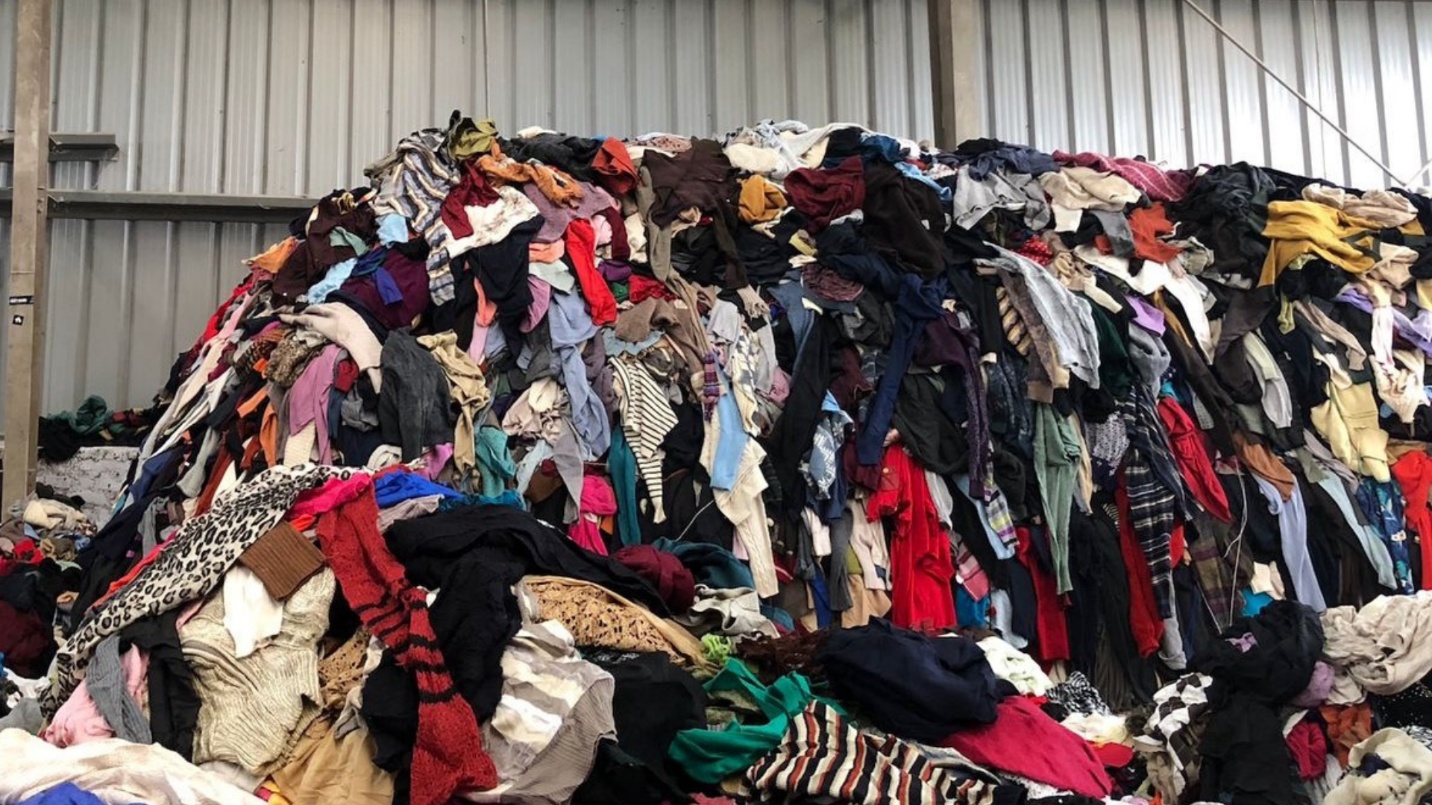
The global fashion industry produces 92 million tons of textile waste every year – and the production in the past two decades. Yet the most common sustainability advice you'll encounter remains frustratingly simple: just buy less. The data tells a very different story about what's actually required.
While conscious consumption is part of the solution, focusing solely on individual purchasing behaviour misses the systemic overproduction, labour exploitation, and material waste baked into fashion's global supply chain. This article cuts through the noise with facts and figures to show what sustainable fashion truly demands.
The Scale of the Problem
Before any solutions can be evaluated, the numbers must be understood. Fashion's environmental footprint is vast, and most people dramatically underestimate it.
|
Metric |
Figure |
|
Fashion's share of global CO₂ emissions |
~10% |
|
Water consumed per kg of cotton |
10,000–20,000 liters |
|
Microplastics released per synthetic wash |
~700,000 fibers |
|
Garments produced globally per year |
~100 billion |
|
Average times a garment is worn before disposal |
7–10 times |
|
Clothing utilization rate drops since 2000 |
Down 36% |
|
Textile waste generated annually |
92 million tons |
|
Percentage of clothes recycled into new clothes |
Less than 1% |
[**According to global sustainability assessments from organizations such as the Ellen MacArthur Foundation, UNEP, and leading lifecycle studies]
The trajectory is alarming. Global clothing production has doubled in the last 20 years, and as of 2025, the average lifespan of a garment has halved compared to two decades ago. We are producing more than ever, wearing things less, and discarding them faster - creating a system that individual consumer choices alone cannot fix.
Why 'Buy Less' Is an Incomplete Solution
The 'buy less' message places the entire burden of an industrial crisis on individual shoulders. But several data points reveal how inadequate this framing is:
• Overproduction: Brands overproduce by an estimated 30–40% of inventory each season
• Unsold stock: H&M alone had ₹35,000 crore worth of unsold inventory in 2018
• Supply chain inertia: Even if every consumer halved their purchases tomorrow, factories built for volume would still produce excess
• Access inequality: The bottom 50% of earners cannot afford the 'buy better, buy less' approach - sustainable basics remain out of reach for millions
The fashion industry's overproduction problem is structural. It is designed into the seasonal model, the fast-turnaround manufacturing process, and the retail markdown cycle. Consumer restraint is necessary but not sufficient.
The Structural
Problem: Overproduction & Waste
Where the conventional model falls short, circular fashion offers measurable alternatives - and the market is responding.
Source: Mongabay
Resale Market Growth
Perhaps the most striking data point in sustainable fashion is how rapidly the second-hand market has grown. The global second-hand apparel market was valued at ₹18 lakh crore in 2024 and is projected to reach ₹30 lakh crore by 2029, according to ThredUp's Resale Report
Rental Fashion
The fashion rental market is projected to grow at a compound annual growth rate (CAGR) of 10.6% through 2030. Research shows that renting a dress instead of buying new can reduce its carbon footprint by up to 80% - a substantial gain for occasional-wear garments.
Take-Back & Recycling Programs
• Patagonia's Worn Wear: Repaired over 100,000 garments to date
• Eileen Fisher Renew: Takes back approximately 1.4 million garments per year
• Technical recycling ceiling: Only 12% of clothing material can currently be recycled at scale into new textiles
That last figure is critical. Despite well-intentioned take-back programs, the infrastructure to close the loop simply does not yet exist at the scale required. Recycling programs are necessary but cannot be the sole answer.
Fabric & Materials - The Data Behind Your Clothes
Not all fabrics carry the same environmental burden. The fibre composition of a garment is one of the most significant drivers of its lifecycle impact.
Carbon Footprint by Fiber (per kg produced)
|
Fiber |
CO₂ Equivalent (kg) |
|
Linen |
~1.7 |
|
Tencel / Lyocell |
~2.7 |
|
Organic Cotton |
~ 3.8 |
|
Recycled Polyester |
~4.0 |
|
Conventional Cotton |
~5.9 |
|
Polyester (Virgin) |
~ 9.5 |
|
Wool |
~ 36.4 |
[**Carbon intensity comparisons derived from multiple Life Cycle Assessment (LCA) studies sources.]
The Microplastics Crisis
Synthetic fabrics - polyester, nylon, acrylic - account for 35% of all microplastics found in the ocean. A single polyester jacket can shed up to 250,000 fibers per wash cycle. Critically, 'recycled' polyester, often marketed as a green alternative, sheds microplastics at nearly the same rate as virgin polyester. The recycled label addresses only one part of the problem.
Water Usage
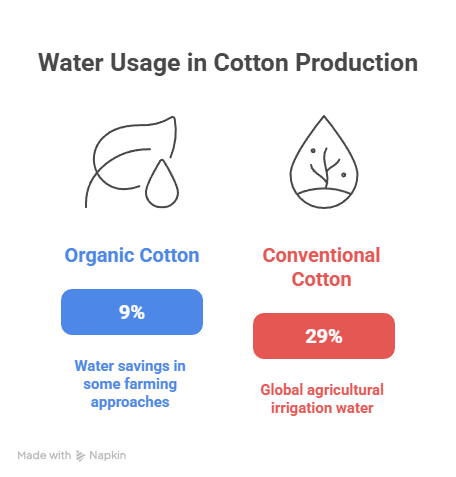
Conventional cotton is notoriously water-intensive, using 29% of global agricultural irrigation water. Producing a single cotton t-shirt requires approximately 2,700 liters of water - equivalent to three years of drinking water for one person. Organic cotton methods have shown up to 91% water savings in some farming approaches, making fiber sourcing decisions genuinely consequential.
The Human Cost
of Cheap Fashion
Sustainable fashion cannot be defined by environmental metrics alone. The human dimension of the supply chain is equally critical - and the data reveals an industry built on systemic inequality.
• Global garment workforce: Approximately 75 million people work in the industry worldwide
• Gender breakdown: 80% of garment workers are women
• Wages in key producing countries: In Bangladesh, the world's 2nd largest apparel exporter, minimum wages for garment workers stand at around ₹9,300 per month.as of 2025
• Labor's share of retail price: Fast fashion brands' labour costs represent as little as 1–3% of a garment's final retail price
• Transparency deficit: The Fashion Transparency Index (2025) finds that most major brands still score below 50 out of 100 on supply chain transparency.
These numbers make clear that a garment bought for ₹1000 carries costs that are simply displaced onto workers and communities in the global south. Sustainable fashion must grapple with pricing that reflects the true cost of production.
How Global
Policies Are Addressing the Crisis
While industry and consumer behaviour shift slowly, policy is beginning to move - particularly in Europe. These regulatory developments represent some of the most concrete structural changes underway.
• EU Green Deal (2030 target): All textiles sold in the EU must be durable, repairable, and recyclable
• France's Anti-Waste Law (2020): Became the first country to ban destruction of unsold non-food goods, including clothing
• Digital Product Passport (DPP): EU mandate rolling out from 2026 onward - fashion items must carry scannable data on materials, origin, and recyclability
• Extended Producer Responsibility (France): Charges brands a fee per item sold to fund textile collection - already collecting ~160,000 tons of textiles annually
• Carbon Border Adjustment Mechanism: Now actively applying cost pressure on high-emission fashion imports into the EU as of 2026
These policies represent a shift in accountability - from consumers to producers. They force brands to internalize the cost of waste and emissions rather than externalizing them. The challenge is ensuring they don't simply result in greenwashing rather than genuine transformation.
India’s Evolving Textile Policy
While India does not yet have a dedicated garment recycling or repair law, textile waste falls under broader environmental legislation, including:
- Environment (Protection) Act, 1986 – The umbrella legislation empowering the central government to regulate environmental pollution and waste management.
- Solid Waste Management Rules, 2016 – Issued under the Environment (Protection) Act, these rules mandate waste segregation, processing, and recycling at source. Textile waste is indirectly covered under municipal solid waste streams.
However:
- There is no specific Extended Producer Responsibility (EPR) mandate yet for textiles (unlike plastics and e-waste).
- There is no formal “Right to Repair” law for garments.
- There is no binding national take-back requirement for fashion brands.
India’s regulatory framework addresses textile waste indirectly - but a textile-specific circularity mandate is still evolving.
What Actually Moves the Needle - Evidence-Based Actions
Given all the data, what actions - by individuals, brands, and policymakers - are most impactful? The table below summarizes the evidence:
|
Action |
Estimated Impact |
|
Wearing a garment 50x instead of 5x |
Reduces carbon footprint by ~400% |
|
Buying second-hand instead of new |
Saves ~82% of CO₂ per item |
|
Washing clothes in cold water |
Reduces washing energy use by ~90% |
|
Air drying instead of tumble drying |
Saves ~3kg CO₂ per load |
|
Choosing linen over wool |
~20x lower carbon footprint |
|
Repairing instead of replacing |
Extends garment life; cuts demand ~30% if widely adopted |
|
Choosing Tencel over conventional cotton |
~55% lower carbon footprint per kg |
These numbers reveal something important: longevity of use is the single highest-leverage action available to individuals. A cheap garment worn 50 times outperforms an expensive 'sustainable' one worn twice. It's about relationship with clothing, not price point.
Conclusion:
Sustainable Fashion Is System Transformation
The fashion industry's sustainability crisis will not be solved by consumers shopping more mindfully alone. The scale of overproduction - 100 billion garments per year, 92 million tons of waste, and less than 1% recycled into new clothing - demands systemic change at every level.
At IDREA, sustainable fashion is viewed not merely as a consumer choice, but as a structural challenge. India’s textile sector is among the largest in the world - and therefore carries significant responsibility in shaping global sustainability outcomes.
True transformation requires:
• Policy evolution toward textile-specific circular frameworks
• Industry-wide accountability across supply chains
• Investment in recycling and material recovery infrastructure
• Scalable repair, reuse, and resale ecosystems
Circular business models, material innovation, stronger regulatory enforcement, and genuine corporate accountability are measurable and trackable - yet they remain insufficient relative to the scale of the problem. Consumer choices matter, but they represent just one variable in a much larger equation.
Sustainable fashion is not a shopping trend.
It is an industrial, economic, and cultural transformation.
And as one of the world’s largest textile producers - and one
of its fastest-growing consumer markets - India is not just part of this
transition. India has the capacity to lead it.
The question is no longer whether change is necessary. It is whether we choose to shape it - or be shaped by it.
Data Sources
• Ellen MacArthur Foundation: A New Textiles Economy report
• ThredUp: Annual Resale Report 2024–2025
• UNEP: United Nations Environment Programme Fashion Reports
• Fashion Revolution: Fashion Transparency Index
• Textile Exchange: Fiber & Materials Market Report
• Common Objective / Sourcemap: Supply chain data