Where Reefs Rise and Roots Take Hold: Tamil Nadu’s Restoration Revolution
Published on December 20, 2025
Where Reefs Rise and Roots Take Hold: Tamil Nadu’s
Restoration Revolution
In the face of ongoing climate change and biodiversity loss,
ecological restoration efforts have become increasingly important. Tamil Nadu
has implemented large-scale initiatives focused on coastal ecosystem recovery,
combining scientific planning, community involvement, and state-supported
programs. Two notable examples include the restoration of mangrove wetlands
in Muthupet and efforts to protect the sinking
island of Kariyachalli in the Gulf of
Mannar.
These two landmark projects - the Green Tamil Nadu
Mission and the Tamil Nadu Sustainably Harnessing Ocean Resources
(TNSHORE) initiative stand testament to the state’s sustainable
environmental governance. Together, they reflect a holistic approach to
ecological restoration, biodiversity conservation, climate resilience, and
sustainable livelihoods.
Muthupet Mangrove
Restoration: Breathing Life Back into the Wetlands
Project Overview
Located in the Tiruvarur and
Thanjavur districts, Muthupet mangrove
wetland is the largest of its kind in Tamil Nadu, covering over 12,020
hectares and forming part of the internationally recognized Point Calimere Ramsar site. Once threatened by degradation
and hydrological disruption, the region is now witnessing a green resurgence.
Under the Green Tamil Nadu Mission, from 2022 to
2025, the state undertook an ambitious mangrove restoration campaign
spearheaded by the Tiruvarur Forest Division over 2,057
hectares:
- 1,350
hectares were newly planted.
- 707
hectares underwent hydrological restoration, including canal repair
and desilting to improve tidal flow.
Ecological Engineering
To ensure tidal flushing and sediment deposition, both
critical to mangrove survival over 380 km of canal networks were created
using innovative layouts such as “Fishbone” and “Box” patterns.
These mimic natural water flow patterns and facilitate mangrove propagation.
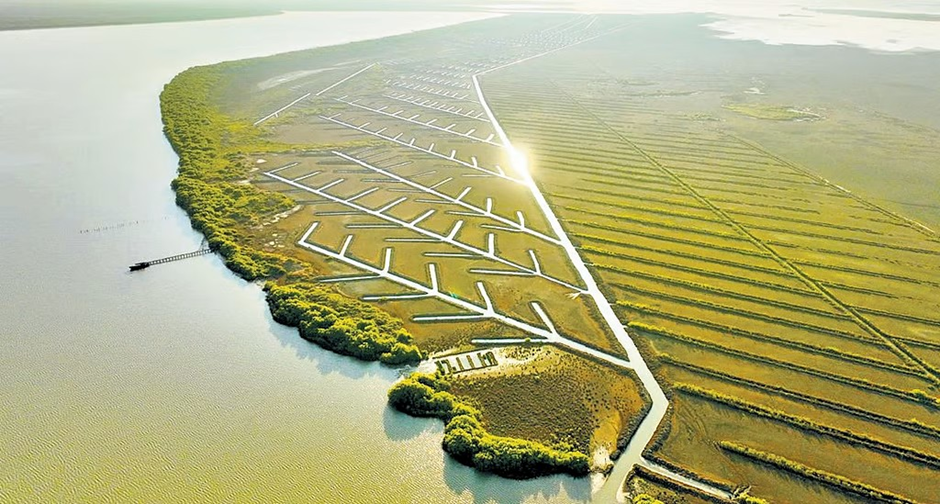
The Muthupet wetland complex,
spanning 12,020 hectares at the confluence of the Koraiyar
and Pamaniyar rivers, is home to Tamil Nadu’s most
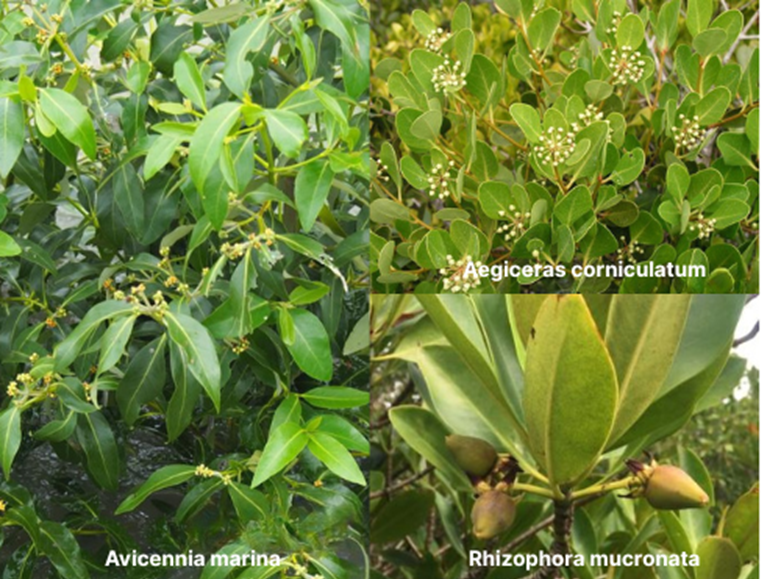
extensive mangrove ecosystem. It is predominantly covered by Avicennia
marina (grey or white mangroves), which makes up about 95% of the state's
mangrove population. To enhance ecological diversity, over 1.2 million
propagules and saplings were planted mainly Avicennia marina, along with
reintroduced populations of Aegiceras corniculatum (black mangroves) and Rhizophora mucronata (red mangroves).
Community as Custodians
Six Village Mangrove Councils (VMCs) were established
across key coastal villages like Veerankoil and Thondiyakadu. These community groups play an active role
in:
- Maintaining
the canal network
- Seed
collection
- Monitoring
sapling health
More than 10,000 residents from 16 fishing villages
are indirectly benefiting from improved coastal stability and fishery
resources. The project also created over 86,000 man-days of rural
employment, supporting local livelihoods.
Kariyachalli Island
Restoration: Rebuilding What the Sea Has Taken
An Island in Peril
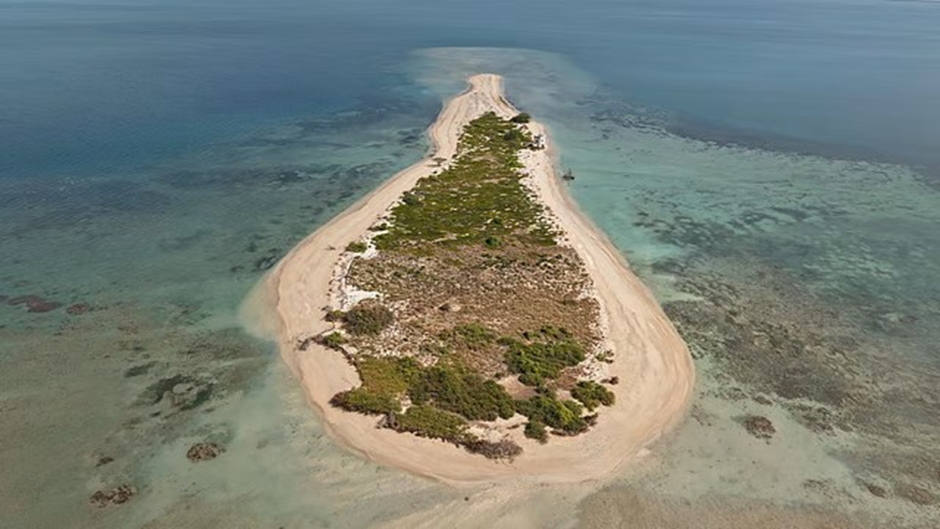
Kariyachalli Island, one of the 21
islands within the Gulf of Mannar Marine National Park on India’s southeastern
coast between Rameswaram and Thoothukudi, has
experienced significant erosion over the past five decades. Part of the larger
Gulf of Mannar Marine Biosphere Reserve and home to one of India’s four major
coral reef systems, the island has lost over 70% of its landmass since 1969,
shrinking from approximately 21 hectares to less than 6 hectares. Without
intervention, it is projected to disappear entirely by 2036.
To address the ongoing erosion of Kariyachalli
Island, a ₹50 crore restoration project has been launched under the Tamil
Nadu Sustainably Harnessing Ocean Resources (TNSHORE) programme, with funding
support from both the state government and the World Bank. The initiative is
being implemented by the Tamil Nadu Forest Department in collaboration with IIT
Madras and the Suganthi Devadason Marine Research
Institute (SDMRI), Thoothukudi.
Artificial Reef Revolution
The centerpiece of this initiative
is the deployment of 8,500 artificial reef modules:
- Constructed
from ferrocement and steel
- Each
unit weighs 1.8–3 tonnes and stands 2–3 meters tall
- Designed
by IIT Madras and the SDMRI
These modules act as wave breaks, reducing coastal
erosion while fostering marine biodiversity by mimicking natural reef
structures. A similar strategy had previously succeeded at Vaan Island,
which gained 55% landmass post-intervention.
Rewilding the Seafloor
In tandem, the project aims to:
- Restore
2 acres of coral reefs
- Replant
3–4 acres of seagrass beds, essential habitats for endangered dugongs
and vital for carbon sequestration and fish breeding.
Empowering Ocean Heroes
More than 300 local fishers, mostly from Tuticorin, Sippikulam, and Pattinamaruthoor,
are being trained as conservation divers. Their responsibilities
include:
- Installing
reef blocks
- Monitoring
marine biodiversity
- Participating
in coral planting
These divers are now gaining skills that open up avenues in eco-tourism,
marine conservation, and sustainable resource management transforming
livelihoods while safeguarding the ecosystem.
A Blueprint for Climate Resilience
Both projects though different in geography and technique
share a common ethos:
Nature-Based Solutions
From mangrove planting to coral and seagrass regeneration,
Tamil Nadu is leveraging ecosystem-based approaches that are
scientifically robust and climate-adaptive.
Community-Driven
Whether it's the Village Mangrove Councils in Muthupet or the diver training programs in Kariyachalli, local communities are at the heart of these
efforts ensuring long-term ownership and impact.
Integrated Governance
These initiatives are being driven by the Tamil Nadu
Forest Department, supported by scientific institutions like SDMRI, IIT
Madras, and international partners such as the World Bank reflecting
cross-sectoral collaboration.
A Model for Sustainable Coastal Development
At a time when global conversations around the Blue
Economy, climate adaptation, and ecosystem restoration are
gaining momentum, projects like Muthupet and Kariyachalli offer replicable models for other
coastal states and developing nations grappling with similar challenges.
By combining green cover restoration, marine
biodiversity revival, and community livelihood enhancement, these
efforts encapsulate the true spirit of sustainability, one that doesn’t just
protect nature but actively involves people in its healing.
Tamil Nadu isn’t just restoring landscapes. It’s
restoring hope.