The High Seas Treaty: A Historic Step Towards Global Ocean Protection
Published on November 1, 2025
The High Seas Treaty: A Historic Step Towards Global
Ocean Protection
Oceans are the backbone of life on Earth. They regulate climate, absorb carbon dioxide, produce oxygen, and support livelihoods for millions of people. Yet, a vast portion of the ocean lies beyond the jurisdiction of any single country and has remained largely unprotected for decades. This governance gap has now been addressed through the High Seas Treaty, a landmark international agreement aimed at safeguarding marine biodiversity in international waters.
Formally known as the Biodiversity Beyond National Jurisdiction (BBNJ) Treaty, the High Seas Treaty marks a major milestone in global environmental governance under the United Nations.
What Are the High Seas?
The high seas refer to areas of the ocean that lie beyond a country’s Exclusive Economic Zone (EEZ), which typically extends up to 200 nautical miles from the coastline. These international waters cover nearly two-thirds of the world’s oceans and almost half of the planet’s surface.
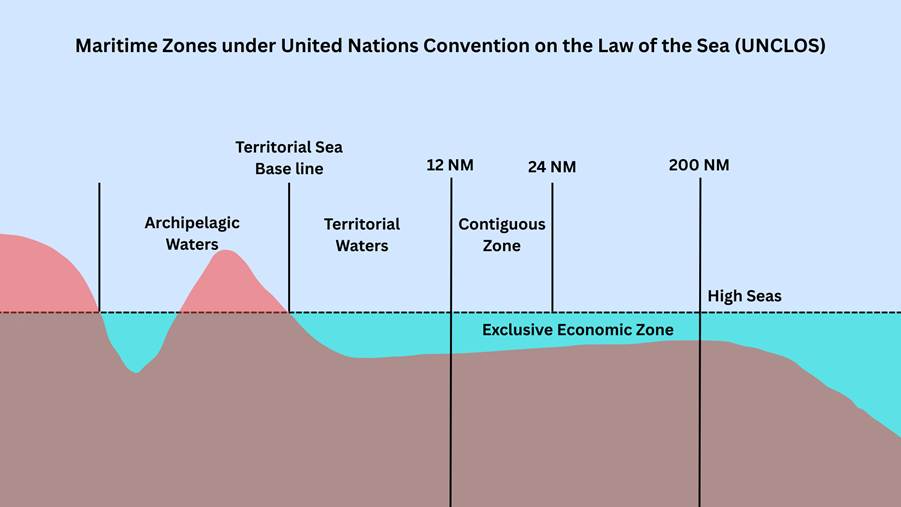
Despite their ecological importance, the high seas have historically suffered from weak regulation, making them vulnerable to overfishing, pollution, climate change impacts, and emerging threats such as deep-sea mining.
What Is the High Seas Treaty?
The High Seas Treaty is the first legally binding global agreement dedicated to the conservation and sustainable use of marine biodiversity in areas beyond national jurisdiction. After nearly two decades of negotiations, the treaty was adopted in 19 June 2023 and entered into force in 17 January 2026, once the required number of countries ratified it.
The treaty operates within the framework of the United Nations Convention on the Law of the Sea (UNCLOS) and fills long-standing legal and institutional gaps in ocean governance.
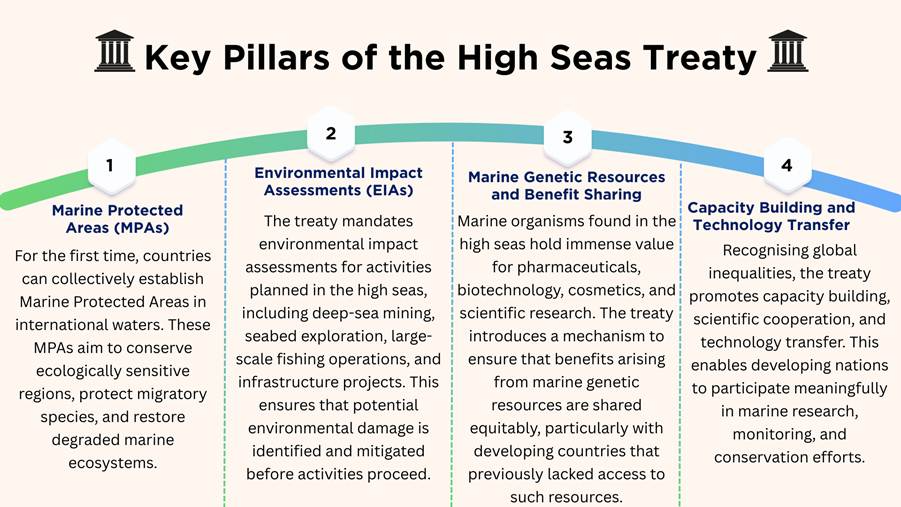
Why the High Seas Treaty Matters
The treaty addresses some of the most urgent environmental challenges of our time:
- Ocean biodiversity loss caused by unregulated exploitation
- Climate change impacts, as healthy oceans play a crucial role in carbon sequestration and climate regulation
- Overfishing, which threatens global food security and livelihoods
- Deep-sea mining, an emerging industry with potentially irreversible ecological consequences
Before the treaty, only about 1 percent of the high seas had any form of protection. The High Seas Treaty is central to achieving the global 30 by 30 goal, which aims to protect 30 percent of the world’s land and oceans by 2030.
Global Participation and Challenges
Many countries, including members of the European Union and India, have signed the treaty. However, ratification varies across nations, and some major powers have yet to fully commit through domestic legal processes. Since enforcement relies on international cooperation, political will and transparency will be critical for the treaty’s success. Implementation also presents challenges related to monitoring vast ocean areas, ensuring compliance, and balancing conservation with economic interests.
India has not yet ratified the High Seas Treaty because, although it became a signatory in September 2024, formal ratification requires the passage of domestic legislation that aligns with the commitments outlined in the treaty. The ratification process typically involves the creation or amendment of laws to ensure compliance with the treaty's provisions for protecting and managing biodiversity in international waters. As of January 2026, while 80 countries have ratified the treaty, India is still in the process of aligning its legislative framework to meet these international obligations.
Why It Matters for India and the Global South
For countries like India, the High Seas Treaty is significant because:
- Healthy oceans support fisheries and coastal livelihoods
- Marine biodiversity protection aligns with climate and sustainability commitments
- Equitable benefit sharing strengthens global environmental justice
- Capacity-building provisions support scientific research and innovation
The High Seas Treaty represents a turning point in humanity’s relationship with the ocean. It recognises that the high seas are a shared global commons and that their protection is essential for environmental stability, economic resilience, and intergenerational equity.
While challenges remain in implementation and enforcement, the treaty provides a long-overdue legal framework to ensure that international waters are protected, responsibly managed, and preserved for future generations.
In essence, the High Seas Treaty transforms ocean conservation from aspiration into obligation.