Biodiversity Is the Missing Link in Climate Action: Lessons from the Sundarbans
Published on March 12, 2026
Biodiversity Is the Missing Link in
Climate Action: Lessons from the Sundarbans
Action today is Reaction Tomorrow- this applies to
climate Too.
What action we do to our planet is ultimately
reflected in climate reaction. This climate reaction is often measured in
emissions targets, net-zero timelines, and renewable energy installations. While
these are on one hand essential, the other hand, a critical element that is
frequently overlooked is BIODIVERSITY.
The
ongoing debate around tourism in the Sundarbans serves as a powerful reminder
that climate plans and strategies are incomplete and potentially dangerous when
ecosystems are neglected.
The Sundarbans Debate: There is more than
tourism!
In
December 2025, a proposal to expand tourism in the Sundarbans highlighted that
the region receives around 9 to 9.5 lakh visitors annually, compared to nearly
19 lakhs in Ranthambore. However, experts strongly questioned this comparison,
pointing to the Sundarbans’ fragile mangrove ecosystem, high population
density, and uniquely vulnerable coastal landscape, which make it fundamentally
different from a terrestrial tiger reserve.
The
Sundarbans is fundamentally different from other wildlife tourism destinations.
It is the world’s largest continuous mangrove forest, recognized as a UNESCO World Heritage Site, and home to millions of people
who depend directly on its fragile ecological systems. Comparing it to a
terrestrial tiger reserve like Ranthambore overlooks critical differences in ecosystem dynamics, climatic
vulnerability, hydrology, and human settlement patterns.
Mangroves: Climate Infrastructure We
Rarely Acknowledge
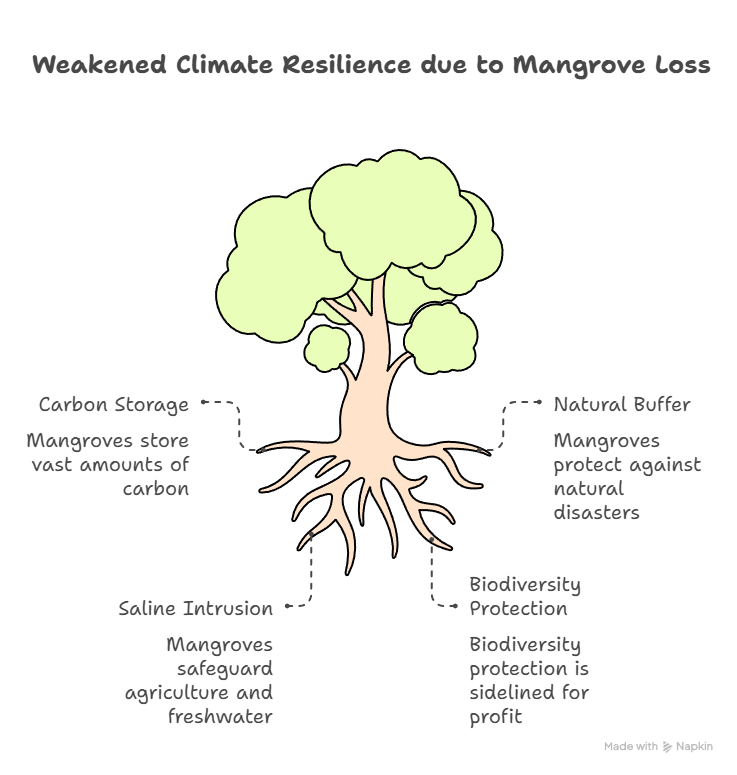
Mangroves are one among the Earth’s best natural
climate solutions, They
-
Store vast amount of carbon in biomass and
soils
-
Act as a natural buffer against cyclones,
storm surges, and coastal erosion.
-
Safeguard agriculture and freshwater
systems from saline intrusion.
-
Protect freshwater sources and agriculture
In the Sundarbans, mangroves are not optional
environmental assets-they are life-support systems. When biodiversity
protection is sidelined in favour of short-term economic narratives, the
climate resilience of the entire region is weakened. Losing mangroves is
equivalent to dismantling embankments, seawalls, and flood barriers- except
mangroves regenerate themselves if protected.
Climate Justice Lens: Who pays the price?
Sundarbans ecosystem, if degraded the consequence are
not shared equally. Climate impacts do not fall on those who design development
plans, approve infrastructure projects, or profit from tourism expansion. In
other terms, they are borne by communities with the least power, the fewest
resources, and the smallest carbon foot prints.
For coastal households in the Sundarbans, mangroves
are not an abstract environmental asset,
they are living shield. As when these natural barriers weaken, families face
stronger cyclones, higher storm surges, saline intrusion into farmland, and the
stead loss of freshwater sources. Each ecological loss translates into economic
and social stress: failed crops, declining fish catches, damaged homes, and
rising debt.
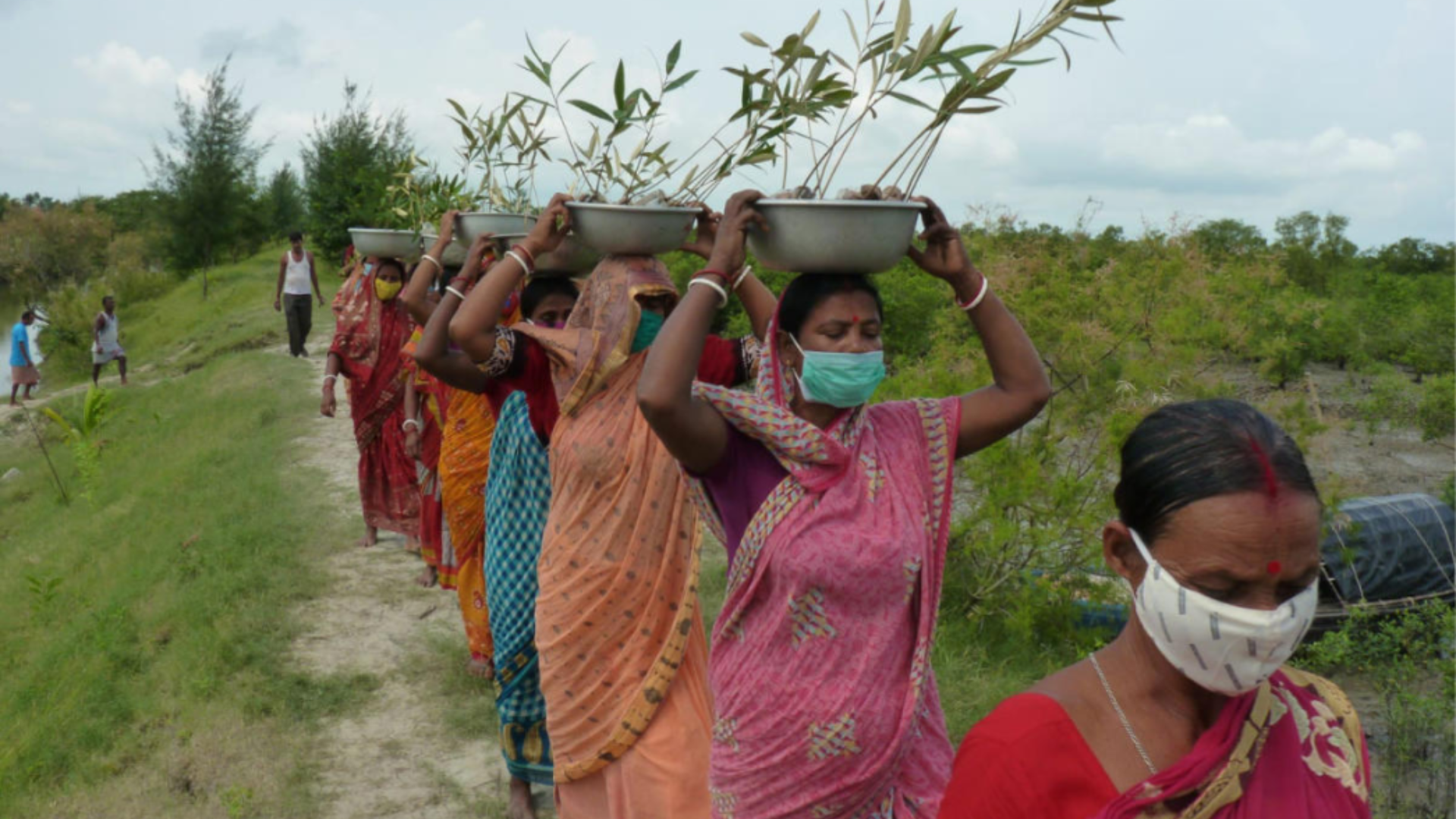
Source: Deccanherald
Women more often carry disproportionate burden. As
drinking water turns saline
and fuelwood becomes scarcer, their daily labour increases. Health risks rise,
caregiving responsibilities multiple after climate disasters, and economical
opportunities shrink. What is framed as “development” at the policy
level frequently results in invisible, unpaid costs at the household level.
True climate action, therefore, cannot be separated
from justice. Protecting biodiversity in the Sundarbans is not just about
saving species or landscapes- it is about safeguarding human dignity, securing
livelihoods, and ensuring that the people who protect ecosystems are not the
ones left to pay the highest price.
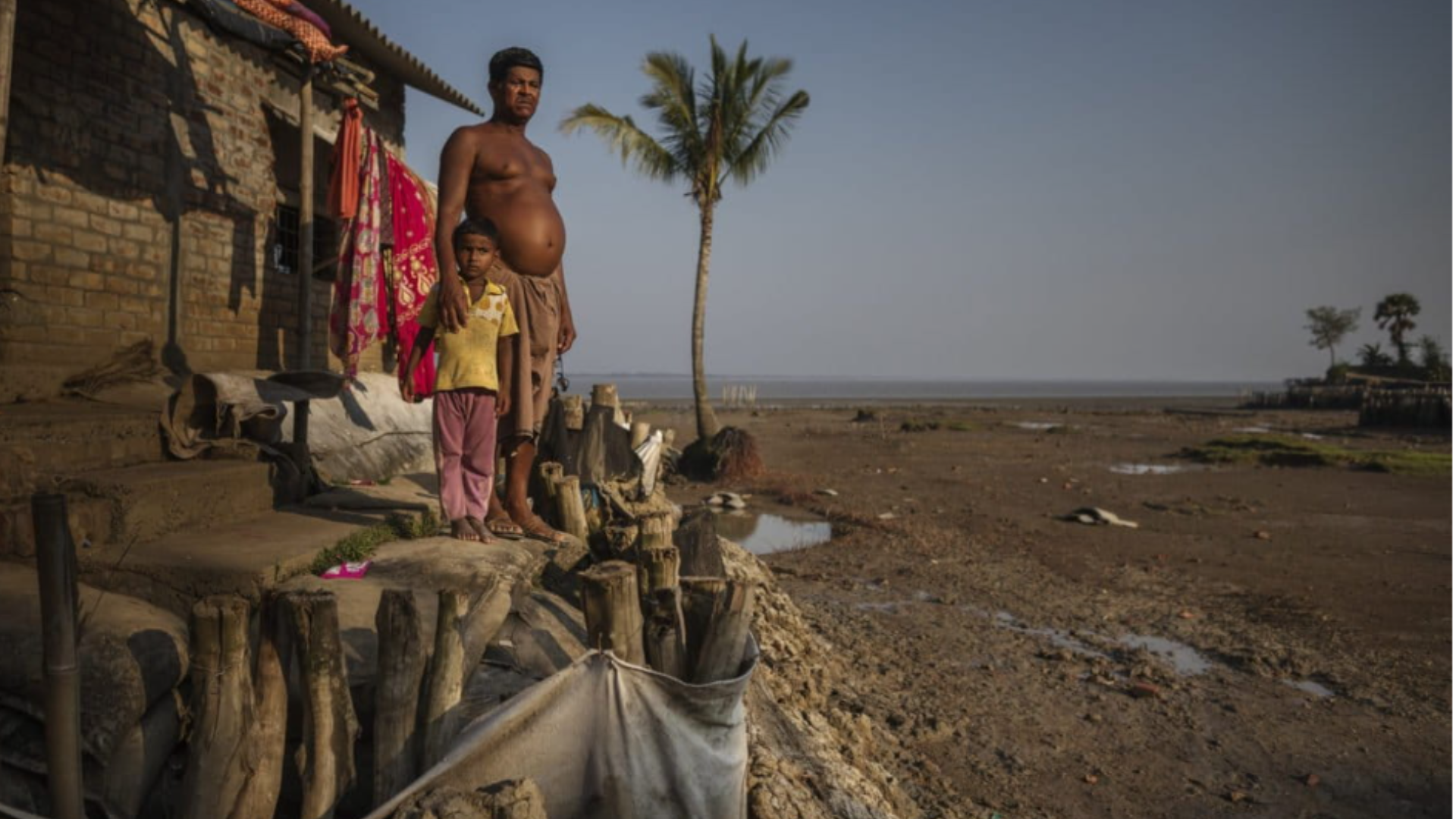
Source: Mongabay
Climate Change, Livelihoods, and Invisible
Losses
The climate
change has already disrupted traditional livelihoods in the Sundarbans.
Agriculture and fisheries-once stable sources of income-are increasingly
unreliable due to flooding, salinity, and extreme weather. Studies show rising
migration, damaged homes, interrupted education, and deep psychological trauma,
especially among children repeatedly exposed to cyclones.
These impacts go beyond economics. They represent non-economic
loss and damage: the erosion of culture, community bonds, mental
well-being, and a sense of security.
Healthy ecosystems reduce these losses.
Degraded ones magnify them.
Why One-Size-Fits-All Climate Thinking
Fails
Treating the Sundarbans like other wildlife tourism
destinations reflects a broader policy blind spot: climate action often
ignores ecosystem diversity. What works in a dry deciduous forest cannot
simply be transplanted into a tidal mangrove landscape shaped by rivers, tides,
and rising seas.
Without scientific carrying-capacity assessments,
expanding tourism risks:
- Disturbing
fragile habitats
- Increasing
pollution and boat traffic
- Accelerating
mangrove degradation
Once damaged, these ecosystems lose their ability to
function as carbon sinks and natural shields- —directly undermining climate
mitigation and adaptation goals.
Biodiversity as Climate Action, not a Side
Issue
The Sundarbans debate shows why biodiversity must be central
to climate planning, not an afterthought. Protecting ecosystems is not
anti-development; it is risk-aware development. When biodiversity is
reduced to a tourism or revenue opportunity, its climate value is ignored-and
communities become more vulnerable.
As global science bodies like IPBES
and IPCC have repeatedly stated, climate change
and biodiversity loss are interconnected crises. Addressing one without the
other leads to fragile, short-lived solutions.
The Lesson from the Sundarbans
The real question is not whether the Sundarbans should
support livelihoods-it already does. The question is how development can
occur without eroding the ecosystems that protect people from climate
disasters.
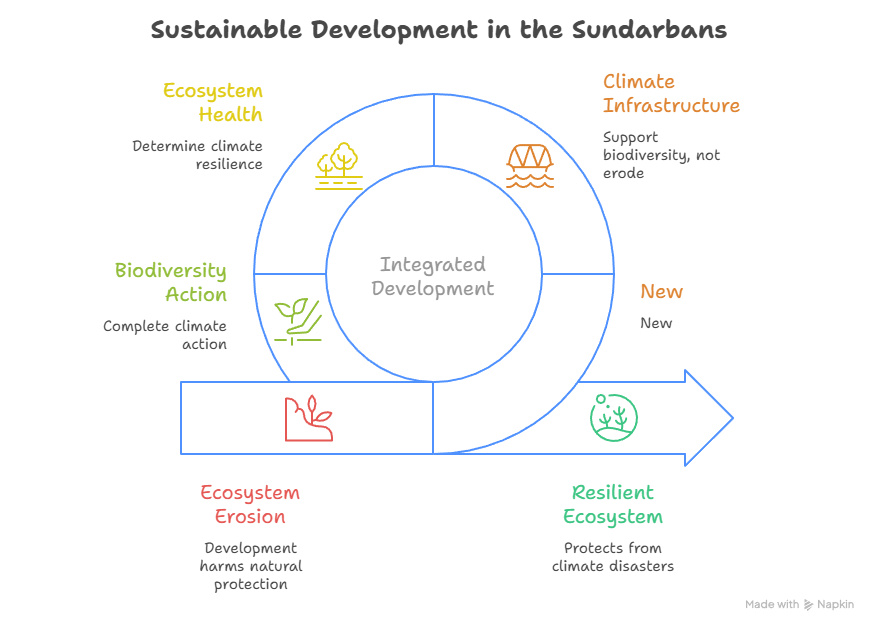
The Sundarbans reminds us that:
- Climate
infrastructure must be aligned with biodiversity.
- Ecosystem
health determines climate resilience
- climate
action without biodiversity is incomplete
‘Climate
Stability Starts with Nature’
The debate over tourism in the Sundarbans is a warning
signal. It shows what happens when biodiversity is viewed through a narrow
economic lens rather than as a foundation of climate stability and human
well-being. If climate action is to be effective, just, and lasting, biodiversity
cannot remain the missing link—it must become the starting point.