Exploring the Intertidal Zone: The Hidden World Between Tides
Published on March 5, 2025
Exploring the Intertidal Zone:
The Hidden World Between Tides
As India's coastal
ecosystems host a vast array of marine organisms, a large portion of this
biodiversity remains uncatalogued and undervalued. To bridge this
knowledge gap, the India Intertidal Bioblitz was launched as an
innovative project, conducted from January 26, 2025, to February 4, 2025.
The initiative took place across Mumbai, Goa, Visakhapatnam, and the Andaman
Islands, bringing together researchers, conservationists, and keen
volunteers to explore and document the rich marine life thriving in these
intertidal zones.
What is the Intertidal
Bioblitz?
The Intertidal Bioblitz
is a survey where researchers and volunteers work together to identify and
record as many species as possible within a short time in a specific area. The India
Intertidal Bioblitz is a joint effort led by the Coastal Conservation
Foundation (CCF) and the East Coast Conservation Team (ECCT). This
initiative focuses on intertidal zones, the areas between the highest and
lowest tides. These zones are home to many marine species that can survive both
underwater and in exposed conditions.
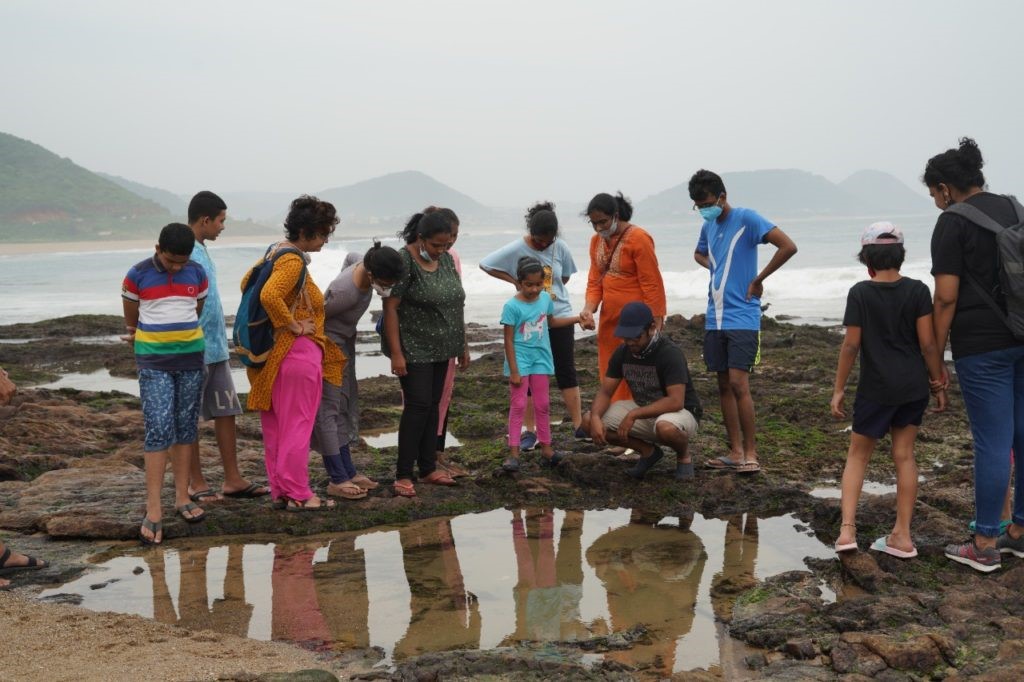
Participants of India's first
Intertidal Bioblitz actively explore the tide pools along the Visakhapatnam
coast, documenting diverse marine species in their natural habitat. (Image
Courtesy: citsci-ind.org)
What is the Intertidal Zone
and Why is the Bioblitz Conducted?
The intertidal zone is
the coastal area between the high and low tide marks. This unique habitat
undergoes constant environmental changes, making it home to a diverse range of
marine species that can survive both underwater and in exposed conditions.
Intertidal zones play a crucial role in coastal ecosystems by serving as
breeding grounds for marine life, acting as natural barriers against erosion,
and storing carbon through seagrass beds and mangroves.
To ensure conservation efforts
are guided by scientific data, the Intertidal Bioblitz was conducted as
a large-scale survey to document and monitor these fragile ecosystems. The
initiative aimed to track biodiversity trends, assess the impact of climate
change and human activities on intertidal marine life, and raise awareness
about the ecological significance of these habitats. Researchers and citizen
scientists collaborated in this effort, contributing to a deeper understanding
of India’s coastal biodiversity.
Key Discoveries and Findings
The Intertidal Bioblitz
recorded over 3,600 observations and identified 514 unique species
across India’s coastal regions. This extensive data collection provided
valuable insights into the country’s rich intertidal biodiversity.
- New Records:
A remarkable discovery was the documentation of Pseudoceros bifascia along the coast of Andhra Pradesh.
Previously thought to be restricted to the Lakshadweep archipelago,
this finding marks the species’ first recorded presence on the Indian
mainland. It highlights the importance of ongoing research and
conservation efforts in uncovering new aspects of marine biodiversity.
Regional Highlights
Visakhapatnam
Participants recorded 1,533
observations, identifying a total of 227 species. The survey led to
the discovery of a few previously unclassified species and over ten species
newly documented in the region. Nighttime exploration of the intertidal zone
revealed a fascinating variety of marine life, including butterfly fish,
porcupine fish, surgeonfish, moray eels, and juvenile angelfish.
Mumbai
In Mumbai’s intertidal zone, 120
species were recorded. Some notable finds included the old-woman
octopus, orange-striped hermit crab, mangrove leaf slug, tiger moon snail,
and the highfin moray eel.
Andaman Islands
Surveys conducted across three
locations in the Andaman Islands documented over 70 species. Observers
found a rich diversity of marine life, including bubble snails, flatworms,
sea slugs, moray eels, octopuses, and juvenile stingrays. The
region's coral-rich habitats contrast sharply with the sponge and
hydroid-dominated coasts of Maharashtra and Goa, highlighting the unique
biodiversity of India’s coastal ecosystems.
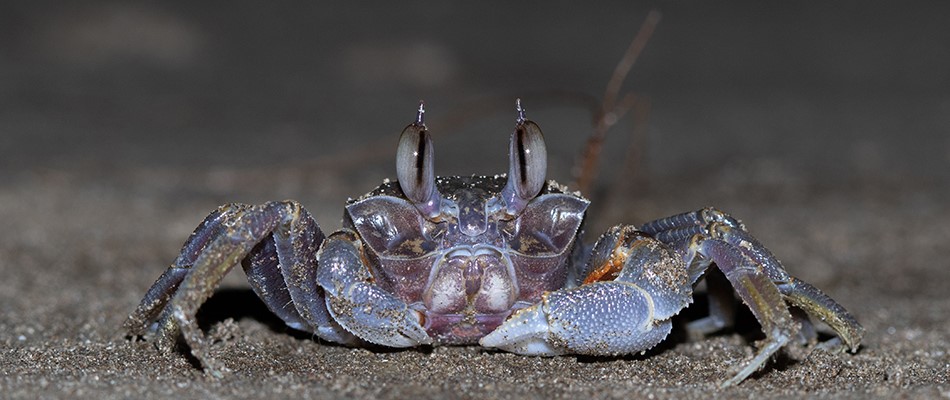
A close-up of a ghost crab
spotted during India's Intertidal Bioblitz, highlighting the rich and often
overlooked biodiversity of India's coastal ecosystems. (Image Courtesy:
inaturalist.org)
The Role of Citizen Science
The success of the Intertidal
Bioblitz highlights the significant impact of citizen science in
ecological conservation. By involving local organizations, researchers, and
nature enthusiasts, the initiative fostered a deeper connection between people
and their coastal environments.
Participants, under expert
guidance, developed skills in careful observation, accurate species
identification, and detailed data recording. These documented
findings were then shared on platforms like iNaturalist, enabling researchers
worldwide to access and analyze the data. This
collaborative effort not only expanded scientific knowledge but also
strengthened public awareness and engagement in coastal conservation.
Conservation Implications
The extensive data collected
through the Intertidal Bioblitz provides a critical foundation for
monitoring changes in coastal ecosystems, which face numerous threats,
including:
Habitat Degradation
Rising tourism and coastal
development are leading to habitat destruction, often worsened by pollution. A
notable example is the degradation of marine habitats near Andaman’s Natural
Bridge, where increased tourism has contributed to the decline of certain
marine species due to overconsumption and habitat loss.
Climate Change
Rising sea temperatures and
ocean acidification are major threats to marine life, triggering events like coral
bleaching. The widespread bleaching event of 2024 severely impacted
all soft corals in the Andaman region, prompting ongoing efforts to
assess the damage and accelerate ecosystem recovery.
Shifts in Species
Distribution
The data also highlights
significant changes in species composition. For instance, carpet sea
anemones are gradually displacing pearly sea anemones in some tide
pools, indicating potential ecological shifts that require further study.
These findings emphasize the
urgent need for conservation initiatives to protect intertidal
ecosystems from human activities and climate change.
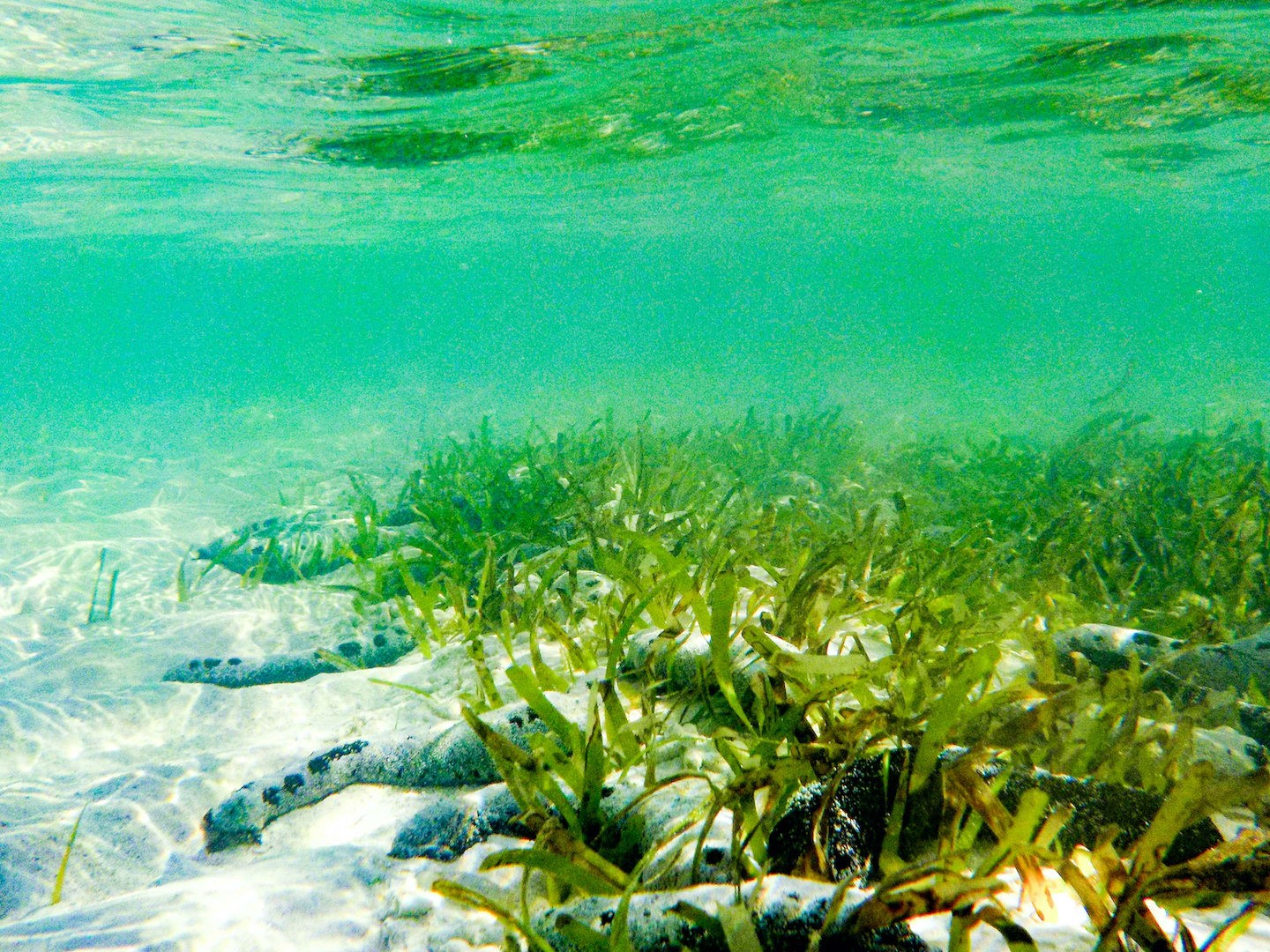
A healthy seagrass bed
discovered in the intertidal zone, providing a critical habitat for marine life
and acting as a natural carbon sink. (Image Courtesy: sustain.round.glass)
Future Directions
Building on the success of the
Intertidal Bioblitz, future efforts aim to expand research, strengthen
conservation policies, and deepen community engagement:
- Expanded Surveys:
Extending studies to additional coastal regions will provide a more
comprehensive understanding of India’s intertidal biodiversity.
- Policy Advocacy:
Using collected data to influence conservation strategies and ensure the
long-term protection of critical marine ecosystems.
- Community Engagement:
Promoting awareness through educational workshops, field expeditions,
and academic programs to foster a culture of conservation and
responsible environmental stewardship.
The India Intertidal
Bioblitz has highlighted the incredible diversity of marine life along the
country’s shores. By combining community participation with scientific
precision, this initiative has laid the foundation for continued research
and conservation efforts. Moving forward, the collaboration of scientists,
policymakers, and local communities will be essential to safeguarding these
fragile ecosystems for future generations.