From Waste to Wealth: How Circular Economy Is Reshaping Our Future
Published on October 11, 2025
From Waste to Wealth:
How Circular Economy Is Reshaping Our Future
Climate change represents a highly critical
worldwide issue, fueled mainly by untenable resource usage, extreme waste
production, along with carbon-heavy businesses. The present linear economy,
which follows a take-make-dispose model, depletes natural resources at an
unsustainable rate, leading to severe ecological consequences. This system
contributes in substance to overall global greenhouse gas emissions, furthering
increases in pollution and accelerating climate change. 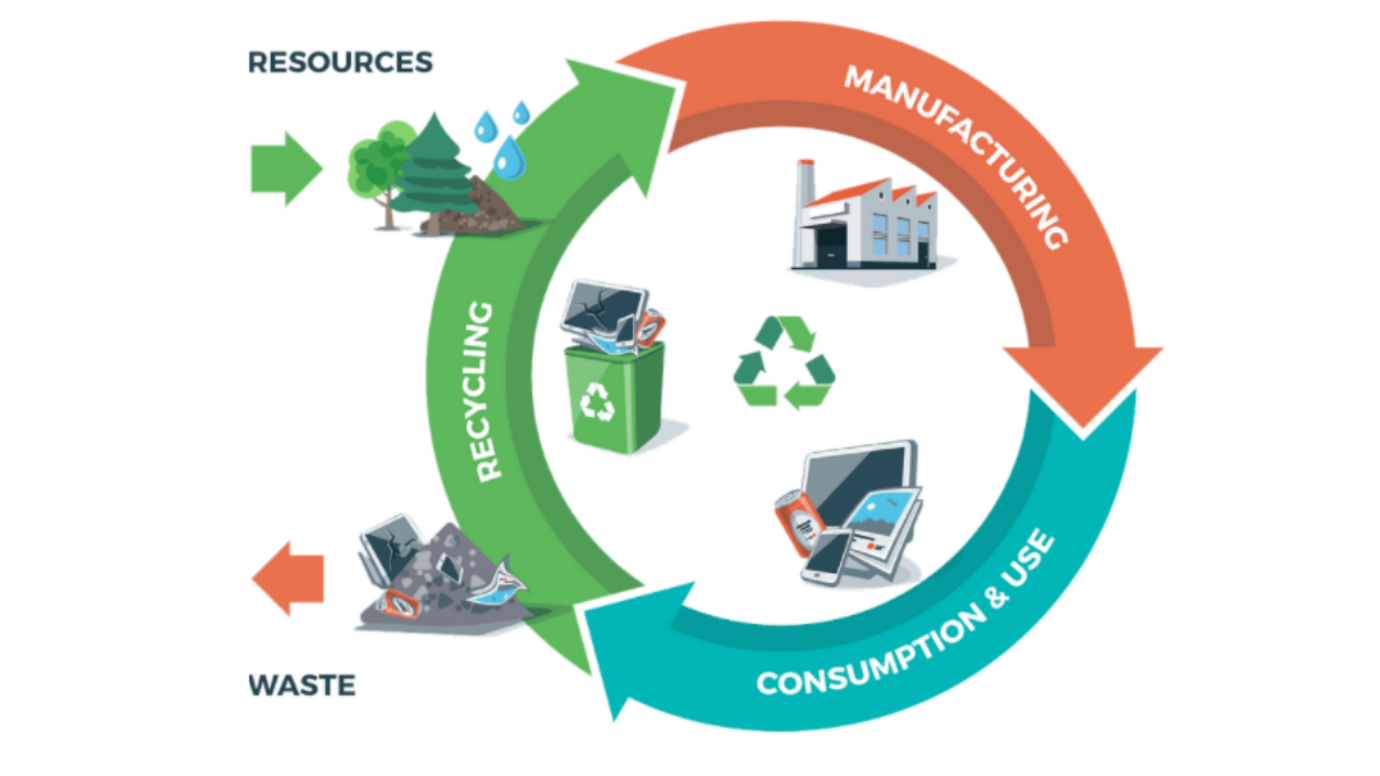 Image Courtesy: efqm
On the
contrary, a circular economy centers on waste reduction, along with expanding
product lifetimes, combined with improving resource usage via recycling,
reusing, and repurposing materials. According to the Ellen MacArthur Foundation
(2023), a transition toward a circular economy inside certain key industries
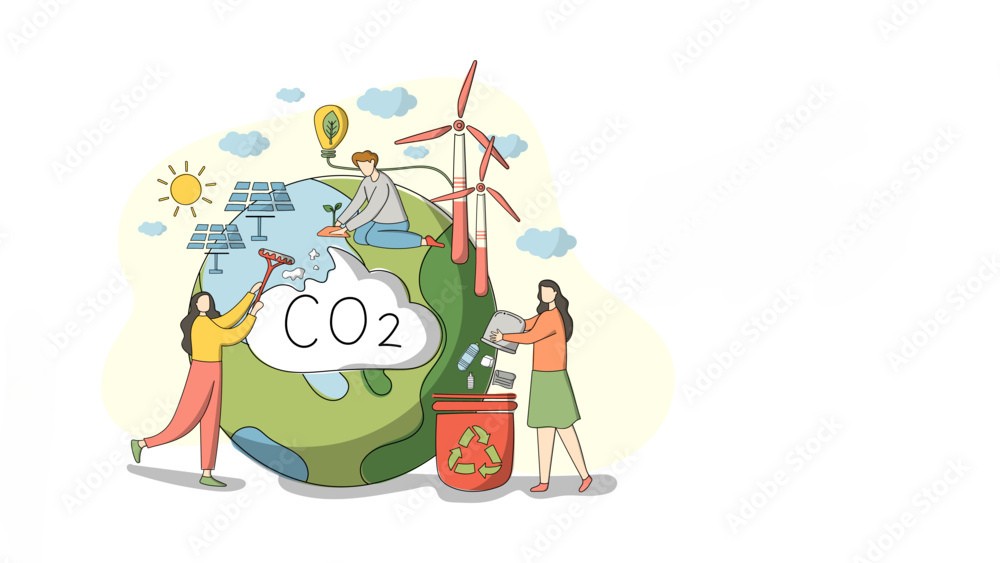
might cut down global CO₂ emissions through 45% via 2050. By shifting away from the currently
wasteful economic model and embracing with effective circular solutions,
multiple industries and many consumers can play an important role in reducing
climate change while ensuring economic sustainability.
Image
Credits: Adobe Stock
The Connection Between Recycling and Climate Change
Recycling
is still a major method for decreasing carbon footprint, because recycling
lowers emissions from manufacturing, reduces landfill waste, and lessens
reliance on extracting raw materials. The making of materials like steel,
paper, aluminum, and plastic is responsible for a lot of CO₂. However, when such materials are recycled
and used again in production activities, the energy consumption is
substantially reduced, considerably cutting down contamination.
As per a
report by the International Aluminium Institute
(2023) recycling aluminum saves nearly 95% of the energy needed to produce it
from bauxite ore. Likewise, recycled steel is able to decrease CO₂ emissions by 58% compared to virgin steel
production (World Steel Association, 2023). Plastics, which are mainly derived
from fossil fuels, require large amounts of energy during production. Recycling
of plastic materials allows us to cut on energy use by as much as 88% and
greatly decrease carbon pollutants (U.S. Ecological Protection Agency, 2023).
Additionally,
landfill waste greatly contributes to worldwide climate change. Organic waste
inside landfills extensively decomposes along with releasing methane, a
greenhouse gas demonstrably stronger than CO₂ by a factor of 25 across a 100-year period
(Intergovernmental Panel on Climate Change, 2023). Composting and recycling can
keep organic and recyclable waste out of landfills, lowering methane emissions
while also stopping ecological pollution.
Resource Conservation and
Emissions Reduction
The
excessive removal of natural resources is likewise a large source of carbon
emissions. Mining, deforestation, and industrial agriculture cause the
destruction of ecosystems and the loss of biodiversity. The circular economy’s
attention toward material recovery, in addition to product reuse, offers a
method to adequately lessen these ecological effects.
For
example, recycling of one ton paper saves over 17 trees along with 7,000
gallons of water, in addition to reducing energy consumption by 65% (American
Forest & Paper Association, 2023). Based on the United Nations Environment Programme (2023), metal recycling lowers the demand under
mining, accounting for 8% toward worldwide CO₂ emissions. The fast fashion industry is known
for its large carbon footprint. Nearly 10% of overall global carbon emissions
are generated annually by the industry. A circular economy approach, through
the incorporation of textile recycling and sustainable production methods,
could substantially cut emissions originating from this sector (Ellen MacArthur
Foundation, 2023).
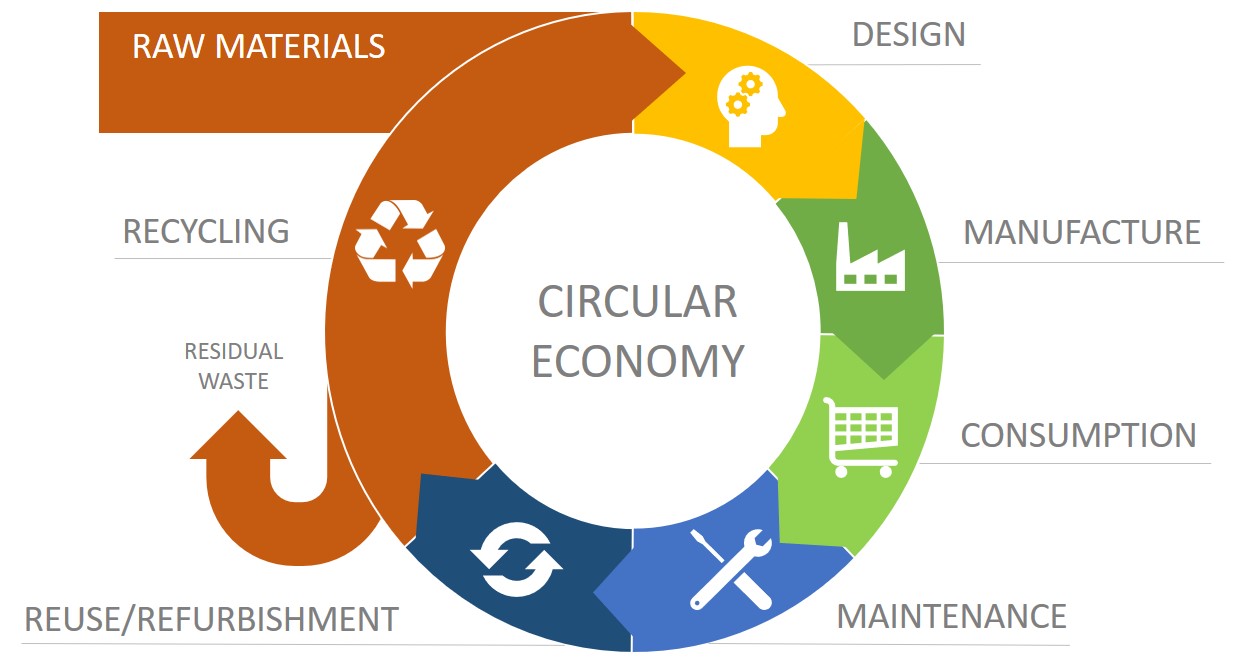
Image Credits: supplychainschool
Circular Economy Solutions for Reducing Carbon Footprint
Recycling
is just a part within the circular economy framework, integrating multiple
strategies toward sustainability. Several of the encouraging resolutions toward
a circular economy include:
1. Closed-Loop Recycling Systems
In contrast
to standard recycling, closed-loop recycling makes assurance about materials
being constantly repurposed without any lowering in their quality. This
technique is particularly effective in metals, glass, and plastics. For
instance, aluminum cans can be recycled a collection of times without losing
strength. Recycling a number of these cans cuts emissions by 95% during each
instance that they are reprocessed.
2. Industrial Symbiosis: Turning
Waste into Resources
Industrial
symbiosis mostly entails one industry's waste and gradually turns into
another's original resource. This substantially minimizes resource extraction
and landfill waste. For example, in Kalundborg, Denmark, waste from a specific
company’s production process is used as input into another, creating an
efficient also low-emission industrial ecosystem (Ellen MacArthur Foundation,
2023).
3. Extended Producer
Responsibility (EPR) Policies
EPR
programs generally make producers liable concerning the disposal at the
conclusion of their products' lives. Across the world, many governments are
implementing policies for making companies to design more products for
recyclability and to manage waste collection systems. The European Union's
Circular Economy Action Plan mandates higher recycling targets in conjunction
with stricter plastic waste management policies by 2030.
4. Upcycling and Sustainable
Business Models
Besides
recycling, upcycling increases product lifespans through inventively reusing
materials which otherwise would be thrown away. Patagonia, IKEA, along with
Nike are examples of brands that are spearheading repair as well as resale
programs, which curtails waste along with emissions linked to the creation of
new products. Likewise, the refillable packaging systems from Unilever and
Nestlé considerably reduce plastic waste and also decrease emissions.
5. Digital Technologies for Waste
Management
Recycling
systems are extensively using artificial intelligence (AI) and blockchain
technology to improve material recovery and traceability. Systems that use AI
to sort waste may make the process more efficient and raise recycling rates,
and blockchain can be used to track and verify how sustainable supply chains
are.
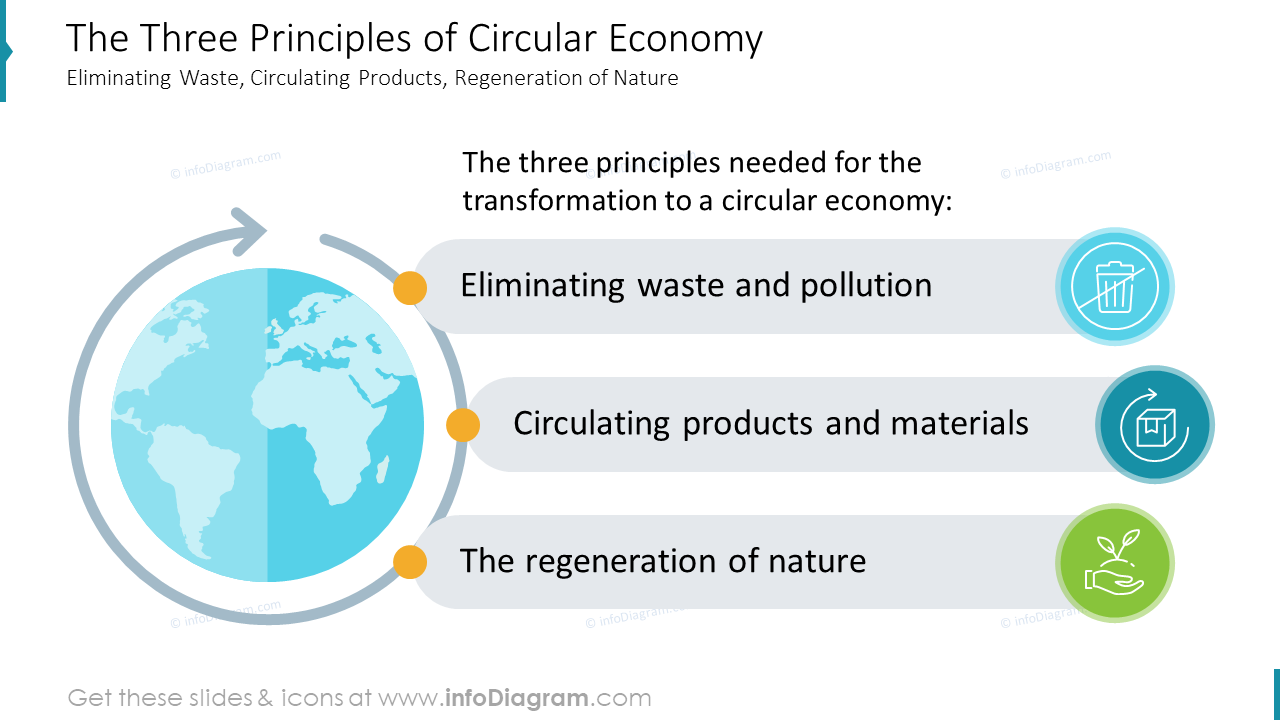
Image credits: Infodiagrams
Global Policies Supporting the Circular Economy
Governments
across the world are putting into action policies for promoting sustainable
waste management as well as circular manufacturing along with carbon reduction.
Some prominent initiatives include:
- The
European Green Deal – Achieving climate neutrality by the year 2050, featuring a
meaningful focus within circular economy practices.
- China’s
Circular Economy Policy – Requiring obligatory recycling statutes through eco-design rules
for producers.
- The US
National Recycling Strategy (2023) – The US National Recycling Strategy
(2023) focuses on advanced plastic recycling and on e-waste management. In
addition, the strategy calls for important food waste reduction.
The Role of Businesses and
Consumers
Both
companies and customers have an important part in resolutions for the circular
economy.
✔ Businesses should:
- Invest
in eco-friendly product designs using recyclable and biodegradable
materials.
- Institute
take-back as well as refurbishment programs for a number of used products.
- Reduce
the single-use packaging and transition toward refillable solutions.
✔ Consumers can:
- Select
recycled products when it is possible. Also, select products sourced in a
sustainable way.
- Lessen
waste by reemploying, mending, and giving away things instead of throwing
them out.
- Support
of brands with their commitment to sustainable and circular economy
principles.
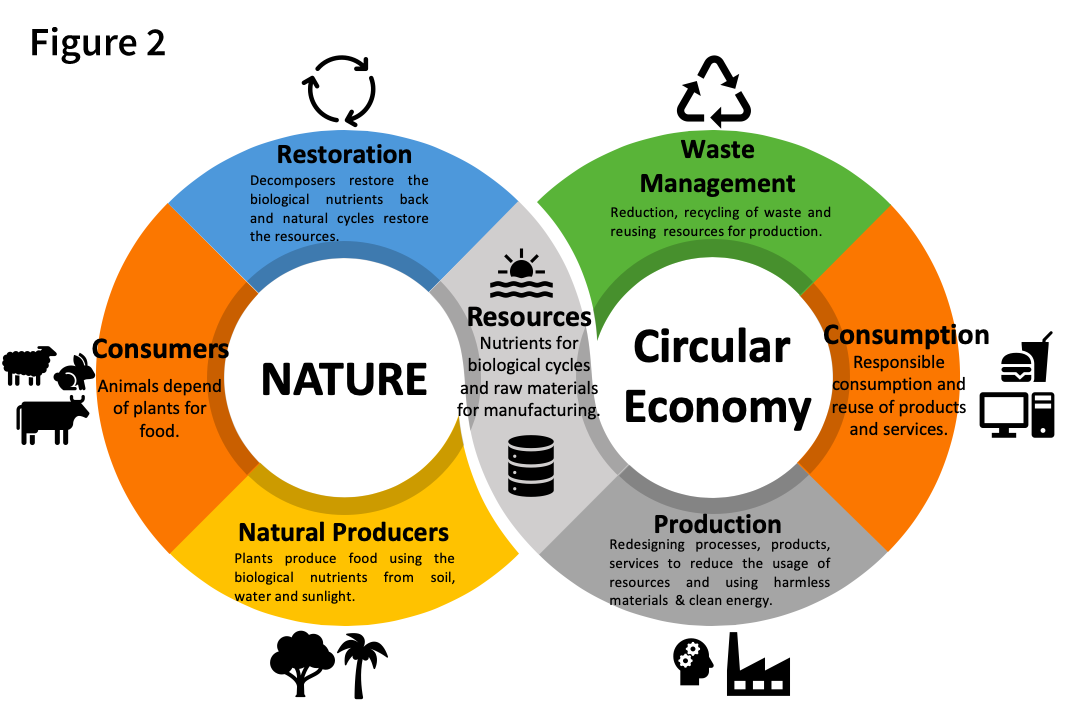
Image Credits: European business review
Can a Circular Economy Create a Climate-Resilient Future?
The move in
the direction of a circular economy is important to guaranteeing lasting
ecological and financial durability. The Ellen MacArthur Foundation estimates
that several circular solutions inside five key sectors of cement, steel,
plastic, aluminum, and food could reduce global CO₂ emissions by 9.3 billion tons per year by
2050.
Even though
much headway is occurring, further investment with firmer policies, and
increased consumer participation are needed to expand these solutions. Climate
action's future hinges not just on emission reductions but, on top, on
reconsidering our resource utilization within a sustainable as well as
regenerative manner.
The central
question is not whether a circular economy can function, but rather how rapidly
we can employ it before the climate suffers irreparable damage.
What is
your opinion of the contribution of recycling to the reduction of carbon
emissions?