How Scientists Are Fast-Forwarding the Amazon to 2050
Published on October 22, 2025
How Scientists Are
Fast-Forwarding the Amazon to 2050
As the world turns its focus towards COP30, to be hosted in Belem, Brazil in 2025, a groundbreaking experiment deep within the Amazon rainforest is offering a glimpse into our planet’s future. Aptly called a “climate time machine”, this initiative aims to understand how the world’s largest tropical forest will respond to the rising carbon dioxide (CO₂) levels of the coming decades.
What Is the AmazonFACE Project?
The project, known as AmazonFACE (Free-Air CO₂ Enrichment), is one of the most ambitious climate experiments ever conducted in a tropical ecosystem. Located near Manaus, Brazil, it features six towering circular structures each surrounding mature rainforest trees.
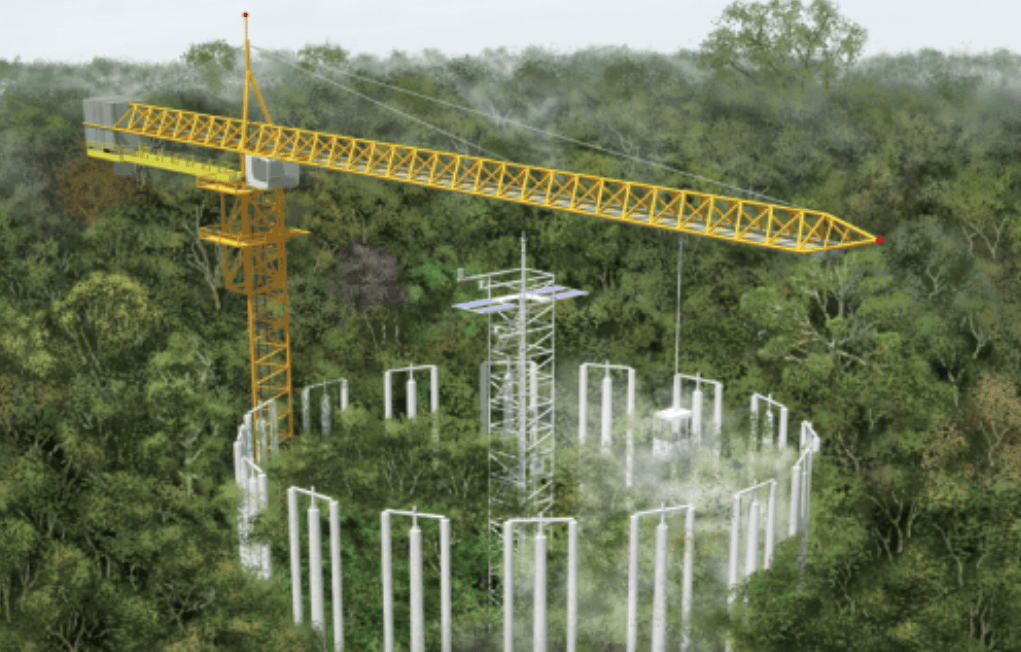
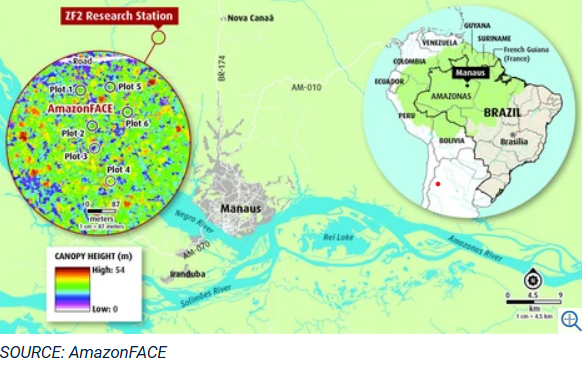
In half of these rings, scientists release elevated concentrations of CO₂ to simulate atmospheric conditions projected for the mid-21st century, while the remaining rings serve as controls. By monitoring these environments in real time, researchers are essentially fast-forwarding the forest into the future - creating a “time machine” to study how it might behave in a warmer, carbon-rich world.
How the “Time Machine” Works
Each ring acts as an open-air laboratory where advanced sensors continuously record:
Carbon uptake by trees and foliage,
Water vapor exchange and local micro-climate variations,
Growth patterns and leaf density, and
Soil nutrient and microbial responses.
Unlike enclosed experiments, the FACE system allows natural rainfall, sunlight, and biodiversity to continue - giving scientists a realistic simulation of the forest’s natural dynamics under future CO₂ levels.
Why It Matters
The Amazon rainforest is often called the “lungs of the Earth”, absorbing billions of tonnes of CO₂ every year. Yet, its resilience under changing climate conditions remains uncertain.
The AmazonFACE experiment could provide vital answers:
Will the forest continue to act as a carbon sink in a high-CO₂ world?
Could prolonged heat and drought turn parts of it into a carbon source?
How might the forest’s biodiversity adapt or decline under stress?
These insights are not merely academic - they are central to global climate modeling and policy decisions. Understanding the forest’s limits could help nations refine strategies for adaptation, forest protection, and carbon offsetting.
A Scientific Prelude to COP30
As Brazil prepares to host COP30, this experiment arrives at a symbolic and strategic moment. It underscores Brazil’s leadership in climate science and rainforest conservation, while reinforcing the need for evidence-based action in global climate negotiations.
COP30 is expected to focus strongly on adaptation and equity, and findings from AmazonFACE may directly influence how countries shape commitments to protect tropical forests, fund carbon sequestration, and adapt to future climate realities.
Looking Ahead
The “climate time machine” in the Amazon is not a portal to the past - it’s a window into the planet’s future. It reminds us that climate change is not a distant phenomenon, but an ongoing transformation already reshaping our natural systems.
Through science, collaboration, and policy, the world can use this knowledge to safeguard ecosystems that sustain life, ensuring that the Amazon remains a living, breathing symbol of Earth’s resilience.