Solar Panels on Train Tracks: Maximizing Space for Clean Energy
Published on September 9, 2025
Solar Panels on Train Tracks: Maximizing Space for Clean
Energy
The Concept and Science Behind It
With the global push for renewable energy, innovative
solutions are emerging that aim to make the most of existing infrastructure.
One such idea is installing solar panels directly on railway tracks. The
science behind this is both simple and ingenious. Train tracks span vast
stretches of land that are otherwise unused for any productive purpose. By
integrating photovoltaic panels between or alongside the tracks, this
underutilized space can be transformed into corridors of clean energy
generation.
These solar panels are engineered to be robust enough to
withstand the dynamic loads, vibrations, and environmental stresses posed by
passing trains. Their design ensures they are thin, durable, and able to endure
extreme temperatures, snow, and debris. Moreover, the technology incorporates
anti-glare coatings to ensure they do not interfere with train operations or
pose hazards to operators.
An added innovation in such systems is the ability to deploy
and remove panels efficiently. Special mechanisms or rail-based machines can
lay these panels like carpets, ensuring quick installation and easy removal for
track maintenance or emergencies. This ensures that energy generation doesn't
disrupt or compromise rail safety.
Environmental and Land Use Benefits
One of the most significant advantages of integrating solar
panels into railway tracks is the conservation of land. Traditional solar farms
require extensive areas that often compete with agriculture, forestry, or urban
development. In contrast, train tracks already occupy dedicated corridors of
land. Utilizing these spaces eliminates the need for additional land
acquisition, reducing both environmental impact and project costs.
Additionally, the elongated, linear nature of railways makes
them ideal for consistent solar exposure, especially in open terrains. The
potential energy generation from such installations is significant; studies
suggest that a country’s railway network, if adequately covered, could
contribute a meaningful portion of its renewable energy needs, while
simultaneously lowering transmission losses by enabling localized generation.
Global Relevance
As countries look for innovative ways to integrate renewable
energy into their infrastructure, solar-on-rail projects offer a scalable,
practical, and land-neutral solution. It aligns with broader decarbonization
strategies while maximizing the utility of existing transport infrastructure.
A Real-World Initiative
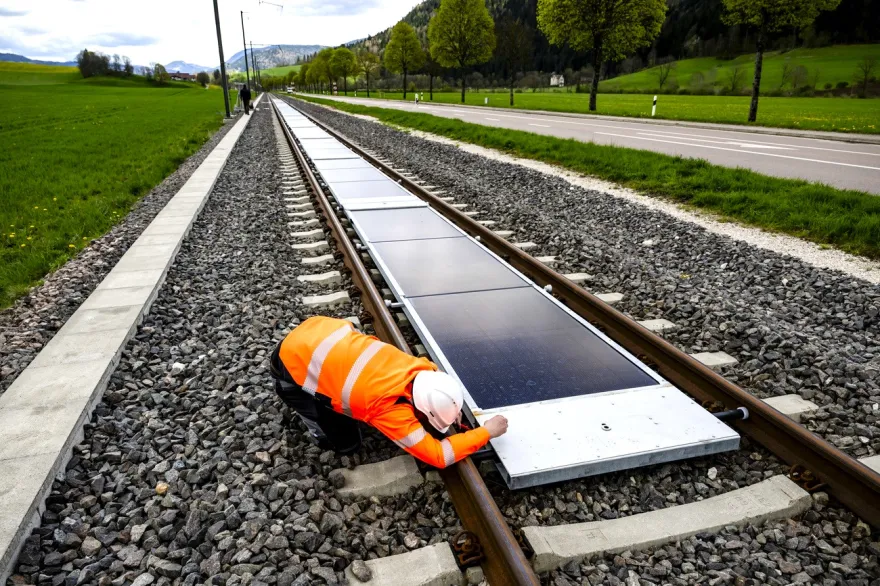
Pioneering this concept, a Swiss startup Sun-Ways has
developed a system that installs removable photovoltaic panels on railway
tracks using a specially designed train. Their pilot projects are demonstrating
the feasibility of generating clean energy while utilizing the railway network
without interfering with train operations. If rolled out on a national scale,
such systems could provide electricity accounting for around 2% of Switzerland’s
total electricity demand.