The Disappearing Wetlands: Protecting Vital Ecosystems with Renewable Energy Solutions
Published on October 28, 2024
The Disappearing Wetlands: Protecting
Vital Ecosystems with Renewable Energy Solutions
Wetlands are some of the most diverse and vital ecosystems on Earth, providing crucial services such as water filtration, carbon sequestration, and habitat for countless species. Yet, in 2024, wetlands around the world face unprecedented threats due to urban expansion, industrial development, and the accelerating impacts of climate change. These ecosystems are disappearing at an alarming rate, and with them, the ecological benefits they provide. As the global push for renewable energy intensifies, it is critical to ensure that these projects do not add further stress to wetlands but instead contribute to their preservation. Let us examine the current threats to wetlands, the essential role they play in the environment, and how renewable energy solutions can be integrated without harming these ecosystems.
The Importance of Wetlands in 2024
Wetlands, which include
swamps, marshes, bogs, and mangroves, are among the most productive ecosystems
on the planet. Covering approximately 6% of the Earth’s surface, they support a
diverse range of plants, animals, and microorganisms. Wetlands are crucial for
several reasons:
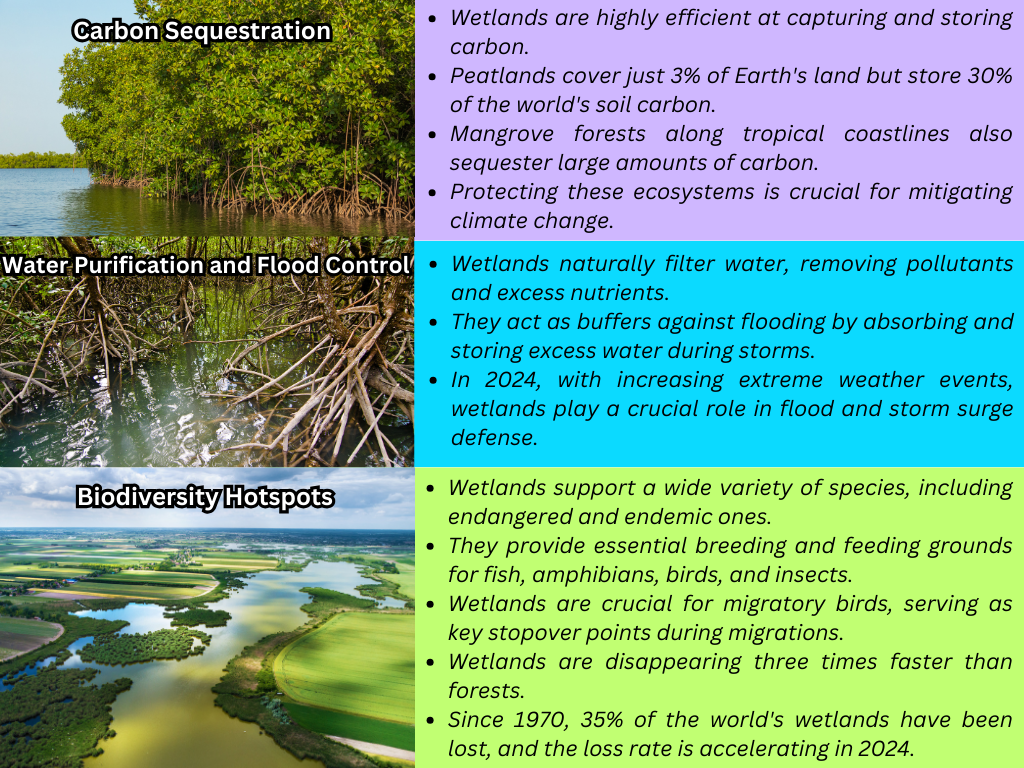
Image:
IDREA
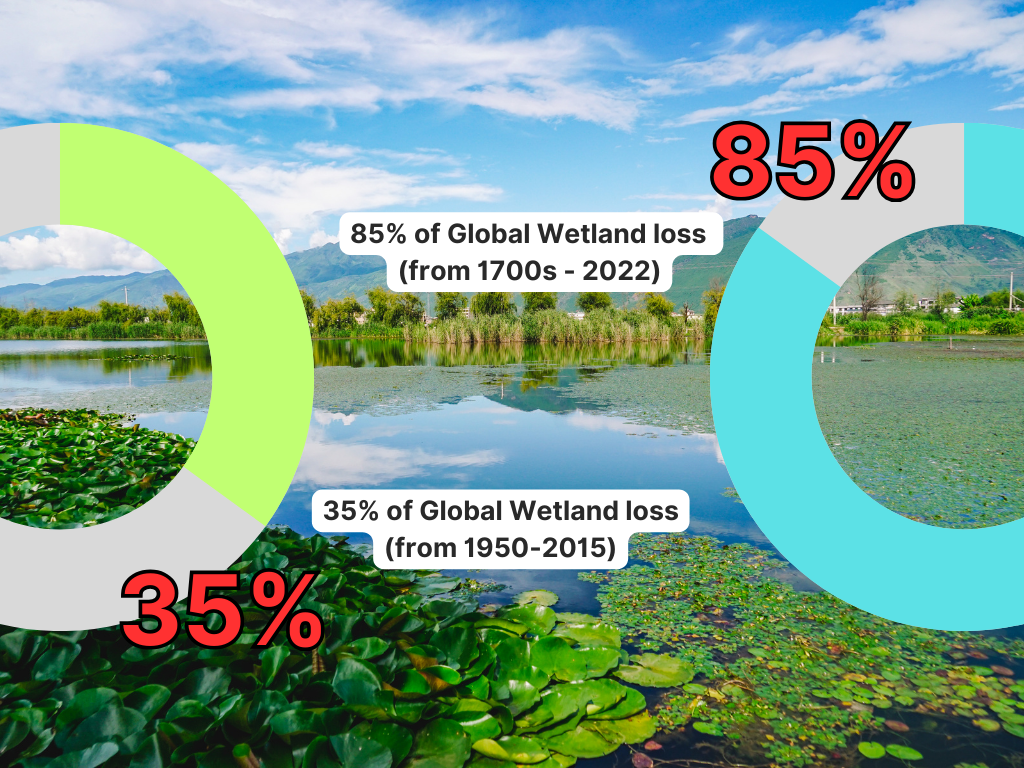
The Current Threats to
Wetlands
Source: Geneva Environment
Network
1. Urban Expansion and
Infrastructure Development
As global populations rise
and cities expand, wetlands are increasingly drained, filled, or built over to
make way for housing, roads, and industrial areas. The loss of wetlands due to
urban expansion is particularly acute in rapidly developing regions, such as
Southeast Asia, South America, and parts of Africa. In 2024, wetland areas
around cities like Jakarta, Lagos, and Mumbai are shrinking due to unplanned
urbanization and infrastructure development.
2. Climate Change
Climate change is amplifying
the threats to wetlands by altering precipitation patterns, increasing
temperatures, and causing sea levels to rise. Coastal wetlands, such as
mangroves and salt marshes, are especially vulnerable to sea-level rise. In
2024, low-lying wetland areas in the Caribbean, Southeast Asia, and the Pacific
Islands are experiencing severe erosion and flooding, which threaten their
survival. Inland wetlands are also under stress from changing rainfall
patterns, leading to droughts or, conversely, too much water, both of which can
alter the ecosystem’s balance.
3. Agricultural Expansion
Wetlands are often converted
into agricultural land due to their fertile soil and access to water. This is
particularly common in regions with high demand for food production, such as
South and Southeast Asia. In 2024, wetland areas in countries like Indonesia
and Bangladesh are being drained to make way for rice paddies, palm oil
plantations, and other agricultural ventures.
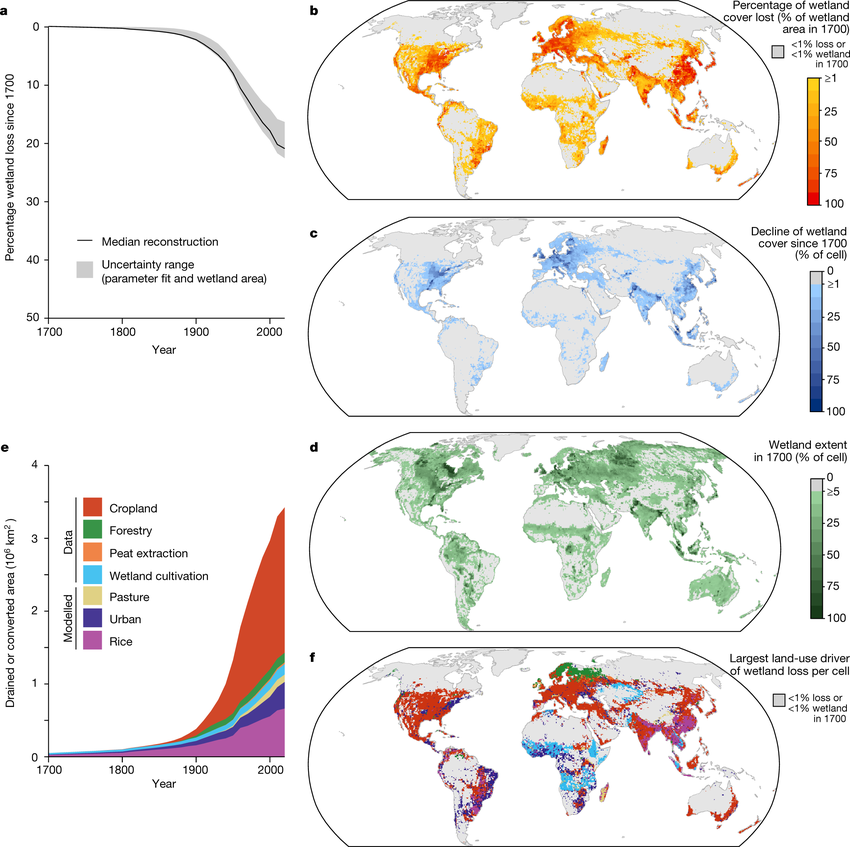
Source:
Extensive global wetland loss over the past three centuries, ResearchGate
The Role of Renewable
Energy in Protecting Wetlands
While renewable energy is
essential for reducing greenhouse gas emissions and combating climate change,
poorly planned projects can pose a threat to wetlands. However, when designed
with care, renewable energy projects can be integrated into wetland areas with
minimal ecological disruption and, in some cases, even provide environmental
benefits.
1. Floating Solar Panels
(Floatovoltaics)
One of the most promising renewable energy technologies for wetlands is floating solar panels, or "floatovoltaics." These solar panels are installed on bodies of water, such as lakes, reservoirs, and even artificial ponds, and provide renewable energy without occupying valuable land. In 2024, floatovoltaic projects are being implemented in countries such as China, Japan, and India, where large-scale ground-mounted solar farms could otherwise encroach on wetlands and agricultural land.
Floating solar panels can
offer several benefits to wetlands. By covering part of the water surface, they
reduce evaporation, which can be critical in areas prone to drought. They can
also help maintain water quality by reducing the growth of harmful algae
through shading. Floatovoltaics represent a growing
opportunity to generate clean energy while preserving vital ecosystems.
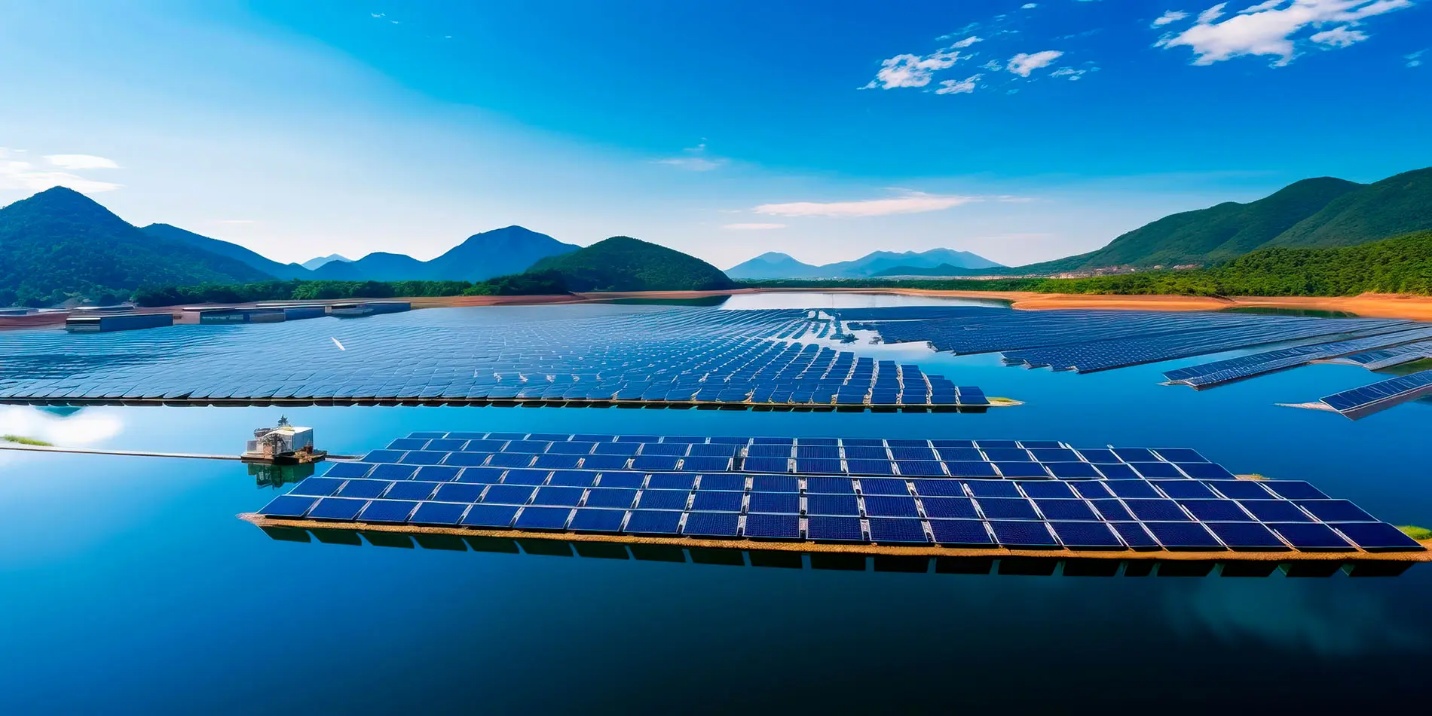
Photo:
Just energy
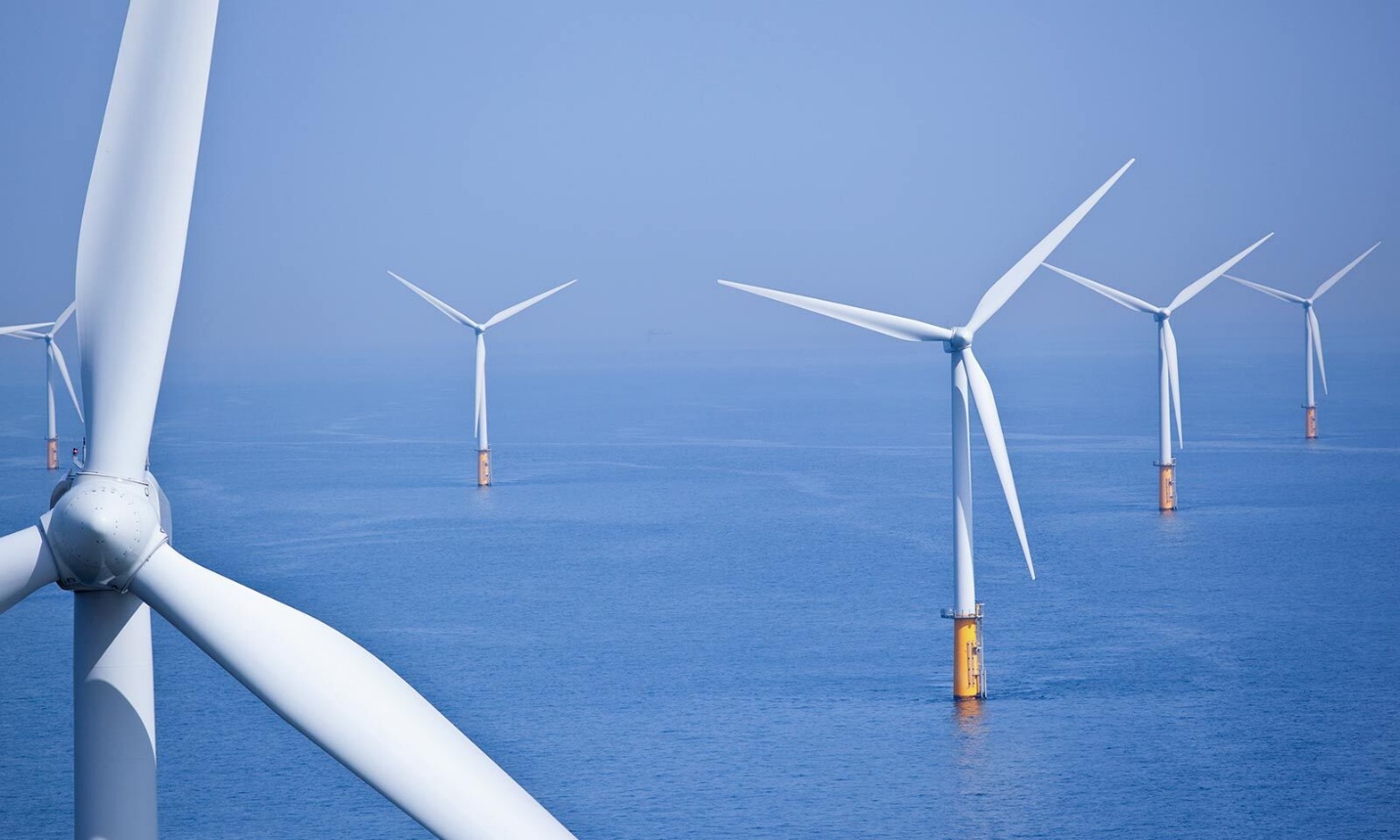
2. Offshore Wind Farms
Offshore wind
energy is another renewable technology that can be designed to minimize impacts
on coastal wetlands. Unlike onshore wind farms, which can disrupt habitats and
bird migration patterns, offshore wind farms are located away from land and
coastal wetlands. These projects harness the consistent wind patterns over the
ocean, generating large amounts of clean energy.
In 2024, Europe continues to
lead the world in offshore wind development, with countries like the United
Kingdom, Germany, and Denmark expanding their offshore wind capacities.
Additionally, new projects in the United States and China are targeting offshore
wind potential in coastal areas without encroaching on sensitive wetlands.
Offshore wind farms can be carefully sited to avoid key marine ecosystems and
migratory pathways, ensuring that coastal wetlands are protected.
(Photo: IndiaSpend)
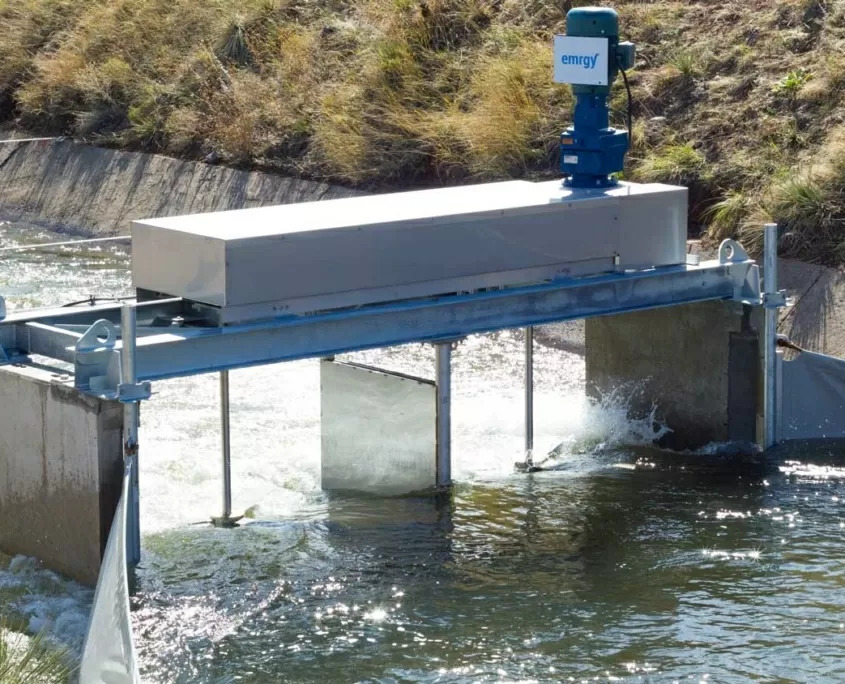
3. Small-Scale Hydropower
Large hydropower dams have historically been responsible for significant environmental damage, including the destruction of wetlands. However, small-scale hydropower systems offer a more sustainable alternative. These projects use run-of-river technology, which generates power without the need for large dams and reservoirs. Instead, small turbines are placed directly in the flow of rivers, minimizing habitat disruption and allowing the river’s natural course to continue.
In 2024, small-scale hydropower projects in countries like Norway, Bhutan, and Nepal are generating clean energy while preserving the ecological integrity of rivers and wetlands. These projects provide renewable energy to local communities while avoiding the significant environmental impact of traditional large-scale hydropower dams.
(Photo: GE VERNOVA)
Strategies for Minimizing the Impact of Renewable Energy Projects on
Wetlands
To protect wetlands in renewable energy projects, these strategies can be adopted:
Environmental Impact Assessments (EIAs)
Comprehensive EIAs are
conducted to assess and mitigate potential impacts on wetlands. In 2024,
stricter EIA standards are implemented globally, including the EU’s Habitats
Directive, to protect sensitive areas such as Natura 2000 sites.
Ecological Offsetting and
Restoration
Where wetlands are impacted,
restoration or creation of new wetlands is carried out to offset any damage. In
the U.S., funds are allocated by solar projects for wetland restoration when
their operations affect these ecosystems.
Community Involvement
Local communities, who often rely on wetlands, are engaged to ensure their needs are considered. In Kenya and Brazil, involvement of local stakeholders has been shown to protect wetlands while providing economic benefits.
Balancing Renewable
Energy and Wetland Conservation in 2024
Wetlands are vital for biodiversity and ecosystem health but face threats from urban growth, climate change, and agriculture. Renewable energy is key to fighting climate change yet must be carefully deployed to protect wetlands.
In 2024, innovations like floating solar, offshore wind, and small-scale hydropower present clean energy options that preserve wetland ecosystems. Through careful planning, EIAs, and community engagement, renewable projects can coexist with and even restore these critical landscapes.
As the shift to clean energy accelerates, it’s essential to balance renewable growth with wetland protection, preserving both biodiversity and our planet's future.